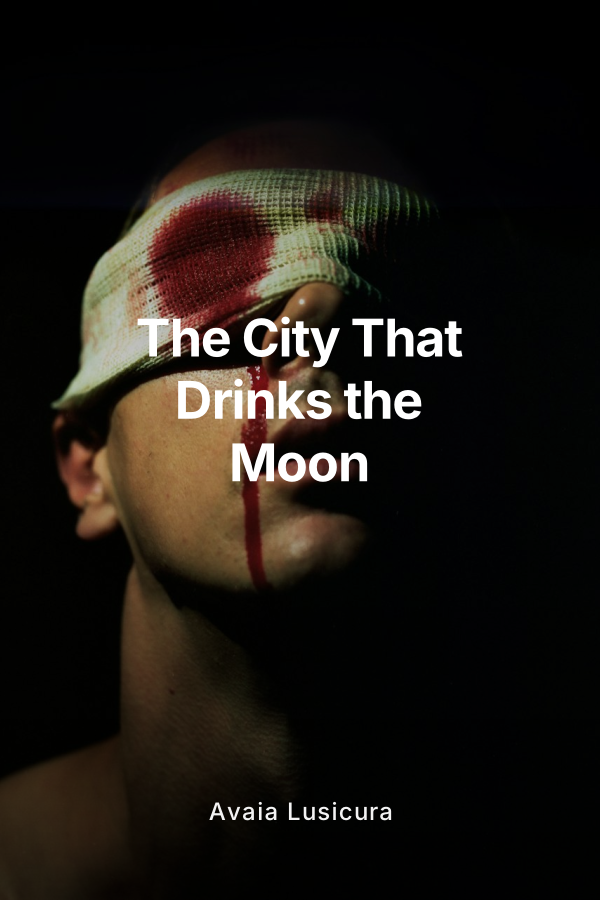
In a decadent port-city steeped in incense, sin, and whispered martyrdoms, a vampire goddess rises to claim what she calls her inheritance: every heart that beats, every oath that falters, every shadow that begs to be touched. She is the last of a matriarchal bloodline whose daughters once ruled empires through worship and terror. Her seduction is a law of nature: mortal men cannot resist her call; mortal women kneel before her immortal sisters; and even the old monsters envy the hunger that makes her sovereign. Only true love—rare, costly, and doubted by those without reflections—can unmake the spell, and love is a currency she spends only when it profits her throne.
As the city slips under her velvet yoke, enemies gather. Jealous vampire lords conspire with mortal queens, zealot clerics clasp hands with gutter-witches, and an entire guild of daylight assassins swears to end the night. Their union is born of envy and terror; their weapon is a secret older than her line: the blood of crows and ravens, creatures that alone refuse all chains. Corvid blood can unturn the newly bitten within forty-eight hours—if the rite is paid in voice, memory, and moonlight—and black-market vials begin moving through the alleys like contraband hope.
Then she tastes a mortal man and does not let him die.
Their bond is immediate, mutual, and wrong in all the ways that thrill her. He refuses the promised immortality, choosing instead to love her as a mortal, to feed her willingly, to keep her savage without becoming one more obedient echo. Their affair ignites the city: ballads smuggled in the taverns, sermons spat from pulpits, and knives whispered into motion. It also tempts her toward a vulnerability her ancestors scorned. Power remains her first devotion, and yet, in private chambers washed in wine and candle soot, she learns to speak like a lover—just enough to blur the line between dominion and desire.
The story unfolds through a chorus of eyes and hungers. The goddess speaks in the present tense of conquest, tasting the world as scripture. Her mortal lover answers in intimate confessions, a man measuring his soul against her night. A child vampire—her fierce, mischievous shadow—dances at the edge of cruelty and tenderness, a “nuisance” whose loyalty hides a blood-deep truth. Victims, bystanders, and even animals offer brief, harrowing windows into the city’s unmaking. Threaded between them all is a watchful immortal raven, loyal to no throne, who remembers the world before the first oath was broken and bargains with gods like equals.
As eclipses crown the harbor and funeral bells learn new hymns, rebellion erupts. An immortal rival offers the city a bargain: the antidote in every square in exchange for the goddess’s heart on a pike. The lover discovers that saving those she has marked will cost him his voice and the memory of their first night—a sacrifice that might break her spell and their bond in the same breath. The child vampire’s true relation to the goddess surfaces in blood-memory on the eve of war, turning ally against ally and forcing a choice between lineage and love.
In the crucible of siege and seduction, the goddess must decide what she will save: a throne cemented in fear, or the singular mortal who dared hold a mirror to the night. True love can free, but freedom cuts both ways. If she chooses power, the city will drink the moon forever. If she chooses love, the night might learn the cost of a soul it never believed in.
The City That Drinks the Moon is a dark, sensual, and vicious romance—seductive and sardonic, lush with violence but ruled by plot—that strangles and then kisses in the same gesture. It is the tale of a femme fatale deity who teaches a city to worship, a mortal who teaches a goddess to hesitate, and a raven who refuses to bow to either.