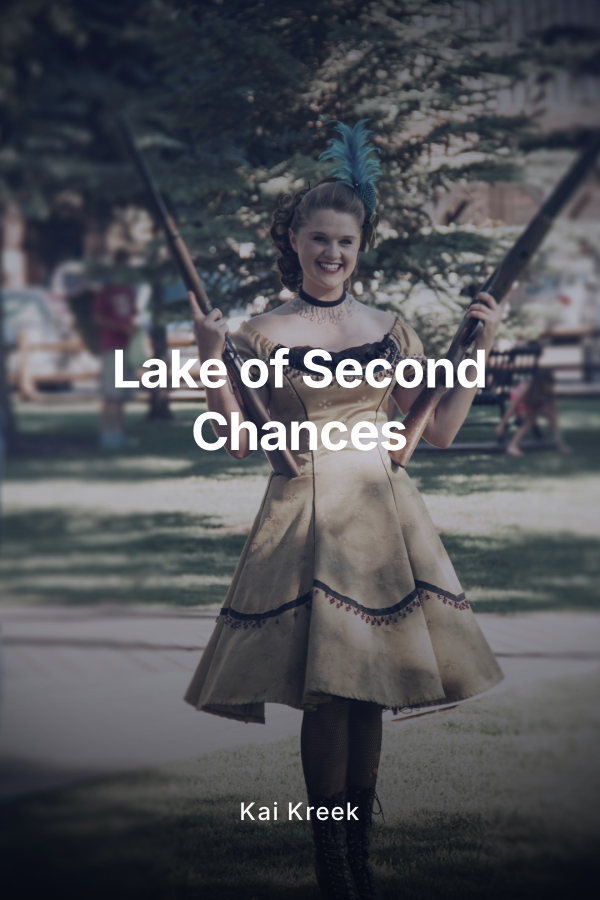
In 1800s Great Britain, scandal is currency and a woman’s reputation can shatter in a single night. For Lady Evelyn Harcourt, the last unmarried daughter of a noble family, marriage has always shimmered on the horizon like a distant promise. She has watched her sisters wed, listened to drawing room tales of romance and betrayal, and learned early that men leave. Her father’s long kept mistress and whispered stories from society have carved into her a quiet terror that she will never be enough to make a man stay .
When forged letters, penned by an anonymous hand that will never be unmasked, erupt into a misunderstood scandal that cannot be undone, Evelyn’s fate is sealed . The letters spin an illusion of impropriety between her and Adrian Blackwood, Viscount Ainsley, a man she has barely spoken to and certainly never loved. The scandal reaches the ears of the Queen herself, who is not only monarch but Adrian’s sharp tongued, shrewdly affectionate grandmother. Witty, subtly manipulative and determined to protect her grandson’s future, the Queen arranges an engagement that becomes a forced march to the altar, binding two strangers with very different hearts.
Adrian arrives in this arrangement as a widower carved hollow by grief. Years ago, his wife and unborn child drowned in the lake on his estate while he was away, and the guilt of not being there has never loosened its hold on him . Society whispers that he is cold and heartless. Servants say he loathes the sight of children and avoids his own private lake as if it were cursed. The truth is more complicated. Adrian is terrified of loving again, convinced that attachment only brings loss. He keeps his distance from lakes yet lingers at their edges, drawn and repelled at once, and brushes past children not because he despises them, but because their laughter is a sound he once imagined echoing in his own halls and now cannot bear .
Their marriage begins under the shadow of duty and misunderstanding. Evelyn walks into Ainsley Hall with bright anticipation, thrilled at last to have a household of her own, determined to be a good wife, and more than a little starry eyed at the idea of a title. Adrian, in contrast, receives her with rigid courtesy, offering her a tour of the estate and answering her gentle questions in clipped, distant tones . Where she is warmth and open curiosity, he is gruff, guarded and colder than the stone walls of his ancestral home.
Yet Evelyn is not easily discouraged. Her fear of being left spurs her to overperform as a perfect viscountess. She greets him with semi formal politeness, careful curtsies and composed smiles, hiding any hurt behind impeccable manners. She brings him small, thoughtful gifts, learns his preferences in tea and meals, quietly rearranges rooms to make his study more comfortable, and keeps the house running with an invisible grace . She reads quietly in the same room where he works, offering him the steady presence of companionship without demand or complaint. She laughs with the staff, bakes for them, and showers affection on the rabbits in the garden, her gentle heart spreading warmth into each corner of Ainsley Hall.
Adrian notices more than he admits. One afternoon, when he finds a rabbit with an injured foot, instinct overrides reserve. He kneels in the grass, large hands surprisingly gentle as he bandages the tiny creature’s paw. He does not know Evelyn is watching from the terrace. She sees the softness in his expression, the fleeting, unguarded smile that touches his mouth when the rabbit nuzzles his fingers, and something in her hopeful heart flares. Perhaps he is not as heartless as he wants the world to believe .
Still, the walls between them hold. They share a bedroom yet maintain separate, carefully distant routines. He sleeps as rigidly as he lives, always on his side of the bed, always careful not to brush against her in the dark. Their schedule becomes a slow choreography of nearness and restraint. Evening finds Evelyn curled in a chair with a book while Adrian works at his desk, their conversations limited to small, almost awkward exchanges. Tiny arguments flicker between them like sparks, their differences in temperament and expectations igniting short bouts of tension that neither quite knows how to resolve .
The first shift in their slow burn comes unexpectedly after an afternoon of fencing with friends. Adrian returns with a shallow but bloody cut along his ribs. Evelyn insists on tending to it. In his room, he strips off his shirt with visible reluctance, suddenly aware of how exposed he is to her gaze. She steps close, the scent of soap and something sweet surrounding him. Her fingers brush his bare skin to clean the wound, and his muscles tense involuntarily as her touch sends a jolt through him. His breath hitches. Her own hands tremble slightly, awareness flooding the space between them. Their eyes meet and he is the first to look away, turning his head so she cannot see the confusion, the unwanted desire, the longing he has sworn never to feel again .
Both pretend afterward that it meant nothing. Yet each carries the memory of that touch, the warmth of the other’s body close, the moment their usual careful distance felt suddenly unbearable.
The Queen watches all of this from afar, with a mix of mischief and genuine concern. She inserts herself intermittently into their lives with sharp questions, veiled commands, and occasional surprising kindness. She sees Evelyn’s quiet efforts to draw Adrian out, and she pushes her grandson, with sly remarks and small tests, to consider whether clinging to his grief is truly an act of loyalty or simply an excuse to avoid living again . The forged letters that once forced them into marriage recede into the background, never properly explained, an unsolved mystery that nonetheless set in motion a love neither of them expected.
As weeks stretch into months, the intimacy between Adrian and Evelyn grows in subtle, electric ways. A near kiss in the soft glow of the library fire almost breaks their stalemate. They argue over something trivial, passion flaring into proximity. His hand catches her wrist, pulling her just a fraction too close. Their breaths mingle. For one suspended heartbeat, their lips hover a whisper apart, both of them trembling on the edge of surrender. Then a servant knocks. The moment shatters. They step back, faces flushed, voices stiff with false calm, the ache of what almost happened clinging to them long after they part .
A shared bath becomes another turning point. Called by necessity and not seduction, it begins with shy compromise. The house is under repair after a storm and the plumbing in her dressing room fails. To her surprise, Adrian offers his great copper tub. They arrange it with screens and carefully negotiated boundaries, yet water has a way of dissolving defenses. Evelyn sits in the steaming bath, her hair loosened from its usual careful style, tumbling in wet waves down her back. Adrian, half turned away, intends only to bring her towels but catches sight of her reflection in the mirror: bare shoulders, flushed cheeks, eyes soft as she relaxes in the heat. The intimacy of the moment is not in exposed skin but in vulnerability. She looks at him, no corset, no carefully arranged façade, only herself. He lingers longer than propriety allows, swallowing words he does not yet know how to say. That image of her, hair down and unguarded, burns in his mind long after the water cools .
Throughout these slow shifts, Evelyn’s deepest fear gnaws at her. She has seen too many men choose other women, other lives, other comforts. She overcompensates with perfect hostessing, overly formal greetings, a constant effort not to trouble Adrian with her own needs. She tells herself that as long as she is flawless, he will have no reason to turn away. Inside, though, jealousy prickles when he withdraws, and panic flares if he is late returning home. She hides these emotions beneath a composed veneer, afraid that if he sees how much she cares, he will consider her weak and leave her like all the stories she grew up hearing .
The breaking point comes in the middle of their story, in a chapter of their lives defined by confrontation and revelation. It begins with children.
Evelyn has noticed for months that Adrian responds to children with visible discomfort. When village families visit for harvest gatherings, he stiffens as children run near, gently but firmly steering them away. It looks almost like disgust, as though their laughter offends him. She cannot understand it. One afternoon, near the edge of his unused lake, she finally speaks the question that has been growing in her chest. Why does he look at children that way? Why does he never visit the water that belongs to his estate? Why does he stand at the edge of joy and refuse to step into it ?
Her words cut through his carefully constructed silence. The argument that breaks open between them is rough and unrestrained. He snaps back with sarcasm and coldness, accusing her of meddling in things she does not understand. She, in turn, pushes harder, her own long buried fury at being kept at arm’s length finally bursting free. She calls him out for his avoidance, for living in a tomb of his own making, for punishing her for sins she did not commit. Her voice shakes as she dares to point at the lake and at the empty future she fears, demanding to know why he will not even consider a life with children when she has dreamed her whole life of family.
It is too much. Her accusations slice straight through the fault line in his heart.
In the midst of this tempest, the truth of his past finally spills out. Haunted memories of his wife’s accidental drowning, the child they lost with her, and the crushing guilt of not being there flood their fight. He confesses how the lake became a grave in his mind, how every child’s face reminds him of the one he never met, how he is terrified that if he loves Evelyn and any child they might have, fate will simply rip them away as punishment. He hurls these confessions like weapons, trying to wound her into retreat, because if she walks away first, at least he will not have to watch her drown in his arms .
Instead of retreating, Evelyn steps closer. She sees, beneath the anger, a man drowning on dry land. Her greatest fear meets his in that instant: she is afraid of being abandoned; he is afraid that if he holds on, the world will tear what he loves from his grasp. To love at all would mean accepting that no promise can ward off loss.
The argument does not end with tidy apologies. It implodes into something fierce and physical, a collision of bottled up desire and equally bottled up pain. He has held himself back from her for weeks upon months, resisting the pull of her presence, the softness in her eyes, the steady patience of her touch. That restraint finally shatters. In a blaze of angry words and shaking hands, they reach for each other.
What begins as rage filled intimacy and rough, snapping words transforms, piece by piece, into something far more tender than either of them expects. In the heat of that night, consent is drawn again and again in halting questions and desperate yeses. She pushes back, kisses him first at one point to show him she is not afraid, and somewhere between the wall and the bed, between his harsh grip and his careful release, he pauses to make sure she truly wants this. Afterward, in the quiet aftermath, their bodies still pressed close, those same lips that shouted now murmur apologies, uncertain compliments, and soft, astonished laughter. For the first time, they giggle together in the dark, two people surprised to find that their anger has burned away only to uncover something far more vulnerable: hope .
From that night, their marriage shifts its center of gravity. Desire is no longer something they are pretending not to feel. It hums beneath daily life, shaping glances across crowded drawing rooms and quiet touches under the breakfast tablecloth. The slow burn of their intimacy intensifies, scenes of shared passion growing more frequent and more assured as they learn each other’s bodies, preferences and scars. Praise becomes part of their language, soft words Adrian murmurs against her skin, astonished at the way she answers his touch with trust instead of fear. Light dominance and possessiveness emerge in their love making not as games for control, but as ways of saying the words they do not yet know how to speak in daylight: you are mine, I am staying .
When Evelyn becomes pregnant near the end of the middle stretch of their story, the news lands in their lives like both a miracle and a test. Her old fear of being left flares anew as her body begins to change. His terror of loss is dragged from the shadows and placed center stage. They confront it together this time, in midnight conversations and tender, heated nights when Adrian’s need to reassure her intertwines with his desire. Pregnancy does not dampen their intimacy; it deepens it, adding layers of care and vulnerability to each touch.
By the final chapters, their love story has evolved from reluctant cohabitation to a true partnership. Adrian softens visibly, his grumpiness tempered by humor and an emerging playfulness, especially with their child in his arms. Evelyn grows more secure, no longer twisting herself into the shape of a perfect wife to keep his love, but standing beside him as his equal, speaking her needs with more courage. Their private life remains spicy and alive, yet now laced with an ease that was unimaginable when she first stepped into Ainsley Hall and he barely met her eyes .
The Queen, watching this transformation, hides her satisfaction behind arch comments and raised eyebrows. She sees the grandson she feared lost to grief reclaiming joy, and the granddaughter by marriage she once tested blossoming into a woman who can stand her ground. The anonymous forger of the letters is never found, but in a quietly poetic twist, the false scandal that once felt like a prison sentence becomes the unlikely foundation of a family.
The epilogue lifts the curtain one last time years later, through the eyes of their eldest child, old enough now to form opinions and tell stories. In that child’s voice, the reader glimpses a family at the lake that once symbolized death and fear. The Viscount who would not go near the water now teaches his children to skim stones across its surface, to respect its depth but not be ruled by it. Evelyn sits on a blanket, laughing as smaller siblings tumble over her skirts. The children see their parents as “silly” in love, always sneaking kisses when they think no one is looking, always lingering too long in doorways and late night kitchens. To them, the Queen is the formidable but beloved grandmother who visits with sharp words and hidden sweets, and the lake is no longer a grave but the backdrop of picnics, bunnies in the grass, and a love story they are too young to fully understand yet already feel all around them .
Lake of Second Chances is an enemies to lovers, slow burn, second chance at love romance set in Regency Britain, woven from the threads of grief, forgiveness and sensual awakening . It traces the journey of a grumpy widowed viscount and a hopeful nobleman’s daughter from forced marriage and emotional distance to a deeply passionate bond that withstands both scandal and their own deepest fears. Across five chapters that build from bittersweet beginnings to a fiercely tender ending, the novel explores how two wounded people can learn not only to desire one another, but to trust that this time, love will not be the thing that destroys them. Instead, it becomes the quiet, steady force that rescues them both.