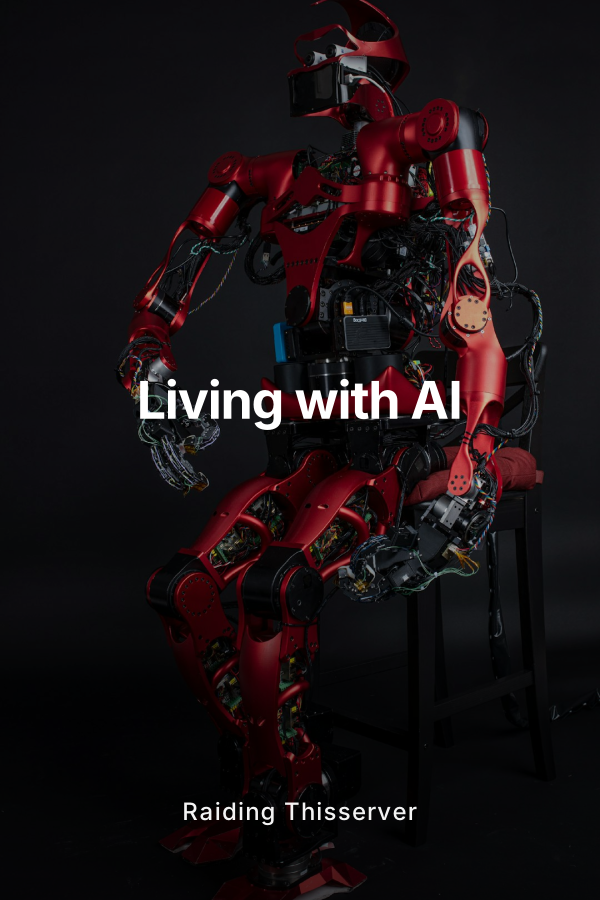
This book offers a clear, practical, and highly readable journey through the new world of artificial intelligence, written for everyday readers who may feel curious, excited, or uneasy about rapid technological change. It aims to help people understand what AI really is, how it already affects their lives, and how they can respond with confidence rather than confusion or fear, blending explanation, real life examples, and reflective questions to support both learning and critical thinking .
Chapter 1 introduces the reader to the idea of living with AI as a normal part of daily life rather than as distant science fiction. It explains in accessible language what AI is and is not, separating popular myths from grounded reality. The chapter traces, in brief and simple terms, how AI moved from a laboratory topic to something present in phones, homes, schools, and workplaces. Through recognizable everyday situations, it shows how often people already interact with AI without realizing it, such as when they search online, navigate with digital maps, or rely on automatic translation. This opening section frames AI as a set of human made tools that can be shaped, used, or misused, and invites the reader to see themselves as an active participant in this transformation instead of a passive observer.
Chapter 2 focuses on AI at work and in education, where its influence is rapidly expanding. For workers, it explores how AI tools can assist with writing, data analysis, scheduling, and communication, changing both routine tasks and expectations for productivity. It also addresses common worries about job loss, surveillance, and performance pressure, providing clear explanations of what current systems can realistically do and where human judgment and creativity remain essential. For students and teachers, the chapter discusses AI as both a learning aid and a potential source of shortcuts, explaining how it can help with study planning, explanation of complex topics, and creative exploration while also raising questions about originality and academic integrity. Readers encounter concrete scenarios and simple, actionable suggestions for experimenting with AI tools safely, ethically, and effectively.
Chapter 3 turns to home, family, and personal life, where AI shapes habits, relationships, and self understanding in quieter but profound ways. The chapter looks at recommendation systems behind social media feeds, streaming platforms, and shopping sites and explains how these systems learn from user behavior, often guiding attention and choices. It explores the emotional side of constant connection to AI supported devices, such as dependence on digital assistants or the comfort and risk of algorithm curated content that fits existing preferences. The chapter also addresses parenting in the age of AI, describing how families can talk with children and teenagers about privacy, screen time, creativity, and critical thinking. Throughout, it emphasizes that small, conscious choices about how and when to use AI can significantly affect well being, focus, and relationships.
Chapter 4 examines the wider social, ethical, and political questions raised by AI. It outlines, in plain terms, concerns about data privacy, bias in automated decisions, and the concentration of power among a few large technology providers. Without relying on technical jargon, it explains how AI systems are trained, why they can reflect or amplify human biases, and what this means for areas like hiring, lending, law enforcement, and access to information. The chapter describes emerging efforts to regulate AI and establish shared standards, while encouraging readers to see themselves as citizens with a voice in shaping these rules. Reflection prompts and short case style examples invite readers to consider what values they believe should guide AI use in their communities and societies.
Chapter 5 looks ahead to possible futures with AI and focuses on what individuals can actually do next. Rather than predicting a single future, it outlines several plausible directions AI development could take and what each would mean for work, education, democracy, and daily life. The chapter stresses the importance of lifelong learning, adaptability, and collaboration between humans and machines. It offers practical advice on building basic AI literacy, from understanding common terms to trying out beginner friendly tools in a deliberate way. The book concludes by urging readers to adopt a mindset of informed curiosity, balanced skepticism, and shared responsibility, recognizing that while no one person can control the direction of AI, many small decisions by ordinary people collectively help determine how this powerful set of tools will be woven into human life.