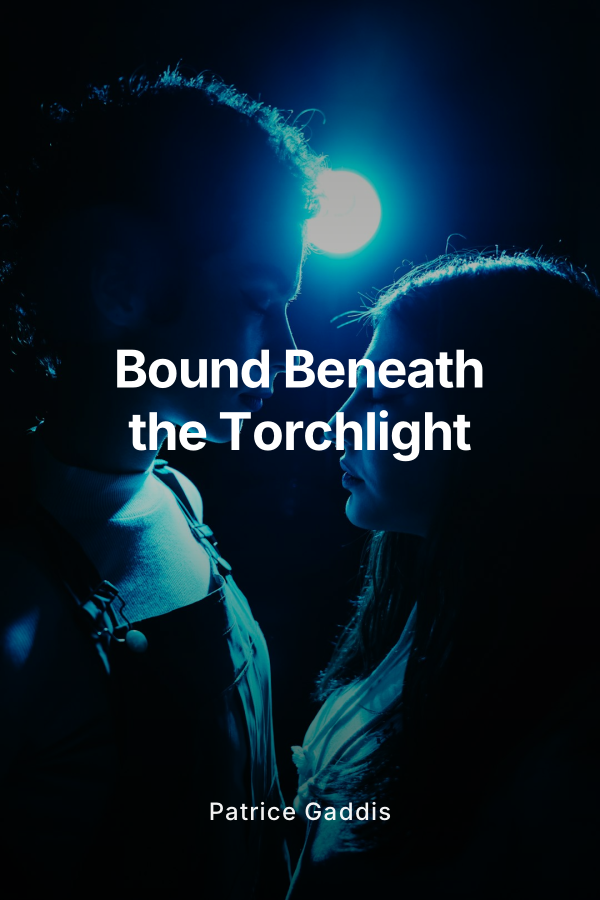
In a war that has stripped mercy down to a luxury, Harry Potter is summoned into the depths of Grimmauld Place with only one warning: the Order has captured a Death Eater who knows something vital. He expects strategy, urgency, and another necessary ugliness in a conflict already devouring everything good. He does not expect to walk into a torchlit dungeon and find Draco Malfoy chained to a table. From the first instant, the sight hits him like a physical blow, forcing into the open an obsession he has spent the past year trying not to name. Draco is still sharp tongued, vicious, and defiant toward everyone around him, but the moment his gaze lands on Harry, something in him softens. That single contrast becomes the spark that turns a grim wartime interrogation into something far more dangerous: a reckoning neither of them can hide from anymore.
The story unfolds in six exact, escalating movements, beginning with Harry’s horrified witness to what the Order is willing to become in the name of victory. Ron, openly cruel and eager to hurt Draco whether Ginny’s life hangs in the balance or not, pushes first. Kingsley stands hard and pragmatic beside him, convinced that anything is justified if it wins the war. Harry tries, at least aloud, to frame his objections as moral resistance. Inside, he knows the truth immediately: he cannot stand to see Draco hurt. That truth only intensifies as Draco endures pain with clenched jaw and hateful silence until a scream tears out of him and Harry snaps, stopping Ron before anyone else can understand why his restraint has broken so quickly. The summary charts Harry’s descent from denial into helpless protectiveness, showing how every cry, every flinch, and every involuntary plea from Draco strips away another layer of self deception.
When Harry is finally left alone with Draco, the darkness of the story shifts from public brutality to private tension. Draco refuses to betray what he knows, not out of loyalty to the cause around him, but because any truth he gives the Order could mean death for himself and for his mother. Harry believes him almost at once. That trust becomes the foundation of the romance. Draco, restrained and vulnerable but unmistakably in control of what he chooses to reveal, asks Harry to touch him. Harry’s hand on Draco’s cheek becomes the first real intimacy between them, charged with longing, shame, and almost unbearable restraint. The moment does not tip into a kiss yet. Instead, it hangs in the air as an almost confession, sharpened by the knowledge that anyone could walk back into the room at any second. This first private encounter establishes the emotional grammar of the entire book: Draco is cruel to the world, tender only with Harry; Harry is consumed by desire and horror in equal measure; and both of them are already standing at the edge of something irreversible.
The middle of the book deepens the psychological pressure. Ron and Kingsley return for a second round of interrogation, pushing harder, longer, and with less patience. Harry forces limits where he can, but even that compromise poisons him. He watches Draco’s body jerk under curses that fall just short of named torture, and every second of his own inaction curdles into guilt. Draco notices everything: Harry’s clenched fists, his jaw working, the way he flinches when pain lands. When Draco finally gasps, “Please, it hurts,” the line Harry has been trying to hold shatters again. The scene is not only about violence. It is about exposure. Draco, who has met everyone else with contempt, allows Harry to see what his suffering costs him. Harry, who has tried to hide his feelings under arguments about morality and war, can no longer pretend that his panic is abstract. In the intimate silence that follows, Draco gives voice to the truth Harry has been dreading and craving in equal measure: he has always loved him. The confession is vulnerable, trembling, and immediate. Harry says it back. Their first kiss lands in the dungeon like a defiance of everything around them, urgent and tender at once.
That kiss does not save them from what comes next. Instead, it raises the stakes. Ron and Kingsley return once more, this time with Blaise Zabini, who claims he can make Draco talk without pain. What follows becomes the most humiliating and devastating sequence in the summary: a prolonged scene of exposure, helplessness, and escalating loss of control. Blaise cuts Draco’s shirt open, exposing skin Harry cannot stop seeing, skin that trembles, flushes, and breaks into goosebumps under another man’s hands. The torment shifts from physical pain into another form of violation as Blaise uses old knowledge of Draco’s vulnerabilities to unravel him through relentless tickling across ribs, hips, and underarms. Draco, unbearably ticklish and still trying to resist, breaks into helpless laughter almost immediately, then spirals into shrieking, squirming, pleading desperation. His usual viciousness fractures under the force of involuntary reactions he cannot contain. For Harry, this is where horror, jealousy, helplessness, and possessive fury fuse completely. He is sickened not only by Draco’s suffering, but by the sight of him made defenseless, exposed, and forced to beg for someone else. Blaise’s mocking amusement and Ron’s satisfaction make the scene even more poisonous. The emotional climax comes when Draco, nearly broken and on the verge of giving away what he knows, gasps Harry’s name in a hoarse, laughter wrecked voice. That is the instant Harry finally snaps beyond reason.
The escape is sudden, impulsive, and absolute. Harry does not negotiate. He does not explain. He stuns Blaise, Ron, and Kingsley in one violent break of restraint, tears apart the very side he has been defending, frees Draco from the table at last, and Apparates them both back to Grimmauld. This act transforms the novel from dark dungeon romance into secret refuge story. The war remains outside, pressing at the edges, but Harry shuts it out with wards and will. The summary emphasizes that this is not a public rebellion, not yet. It is a private choosing. Harry chooses Draco over the Order’s methods, over strategy, over the version of himself that might have accepted necessity as an excuse. In doing so, he does not end the danger. He merely creates the first safe room either of them has had in a very long time.
The final movement of the book trades the cruelty of torchlight for the hush of a bedroom sealed against the world. Harry is visibly shaken after the escape, his hands unsteady as he helps Draco into bed and under the blankets. Draco is flushed, wrung out, and clinging, but his trust in Harry is immediate and complete. There is no lingering game between them now, only a soft and intimate unwinding of everything the dungeon forced into the open. Draco gently coaxes Harry toward the confession he is still too embarrassed to make: that seeing Blaise touch him, seeing him laugh and beg for someone else, filled Harry with jealousy so sharp it felt like panic. Harry tries to deny it at first, but Draco has already seen the truth on his face. When Harry finally admits it in a shy, quiet way, Draco reassures him with absolute clarity. Blaise never mattered. It was always Harry. That reassurance gives way to a second kiss, desperate at first from all they have nearly lost, then slower, deeper, and far more emotional. It becomes the kiss of two people who have crossed a line that cannot be uncrossed and do not want to go back.
What gives the summary its final power is not merely the romance, but the grounded promise at its close. Harry does not offer Draco a fantasy untouched by consequence. He offers something firmer: protection. After the kiss, in the privacy of bed and blankets, he promises that he will protect Draco and Narcissa. The vow is intimate, practical, and immediate, not a grand public declaration but a private covenant between two people who know exactly what the outside world will do to them if given the chance. Draco, who has spent the book pinned, interrogated, mocked, and nearly broken, is finally allowed to be soft without fear. Harry, who has spent the book shaking with horror at Draco’s helplessness, is finally able to hold him instead of merely witness him. The story closes not with speeches or strategy, but with tenderness: Draco clinging tightly to Harry under the blankets, Harry spooning him from behind, one last soft lingering kiss, and then sleep.
As a complete book concept, this is a dark romance built on contrast: war and refuge, cruelty and tenderness, public hatred and private devotion, helplessness and chosen protection. Its appeal lies in its intense psychological focus, especially through Harry’s third person limited point of view, where every scene is filtered through obsession, dread, jealousy, and aching love. The war remains mostly off page, which gives the summary a chamber piece intensity. The dungeon becomes a crucible where Harry’s buried feelings are forced into the light, while Grimmauld becomes a sealed sanctuary where those feelings can finally be spoken aloud. The emotional architecture is precise: shock, resistance, private trust, confession, humiliation, rupture, refuge, and vow. At its core, the book promises a love story forged in the ugliest possible circumstances and redeemed not by innocence, but by choice. Harry sees Draco at his most helpless and refuses to look away. Draco sees the violence in Harry’s protectiveness and answers it with trust. Together, they create a secret refuge in the middle of a war that has taught everyone else to mistake brutality for necessity.