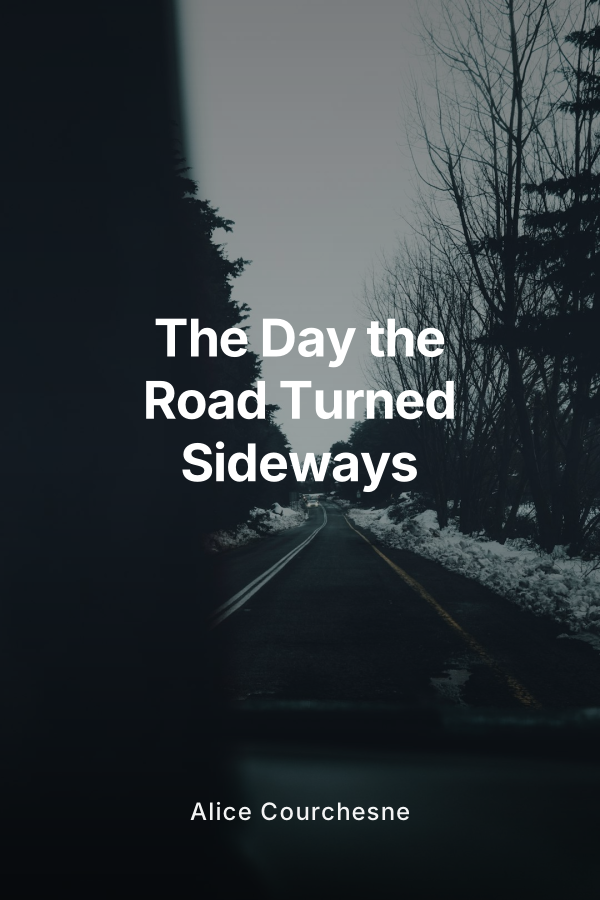
This book is a single unfolding memory, told by an older, steadier version of the narrator who looks back on one glittering day that should have been ordinary, maybe even perfect, and instead became a hinge in their life.
The story opens in quiet reflection. The narrator addresses the reader from the vantage point of hindsight, acknowledging how deceptively normal the morning felt. This older voice is not grand or distant. It is intimate, almost conversational, and gently self aware. It knows what is coming, yet it invites the reader into the day as it was lived, moment by moment, before everything went wrong. The framing makes clear that this is not only a story about an accident on a country road. It is about the fragile boundary between the future we think we are driving toward and the one that actually waits for us.
The first movement of the chapter follows the drive toward a long anticipated visit to a veterinary school and its VR gallery, a place that feels like a preview of the narrator’s imagined future. The car is a small, shared world, full of private rituals and hopeful talk. Pop songs pulse through the speakers, Taylor Swift threading through the morning like a soundtrack to a life that still seems wide open and safe. The older narrator remembers specific details, not to show off memory, but to prove how vividly that day imprinted itself: the color of the sky, the taste of rushed coffee, the way nervous excitement made every mile feel shorter.
Arriving on campus, the tone shifts to wonder. The veterinary school feels both historic and gleaming, the buildings old yet clearly renovated, glass and brick layered together. The narrator lingers on sensory contrasts. There is the clean institutional brightness of lecture halls and labs, and then, just beyond, the undeniable smell of manure drifting from the attached teaching farm. This mix of polish and grit mirrors the narrator’s growing realization that the dream of becoming a vet is not only about cuddling animals; it is about real bodies, real work, and real mess.
Inside the VR gallery, the narrator steps into simulated surgeries and barn calls, slipping on a headset that offers a curated future. The experience is thrilling and slightly unreal, an almost weightless kind of responsibility. Within the safe boundaries of the simulation, mistakes can be reset with a button. The older voice, looking back, draws a subtle line between that digital control and the lack of control that is waiting at the end of the day. It notes, with a touch of irony, how easy it was to believe that life could be managed the way a VR scenario can be rewound.
Throughout the visit, the suspense grows slowly and quietly, not through loud warnings but through small, almost dismissible moments. The narrator’s body does not feel quite right after an allergy flare, a lingering tightness under the surface that is easy to ignore when surrounded by new buildings and possible futures. Comments about the drive home drift through conversations, little jokes about the speed limit or the condition of the back roads that register only faintly at the time. The weather shifts in minor ways, light changing on the pavement, the air thickening in the late afternoon. None of it feels like a clear omen. The older narrator does not pretend that they saw disaster coming. Instead, they are honest about how ordinary the danger looked until it arrived.
As the day winds down, the story narrows again to the inside of the car. The visit is over. The brochure is folded in a lap. The farm’s smell lingers on clothes and skin, a reminder of where they have been and where, in theory, life is headed. The music starts up on the return trip, familiar Taylor Swift tracks filling the small space, a comforting repetition that makes the world outside the windows feel almost like a backdrop. Conversation rises and falls. There is laughter. There are shared glances that say, wordlessly, can you believe how good today was.
The suspense, by now, is almost unbearable for the reader, not because the writing shouts about it, but because the older narrator keeps gently reminding us that this is the last time these moments will ever be simple. The road itself becomes a character. It stretches ahead at 90 kilometers per hour, smooth and obedient, until in a breath it is not.
The accident sequence is the sharp pivot of the book yet it is described in a way that resists melodrama. There is no slow motion cinematic flourish, only the brutal clarity of remembered sensation. The car begins to skid. There is the sickening feeling of grip vanishing, of the world tilting sideways faster than thought. The narrator does not recall pain in the instant, only a flood of fear and animal instinct, muscles bunching tight, head snapping back and forth as the vehicle slides and finally comes to rest in the ditch, turned sideways against the earth. The soundscape contracts to seatbelt strain, the rattle of loose objects, the scrape of metal and gravel.
Time after the impact is fragmented. The chapter does not dwell clinically on injuries or logistics. Instead it follows the strange quiet that often follows terror. There is the bewildering realization that they are still alive and conscious, the inventory of limbs, the first words spoken into the shocked silence. The older narrator remembers particular details that might seem trivial to others yet are everything to them, like the pattern of the steering wheel against white knuckles or the way the air inside the car suddenly smelled different, as if the world outside had rushed in through invisible cracks.
Only after this stillness does the reflective voice fully step forward again. The book circles back to its beginning premise: a day that should have been straightforward, turned inside out by a single loss of control. The narrator considers how that moment in the ditch altered their sense of safety, their relationship to risk, and even their understanding of what it means to choose a path in life. Vet school is no longer just an abstract dream attached to glossy facilities and immersive tech. It is now entangled with the knowledge that every path, no matter how carefully planned, runs along the edge of uncertainty.
In its closing pages, the chapter threads together two timelines. In one, the younger self sits in the dark, tilted car, waiting for help, pulse racing yet oddly detached. In the other, the older self writes this memory, examining it years later, tracing how that single day shaped the person they became. The narrative does not offer a grand, tidy lesson. Instead it arrives at a quieter truth: that the meaning of an event is not locked into the moment it happens. It unfolds over years, in the choices made afterward, in the way we tell and retell the story to ourselves.
The final image returns to a small sensory detail that appeared early in the day, creating a subtle echo that closes the loop. It might be the smell of manure from the teaching farm that once only meant possibility, now carrying a dual weight of hope and fragility. Or the remembered chorus of a song that played before the crash, now forever linked not to chart rankings or celebrity but to the sound of tires letting go of the road. The book ends with a single, grounded realization expressed in the narrator’s own voice: that life is measured not only by the days when everything goes right, but by the ones when the road turns sideways and we somehow walk away.