This book follows an adult narrator looking back on the summer of 1967, when they were seven years old and spending time on their grandparents’ Wisconsin farm. Through vivid, short scenes, the story captures a child’s world of warmth, routine, and simple adventure, then shows how one sudden accident reshapes that world forever.
The first chapters linger in the sensory richness of visits to Grandma’s house: the comforting smells of her kitchen, where meals and desserts simmer and bake all day; the calm ease of Grandma moving through her work; and the sleepy excitement of sleepovers in a drafty upstairs bedroom where the wind whistles through the windowpanes and feeds a seven year old’s fear of ghosts. Farm life appears as both ordinary and magical, seen from low to the ground: dusty yards, clattering pans, the creak of barn doors, and the quiet presence of a hardworking Grandpa who mostly keeps to his chores and only steps in sharply when the children get too close to danger, such as the bull in its stall.
Across these brief memories, Grandpa slowly comes into focus as a reserved, steady man whose affection shows in small, practical ways. He pulls the grandchildren in a wagon behind the riding lawn mower, offers them glimpses of the wider farm, and occasionally scolds them when they test the limits of safety. Grandma and Grandpa’s home becomes the center of security and tradition, a place marked by favorite dishes like her meatballs and “cracker pie,” by gentle rules, and by the comforting rhythm of days spent between house, yard, and barn.
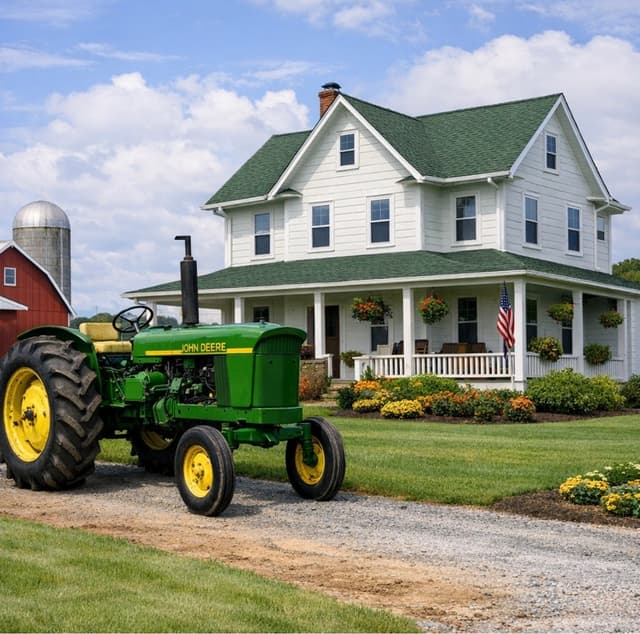
This sense of safety is shattered in a single, life altering moment. One ordinary day, while the children are playing down the street in their neighborhood, their father suddenly appears and tells them to go home at once. In the kitchen, they find their mother crying as she delivers the words that divide “before” from “after” in the narrator’s memory: Grandpa has died. The details emerge in fragments understood only partly by a child and later reconsidered by the adult narrator. Grandpa had driven a tractor up to the meadow to bring in the cows, likely choosing it simply because it had enough fuel, without pausing to think of the machine as inherently dangerous. Somewhere alone in that field, he hit a stump, the tractor flipped, and it rolled over on him, crushing him where no one could help.
The accident and its aftermath form the emotional core of the book. The narrative stays close to the seven year old’s confusion, fear, and stunned realization that someone so solid can vanish in an instant. The meadow where Grandpa died becomes a distant, half imagined place of both mystery and dread. Scenes of adults whispering, phone calls, and hurrying back and forth are seen and only partly understood. The narrator gives just a few brief adult reflections, acknowledging later awareness of how casually everyone once treated tractors and farm life, and how fragile that everyday trust in routine actually was.
From there, the story follows the family as they move through the strange days between death and funeral. Grandma, once calm and relaxed, is transformed by grief. The narrator sees it in her posture, her voice, and especially in the way she begins to worry constantly about the grandchildren’s safety. Where the farm once felt like a playground, it now bristles with invisible dangers. Even simple activities seem to carry new weight, yet the house still smells like her cooking, and she fills the silence with stories about Grandpa, trying to hold him in the world through memory.
The final chapter centers on the funeral, described through the eyes of the seven year old. The church, the casket, and the faces of adults are captured in sharp, bewildered images. The most haunting moment comes when Grandma looks at her husband’s body and says how nice he looks, before quietly noting the bruises on his face and hands. That mixture of love, denial, and stark truth becomes the book’s lasting impression of grief as a child first encounters it. A few spare adult comments frame the scene, but the story ends mainly in the child’s point of view, standing in a world that suddenly feels larger, more dangerous, and forever marked by the summer Grandpa died.
Across its five chapters, this book offers a short, focused portrait of one family’s loss and the way a single farm accident can echo through generations. It speaks to readers who grew up on farms or in close knit families, as well as to anyone who has felt the way childhood memories crystallize around one unforgettable season. At its heart, it is a quiet testament to grandparents, to the ordinary holiness of their kitchens and fields, and to the way love, fear, and memory intertwine in a child’s first confrontation with mortality.