Erin used to measure life in goals scored and grass stains. In Year 6, every break-time belonged to headers and volleys, and the playground hierarchy was simple: if you could play, you belonged. As the “Queen of the Pitch,” she was sure that starting secondary school would only mean bigger goals, better kits and maybe a County Cup medal with her name on it.
Then summer happened.
While Erin sweated through double sessions at the local football camp, something slipped through everyone else’s phones: a TikTok “social virus” that turned her friends from football fanatics into “clean girl” clones. By September, the girls who once slid tackled beside her turned up in slicked-back buns, glossy lips and matching pastel hoodies, quoting influencers and clutching skincare from Sephora and Next like trophies. The pitch was out. Glow drops were in. The new Year 7 reality belonged to Jess and her “Sephora Squad,” a glittering, ruthless mini cult where social status hinged on filters, clout and how perfectly you could frame a “get ready with me.”
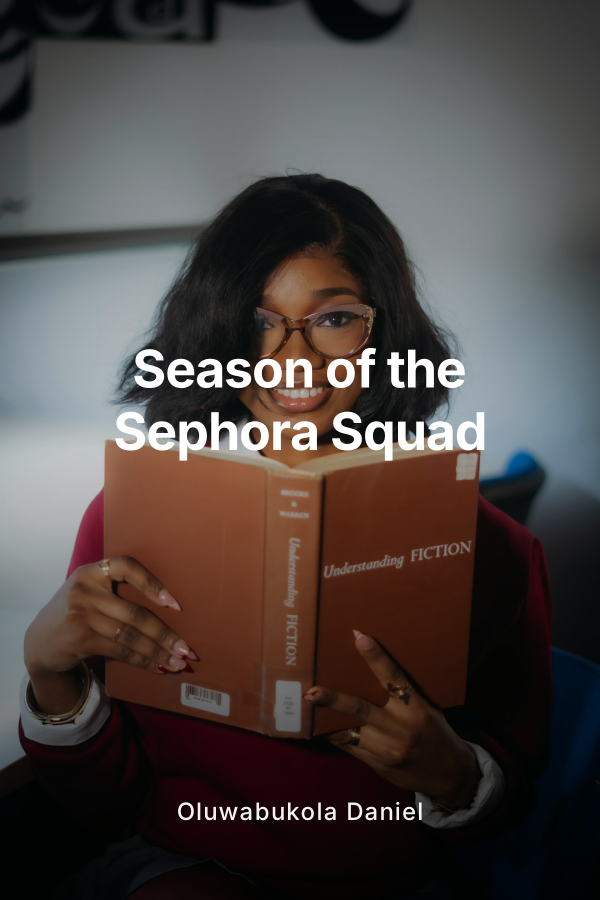
“Season of the Sephora Squad” is a funny, high-energy diary-style thriller for readers aged 9 to 13 who live half on the pitch and half on their phones. Written in Erin’s chaotic, brutally honest voice, it tracks her journey from SATs week to the end of Year 7 as she faces a new kind of opponent. The stakes are not just about winning football matches any more. They are about surviving a weaponised friendship group, viral rumours and a dark web of fake accounts and dares that threaten to wreck her team, her reputation and the biggest opportunity of her life.
Across two tightly plotted parts, the book blends sharp comedy with gripping suspense. Each diary entry uses a “play‑by‑play” breakdown of key scenes, secret intel sidebars and a “social heatmap” that shows who is in the Squad and who has been quietly exiled, as if secondary school is both a match and a spy mission. Full-time stats at the end of entries track the shifting score between Erin and the Sephora cult, turning everyday drama in the canteen and changing rooms into high-stakes episodes in an ongoing season.
At the heart of the story is a clear clash of aesthetics and values. Jess, with her perfect eyeliner wings and polished routines, represents the clean, curated life TikTok promises. Erin, still in muddy boots and oversized football hoodies, represents the reality of effort, sweat and genuine joy. Their conflict becomes the central battle of Year 7 and frames the wider questions the book invites readers to explore. What happens when your whole year group seems to change overnight and you are the only one who did not get the memo? How do you stay loyal to the version of yourself you like when everyone tells you it is “not cute anymore”?
Erin’s emotional journey starts with confusion and disbelief. Early in Year 7, she staggers through corridors where old teammates scroll silently, planning content instead of passes. The pitch is almost empty; the canteen is alive with whispery product hauls and whispered rankings of who looked “aesthetic” enough to sit with the Squad at lunch. Her family, warm but clueless, only half understand the new rules. To them, a phone is a phone and football is football. To Erin, it becomes clear that football can now be canceled by a single viral clip, and a phone can quietly ruin a life before anyone has time to pull the plug.
This new social landscape is kept deliberately high-stakes. The Sephora Squad does not just post harmless outfit checks. They run trends like missions. There are secret dares filmed across school, “funny” pranks in PE that are really humiliations, and private chats where fake screenshots and twisted stories get shaped into new “truths.” When a shadowy fake account begins exposing other students’ secrets, Erin realises the thrill of clout can turn poisonous very fast. She is forced to ask what she is willing to risk to protect her place on the team and the few friendships she still trusts.
Complicating everything is Erin’s own unexpected rise as an online voice. What begins as a private vent, dancing along to an “I’m not cute anymore” audio in her messy bedroom after training, slowly mutates into a sharp, viral anti‑Sephora presence. At first, her content is chaotic and funny. She jokes about mud versus makeup, stitches Squad videos with spoofs that show the reality just outside their perfectly cropped frames, and dances in full kit instead of co ord sets. The tone is comedy and defiance, a loud refusal to apologise for grass stains.
When her older sibling steps in, things escalate. Savvy, slightly older and much more online literate, they start feeding Erin information about how certain brands aim their products and messaging at kids, tapping into insecurities to sell them an endless carousel of “must‑haves.” Together, they investigate the gap between the Squad’s “clean girl” persona and the less pretty corporate tactics behind it. Erin learns how companies rely on clout hungry children to promote skincare routines they do not need, while downplaying potential harms and pushing obsessive product use as self care.
As Erin’s posts evolve from jokes to exposés, she takes a bigger and riskier stand. She calls out how certain skincare and fashion chains create a sense of panic about being “behind” on trends, celebrate overconsumption and quietly reward the most extreme content. She exposes the fakery of filters and staged routines right alongside the ugly side of influencer relationships. As her videos begin to resonate, she moves from anonymous frustration to a public, recognisable figure. Her account, once a tiny private corner of the internet, becomes a lightning rod watched closely by students, brands and, increasingly, adults who are not sure whether to praise or punish her.
This new activism comes at a price. Jess and her lieutenants react with calculated cruelty. They launch their own countermoves from inside the Squad: undermining Erin in subtle ways at first, then escalating into brutal secrets and lies. One false narrative, amplified by a forged screenshot and a carefully clipped video, threatens to detonate Erin’s reputation completely. The exact betrayal lands in the most public, humiliating way possible, at the worst point in the football calendar. The sabotage spills onto the pitch, shaking Erin’s focus during crucial matches and threatening her place in the County Cup run.
However, this is not a story of a girl swallowed by online cruelty. It is a story of stubborn courage. Throughout the chaos, Erin has tiny glimmers of support: a loyal friend who never quite abandoned football, an unlikely ally from another social group, a teammate who pretends to be all about clout but secretly still trains in their garden. With their quiet backing, Erin chooses a line she will never cross. She refuses to film anyone without consent, even when offered an easy chance to humiliate a Squad member in revenge. That moral boundary becomes a crucial thread. In a world where everything feels recordable and nothing is sacred, Erin holds on to a core idea: some things are not content.
Against this background, the “Football Revolution” slowly gathers momentum. Erin starts lunchtime kickabouts that welcome anyone fed up with sitting on cold steps filming “outfit of the day” videos. She chips away at the idea that you must pick a side forever between sport and aesthetic. At the same time, her online presence nudges other students to quietly question the relentless push of brand driven trends. The rebellion is both on the pitch and on screens. Although the Squad still dominates the visible hierarchy, cracks appear. A few girls show up to training bare faced. A boy praised for his “aura” in a TikTok clip also scores the winning goal for Erin’s mixed squad. The school’s social order begins to wobble.
The climax of the book comes as the County Cup and scouting season collide with Erin’s most daring online stand. With whispers of scouts in the stands and her future in football hanging in the balance, Erin is invited to collaborate with the Sephora Squad on a big “redeeming” video. Accepting would mean instant mass approval and maybe brand deals. Refusing would mark her as public enemy number one. The school, weary of drama, subtly pressures her to keep the peace and “be sensible.” Jess frames the offer as a truce, but the cost would be Erin’s integrity.
Erin’s answer is not words but an act. She goes live with a “get ready with me” that begins like every other viral routine. Ring light on. Camera angled. Products lined up. The Squad watches, ready to judge. Instead of applying the carefully arranged skincare, Erin talks honestly about what football has taught her about effort, failure and real confidence. One by one, she drops each item into a bin bag, including coveted free PR products and borrowed items pushed on her as “too expensive to waste.” The stunt is bold, visual and unforgivable in the eyes of the Squad. It is also the moment that sends her account into the millions, attracting a storm of praise, fury, legal murmurs and breathless gossip all at once.
By the closing pages, Erin has fully rejected the Sephora scene on her own terms. She is no longer trying to bargain for a middle ground where she can keep her studs and still be Squad adjacent. She is unapologetically “mud and sweat,” wearing her kit and scars like armour. Her social position at school remains complicated. She has lost some people who mattered, gained a small but fiercely loyal circle, and quietly won respect from a surprising portion of the year who are tired of pretending to be perfect. Online, she has become a controversial symbol. Some call her brave; others call her dangerous. Adult institutions and brands begin to circle, unsure whether she is an opportunity or a threat.
The book ends not with tidy closure, but with a carefully balanced cliffhanger that keeps both football and social media stakes alive. In the final scene, Erin is on the edge of the County Cup’s defining moment, aware there are scouts in the crowd and knowing that her latest viral video has triggered serious pushback from named companies and school authorities alike. She can feel the weight of both futures pressing on her shoulders: a path where she becomes a celebrated player and another where she continues as a whistleblower challenging the systems that exploit kids’ hunger for approval. The whistle blows, the ball is placed, and the last image freezes between her boot and the goal, with notifications lighting up her screen on the bench behind her.
“Season of the Sephora Squad” is ultimately a story about authenticity and courage in a world that tries to turn everything into an aesthetic. It invites readers to question who benefits when friendship becomes content and childhood gets remodelled as a brand. Without veering into adult territory, it shows how rumours, fake accounts and curated routines can feel as serious and dangerous as any real life bullying. Yet it also offers hope: that refusing to perform, choosing true friends over followers and standing firm on your own muddy ground can be its own kind of main character energy.
Across its two parts, the book promises a full season in Erin’s life, from the first shock of discovering that everyone has “switched teams” over summer, to the final decision to lead her own revolution on and off the pitch. Packed with humour, suspense and sharp social observation, it speaks directly to young readers who can feel the pull of trends and the pressure to polish themselves for the camera, yet still dream of something messier, braver and far more real.