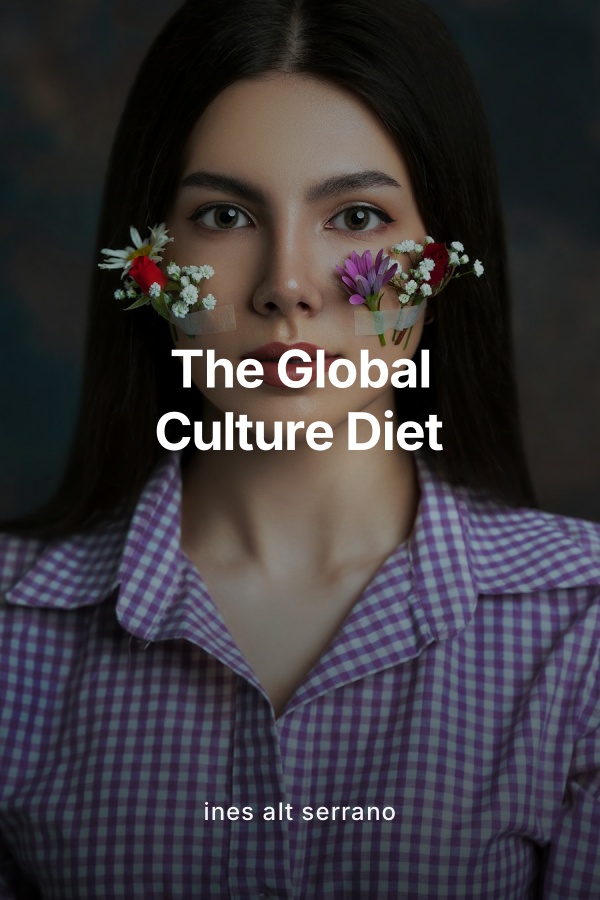
This book is a practical, motivational guide that helps any reader design a “global culture diet” suited to a flexible schedule and an open, curious mind. It shows how to build a simple, sustainable daily and weekly routine of cultural inputs from around the world so that, over time, you think more broadly, empathize more deeply, and feel more connected to a global community.
Instead of treating culture as a luxury or a specialist hobby, The Global Culture Diet explains how to weave films, music, podcasts, essays, visual art, short fiction, and everyday conversations from many regions into the margins of a busy life. It is written for a truly general audience: people who might binge familiar shows, scroll social media by default, or feel “stuck” in one national or linguistic bubble, yet sense they are missing a richer, wider world.
The book centers on three core ideas. First, “global culture” should be genuinely global, with intentional exposure to multiple regions and perspectives instead of a narrow list of “international hits.” Second, a cultural practice must respect real life constraints, which is why every tool in the book is designed for flexible schedules and different energy levels. Third, transformation comes from small, repeated choices, not from one grand trip or a single big course.
Across five chapters, the book moves from mindset to method, then to practice, depth, and long term integration:
-
Why Your Mind Needs a Global Culture Diet
This chapter argues that what you consume daily quietly shapes how you see people, possibilities, and yourself. It explains in accessible language how repeated exposure to a limited cultural feed can narrow empathy and imagination, and how a broader “diet” can expand your mental models, reduce stereotypes, and make you more adaptable in work, relationships, and creative life. The chapter offers relatable profiles of different starting points, such as the person who mainly watches familiar shows from one country, the news addict, the social media scroller, and the already curious but unstructured explorer, helping readers locate themselves without judgment. It ends by introducing the central promise of the book: with as little as 20 to 30 minutes a day, you can fundamentally change the way you relate to the world. -
Designing Your Personal Cultural Menu
Here the book becomes highly practical. Readers are guided to choose a default daily time budget and then customize three levels of engagement: “light,” “standard,” and “deep.” The chapter introduces the concept of a “cultural menu” instead of a rigid schedule, with clear categories such as listen, watch, read, explore, and connect. Within each category, examples show how to pick items from at least four to six world regions, balancing mainstream and lesser known voices. Readers learn how to account for language barriers, how to use subtitles and translations wisely, and how to avoid turning the practice into homework. Templates and prompts help them build a weekly menu that fits different moods and energy levels rather than fighting them. -
Flexible Routines for Real Lives
This chapter focuses on integrating the global culture diet into a busy, unpredictable life. It offers practical patterns like “micro mornings” of 10 minute audio from another region, “commute companions” such as international podcasts or music playlists, and “wind down windows” with short stories or visual arts, all tailored for people with fluctuating schedules. It explains how to create backup plans for low energy days, how to handle interruptions without guilt, and how to use spare pockets of time in waiting rooms, lunch breaks, or lineups. The reader learns to build systems, such as preloaded watchlists and reading queues, so that accessing global culture becomes frictionless and enjoyable instead of another task. -
From Consuming to Connecting
Once the basic routine is established, this chapter shows how to go beyond passive consumption. It teaches readers simple reflection practices like one sentence takeaways, “three surprises,” and “one question I now have,” turning every cultural encounter into a small learning moment without feeling like school. It suggests gentle ways to share discoveries with friends, family, or colleagues, starting conversations that respect differences rather than turn into debates. The chapter also introduces optional “challenges,” such as focusing on one country per week or pairing media from two regions on the same theme, for readers who want a bit more structure or play. -
Becoming a Lifelong Global Citizen
The final chapter zooms out. It explores how a sustained global culture diet can reshape your identity over months and years, making you feel at home in more places, more comfortable with ambiguity, and more skilled at cross cultural communication. It offers guidance on how to periodically refresh and rebalance your cultural menu, how to go deeper into particular regions without losing breadth, and how to integrate travel, language learning, or community engagement if and when life allows. Readers are encouraged to see themselves not as experts but as ongoing learners, contributing in small but meaningful ways to a more curious, less fearful, and more connected world.
Throughout the book, the tone is welcoming, practical, and motivational. Each chapter closes with concise action steps, reflection questions, and concrete examples so that readers never feel lost or overwhelmed. The Global Culture Diet ultimately positions cultural exploration not as an optional extra, but as a realistic, rewarding daily habit that any person anywhere can adapt to their own flexible schedule and evolving life.