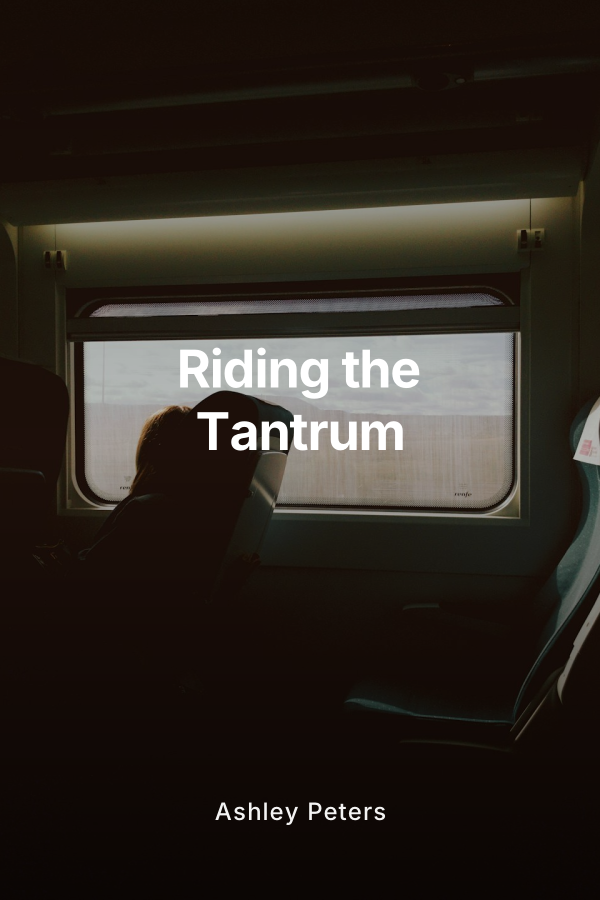
This book is a stripped down, unfiltered memoir of a young rider who grows up angry, lonely, and bruised by life long before he ever hits the dirt of a racetrack. It follows his journey from a kid who never quite fit in to a jockey learning to survive in a world built on speed, pain, and fragile glory. At the heart of it all is Tantrum, the horse who nearly kills him before teaching him how to live.
The story opens not with a polished, heroic image but with the truth: a small, determined rider hanging on for dear life while a high-strung colt named Tantrum tears across the track. That first ride is ugly. The horse just wants to run, the rider is still learning the gallop, and more than once he hits the ground, breath knocked out and pride shattered, praying nothing is broken. He never fractures a bone, but something more important cracks open instead. Each fall, each scramble back into the saddle starts to weld a bond between boy and horse that no one else can really see. He gets better, he advances quickly, and that progress becomes a quiet rebellion against every person who ever doubted he could be anything at all .
Underneath the racetrack scenes runs a deeper current from his childhood. This is not a nostalgic, pretty past. It is bullying that leaves emotional scars. Hospital lights that feel colder than the needles. Silent dinners where no one knows what to do with his anger. He is the kid who laughs too loud, acts too tough, and always seems one comment away from a fight. The book does not dodge the worst of it. It sits with the hospital memories, the humiliation of being singled out, the nights when he stares at the ceiling wondering if he will ever be more than a screwup with a quick temper.
Riding becomes his only real language. In the irons, he can say things with his hands, his legs, his balance that he never manages to put into words. His rage turns into focus. His fear funnels into instinct. But the same volatility that makes him fearless on a horse makes a mess of everything else. He lashes out at people who care. He says things he cannot take back to other riders, to his mother, to friends who were trying to help. The book is honest about those bad choices, not to glamorize them, but to show how easy it is to become the villain in your own story while you are busy blaming everyone else.
Tantrum arrives in his life as a kind of mirror. The colt has the same wild edge: too fast, too keyed up, too close to imploding whenever pressure builds. Early rides with Tantrum leave him in the dirt, humiliated, yet something in the horse pulls him back again and again. The training scenes feel intimate and physical. Dirt in the teeth, leather cutting into palms, the hot stink of sweat from a horse that does not yet trust him. Slowly, the rider learns to quiet his own chaos so he can settle Tantrum’s. It is never pretty, but the small breakthroughs feel huge. A calmer gallop. A clean break. One perfect work in the morning when they move like they share a single nervous system. That is when the dream that once seemed ridiculous starts to feel terrifyingly possible: the Kentucky Derby.
The Derby itself is not just a race in this book. It is a pressure cooker. By the time they reach that starting gate together, everyone around them has an opinion. Trainers, owners, rival jockeys, hangers-on in the barns. Some are supportive. Plenty are jealous. Most are waiting to see if this kid who rose too fast will finally crack. The narrative zooms in close. The crowd is a roar in his skull. His silks stick to his back with cold sweat. Tantrum dances underneath him, quivering with the desire to bolt. For a brief, dangerous moment, all his childhood fears crash into his chest: what if they are right about him, what if he is a fraud, what if this is the day he proves that he was never meant to be here.
Then the gates snap open and everything else drops away.
The race is told from the inside out. The burn in his legs. The flash of another horse’s shoulder beside him. The split-second decision to dive for a seam that might not be there. The memory of every fall they have taken together, blending with the trust that this time, somehow, they will stay upright. When they cross the wire, the victory feels less like a coronation and more like a stunned, disbelieving exhale. They actually did it. The kid no one bet on and the horse everyone thought was too hot to handle just won the most famous race in the world.
But the Derby win is only the midpoint of the emotional arc, not the end.
The book refuses the easy fairytale. In the aftermath, the rider learns how quickly people’s behavior changes once they smell success. The same faces that once ignored him now want photos, interviews, handshakes. Media requests stack up. Sponsors come calling. Old rivals turn polite, then cold again when they learn he will not play the game their way. Jealousy, which always simmered in the background, boils over. The pressure to keep winning suffocates. Suddenly every ride is not just a race, it is a test of whether he deserves that one lightning strike of glory.
The attention also drives a wedge into his personal life. Family members who once brushed off his riding are proud, but their pride can come with strings. Expectations. Demands. Resentments that had been buried begin to surface. Some relationships grow closer under the new spotlight. Others fracture in ways that may never fully heal. The memoir does not pretend that success automatically fixes old wounds. In some cases, it sharpens them.
As the story unfolds beyond the Derby, the rider starts to question what winning actually means. The trophy on the shelf does not silence the voice in his head that says he is still that angry, lonely kid. The applause fades between races. The sleepless nights remain. When he rides Tantrum again, the stakes feel impossibly high. He has more to lose now, and that fear threatens the bond that carried them so far. It takes brutal honesty for him to admit that he has been using racing to outrun feelings that never went away.
What gives the book its unique power is the way it circles back to the simple desire announced at the start: he wants the reader to really understand where he is coming from . That means putting all of it on the page. The ugly fights. The moments of quiet kindness from unexpected people. The nights in hospital corridors as a kid wondering if pain was just going to be his whole life. The split seconds of pure joy galloping in the dark before dawn. The mistakes that still make him wince. The stubborn, almost irrational love he carries for a horse named Tantrum who changed everything by refusing to be easy.
By the end, Riding the Tantrum is not just a story about a boy and a horse who make it to the Kentucky Derby. It is a story about what it costs to turn raw hurt into fuel, about who you become when the world finally looks at you, and about whether you can forgive yourself for all the versions of you that came before the win. It offers no neat answers, only a close up portrait of a life lived at a gallop, where the only real victory is learning to stay in the saddle with your eyes wide open.