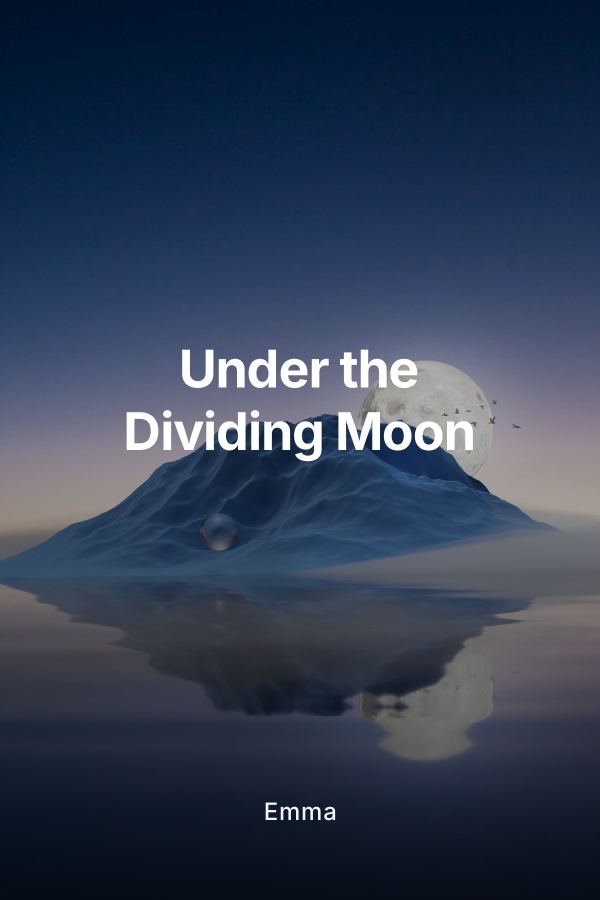
In a kingdom shaped by old blood oaths, shadowed forests, and moonlit rites, two ancient families have spent generations at war, each blaming the other for betrayals so old that no one alive remembers where the truth ends and the hatred begins. Their feud has poisoned courts, villages, and children alike, passing grief from parent to child until hostility feels holier than mercy. At the center of this dark inheritance stand two teenage heirs, born to carry the weight of names they did not choose. They are raised to distrust, trained to defend, and expected to hate. Yet both secretly long for the same impossible thing: peace between their families, and an end to the violence that has defined their world
The novel follows these two heirs as enemies first by duty, then by habit, and finally by fear of what it would mean to see each other clearly. Each has grown up on stories that paint the other family as monsters. Every lesson, every warning, every scar confirms that closeness is dangerous. Their first encounters are full of tension, suspicion, and sharp defiance. They challenge each other with words, with pride, and with the painful certainty that kindness from the other side must be a trap. Yet beneath their anger is a strange recognition. Each sees in the other the same exhaustion, the same loneliness, and the same quiet refusal to believe that endless bloodshed is noble. What begins as rivalry slowly deepens into fascination, and that fascination becomes the most dangerous secret either of them has ever kept.
One of the heirs carries a feared and rare power: lunar magic that gathers in the hands and responds to moonlight with terrifying force. This magic is not beautiful in any easy way. It is unstable, ancient, and bound to emotion. It can wound, expose hidden things, and unleash destruction when grief, rage, or terror break through control. It makes touch intimate and frightening at once. The heir who bears it has spent years treating their own body like a weapon that might betray them. Their hands are both a curse and a symbol of inheritance, proof that they were born into a destiny darker than anyone admits. Others covet the power, fear it, or seek to use it, but few understand the cost of carrying it. The magic isolates its wielder, turning even tenderness into risk and making every close connection feel like a possible disaster
As the story unfolds, the dark magical world around them reveals itself to be steeped not only in open conflict but in hidden manipulation. Murmurs spread through noble halls and ruined sanctuaries. Loyal servants disappear. Old records vanish. Assassinations are disguised as accidents. Visions and false omens are planted where fear can do the most damage. The two heirs begin to suspect that the war between their families did not survive for generations by accident. Someone has been feeding it, shaping it, and carefully protecting the hatred that keeps both houses divided. The real villains are not merely those who strike from the shadows, but those who have learned how to govern hearts through grief, pride, and inherited lies. The feud itself has become a weapon, and both families have been its victims as much as its servants
The turning point of the novel comes when the heirs are forced into reluctant cooperation after uncovering evidence that the history they were taught is incomplete. A hidden trail of secrets suggests that the violence between their houses was deliberately manipulated by powerful figures who benefited from keeping them at war. This revelation does not erase the pain between them. It makes it more complicated. They must decide whether truth is enough to overcome generations of buried rage, and whether trust can survive in a world where every alliance might be staged. Their shared desire for peace, once private and fragile, becomes the foundation for an uneasy partnership. They begin meeting in secret, first to exchange information, then to protect one another, and finally because the only place either feels truly seen is in the presence of the person they were taught to despise.
The romance grows through danger, restraint, and emotional honesty rather than simple attraction. Every step toward closeness costs them something. A conversation in a ruined chapel risks treason. A hand held in moonlight risks magical catastrophe. A confession risks the collapse of everything their families expect of them. Their bond is shaped by stolen moments, guarded vulnerability, and the slow, devastating realization that love can feel most real when the world gives it no permission to exist. Because the lunar magic is bound to touch and emotion, intimacy in the story becomes charged on multiple levels. A brush of fingers can reveal fear, sorrow, memory, or desire. Tenderness is never casual. It is sacred, frightening, and transformative. The emotional core of the novel rests on this contradiction: the same force that can destroy them becomes the force that allows them to know each other more deeply than anyone else ever has.
At the same time, the book remains rooted in the tense pleasures of enemies to lovers. The heirs challenge each other constantly. They provoke, misread, defend, and wound. They know exactly how to strike at each other’s pride because they are mirrors in the ways that matter most. Both are burdened by legacy. Both are starved for gentleness. Both are trying to be loyal to families that demand emotional self-erasure in exchange for honor. Their growing affection emerges not from sudden softness but from witnessing each other’s courage, restraint, and grief. They fall in love because each sees the goodness the world has tried to crush in the other. In a story filled with dark magic and dangerous secrets, love becomes not a distraction from the plot but the bravest act in it.
The villains operate on both intimate and political levels. They are the architects of division, the ones who understand that if the heirs ever unite, the structures built on hatred will begin to collapse. These antagonists may wear the faces of trusted advisers, revered elders, or guardians of family tradition, but their true power lies in manipulation. They exploit old tragedies, forge false evidence, and turn vulnerable people into instruments of fear. Their goal is not only to preserve conflict, but to control the future through it. The two heirs, as symbols of possible reconciliation, become threats to that design. This makes the romance inseparable from the central conflict. To choose each other is to challenge an entire system of power. To seek peace is to place themselves in direct opposition to those who have engineered generations of suffering
The tone of the novel is dark, lush, and emotionally intense, crafted for teen readers who want fantasy rich with danger, longing, and moral complexity. The world is filled with moonlit corridors, cursed heirlooms, forbidden archives, night rituals, and landscapes that seem to remember every sorrow committed upon them. Yet the darkness never exists for spectacle alone. It deepens the emotional stakes, showing how easily fear becomes tradition and how difficult it is to imagine a kinder future when cruelty has been normalized for generations. Against this atmosphere, the romance shines with aching brightness. Every small act of trust feels monumental. Every truth spoken aloud feels like rebellion.
By the climax, the heirs must confront not only the people who manipulated their families, but the wounds those lies created inside themselves. They are forced to choose between obedience and truth, between inherited hatred and a future no one has prepared them to build. The lunar magic reaches its most dangerous form as hidden histories come to light and the forces behind the feud make their final move. The power in the heir’s hands, once feared as a curse, becomes central to exposing what was buried and severing the hold the past has maintained over both bloodlines. But victory is not measured only in defeating villains. It is measured in whether the heirs can survive their own fear of vulnerability, claim love without shame, and offer peace to people taught to reject it.
Under the Dividing Moon is ultimately a story about what happens when two young people refuse to become the weapons their families made them to be. It is a sweeping romantic fantasy about inherited violence, dangerous magic, and the courage it takes to reach for tenderness in a world that rewards cruelty. At its heart, it promises an emotional journey in which longing becomes alliance, alliance becomes trust, and trust becomes a love strong enough to challenge history itself. Through enemies to lovers tension, dark magical secrets, and the haunting force of lunar power, the novel tells a story of two heirs who discover that peace is not weakness, love is not surrender, and the truest rebellion may be choosing each other when everything around them was designed to keep them apart