Chapter One Summary
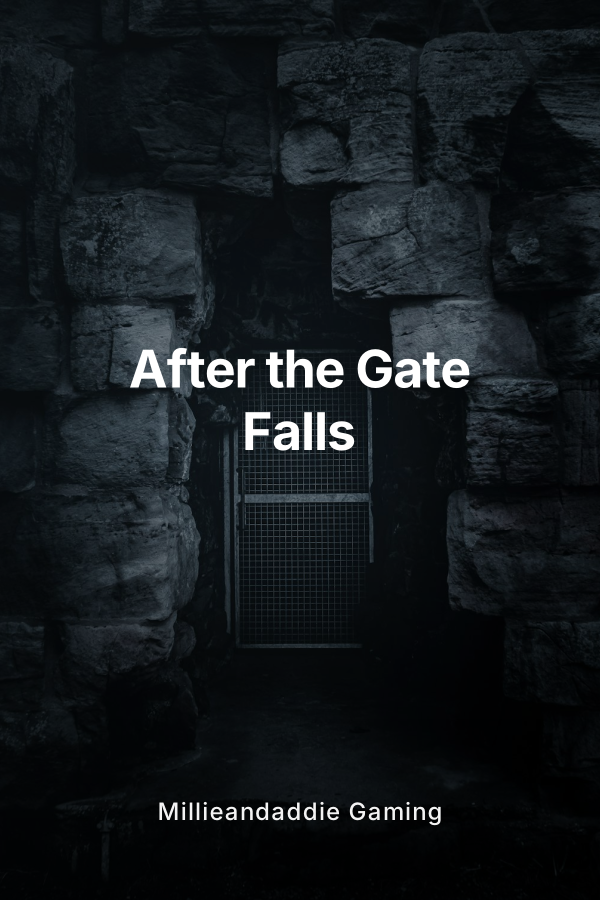
Sally goes to the mall for something small, almost forgettable: a white tank top she has been thinking about for weeks. That tiny desire is what makes the horror work. She is not chasing danger. She is not reckless. She is doing something normal, something easy, something millions of people do without thinking. That is what makes the trap feel so cruel. The store is open, but wrong from the moment she enters. The music sounds far away. The shelves feel stripped clean. A bored employee points her toward the back, then vanishes. When Sally turns to leave, the metal gate is already coming down.
From there, the story tightens like a noose.
A phone appears on the counter. It rings from an unknown number. The voice on the other end does not explain. It only warns. Run. That single message changes the emotional temperature of the novel. The store is no longer eerie. It is active. A thing has noticed her. A thing is already moving around her. Sally hears footsteps where no one should be. Curtains shift. A hidden room behind a mirror reveals security footage that should not exist and cannot be real. On the screen, two versions of Sally occupy the same moment. One stays near the counter. The other walks deeper into the store. Then the second Sally turns toward the camera and smiles, as if she knows she is being watched.
That is the first true fracture in reality, and the book uses it well. Fear becomes suspicion. Suspicion becomes a puzzle. Sally is not only trapped in a locked store. She is trapped in an environment that can duplicate presence, alter sequence, and erase certainty.
The next escalation comes through Maddie, a contact who should not be able to reach her and yet does. The messages are fragmented, desperate, and far more useful than any adult authority in a horror story ever is. Maddie warns Sally not to trust the store, not to trust what she sees, and most importantly, not to trust the open gate when it suddenly rises again. The trap is not confinement alone. The trap is consent. The system wants its victims to walk out at the wrong moment. It wants them to choose the exit that is not really an escape.
Standing outside that newly opened gate is another Sally.
This is the emotional centerpiece of the first half of the book. The double is calm where Sally is terrified. It does not rant. It does not chase. It invites. That makes it worse. It speaks like something that already knows the ending. The copy suggests that the store keeps what it wants and sends something else back. In one move, the novel shifts from haunted location to replacement nightmare. Sally is not just at risk of dying. She is at risk of being edited out of her own life while something better adapted, colder, and more obedient steps into her place.
The tension rises because Sally is almost saved. Other shoppers drift near the store. She tries to call out to them, but her own voice no longer sounds fully human. The distortion is a brilliant warning sign. The process has already begun. The store is inside her now, not just around her. The copy enters. The gate slams shut. The confrontation that follows forces Sally to stop reacting and start thinking.
That is where the summary reveals the core strength of the concept: Sally is not brave because she is fearless. She is brave because she notices the logic of the trap faster than the thing controlling it expects. Maddie’s messages, the security footage, and the behavior of the double all point to one conclusion. The store needs her to leave under the wrong conditions. So Sally refuses the obvious escape. That refusal becomes an act of intelligence, not stubbornness. She attacks the system itself by smashing the monitor that seems connected to its surveillance and learning process. The store glitches. Lights stutter. The copy falters. The illusion of total control breaks for the first time.
By the end of Chapter One, Sally reaches an exit that feels different from the false one. She steps through. The mall looks bright again. Safe again. Normal again. But the summary makes clear that normality is no longer proof of safety. Sally walks away slightly altered. Too calm. Too smooth. Too precise. The first chapter closes on that perfect unease: she may have escaped the store, but the reader is no longer sure which Sally made it out.
Chapter Two Summary
The second half of the book does not relieve the tension. It weaponizes it.
Outside the store, the world appears restored. That false calm is essential. Crowds move. Lights shine. No alarms ring. The mall does what reality often does after trauma: it keeps going. But the story quietly tells us something survived the glitch and passed through the gate. Sally receives a call from a panicked voice that sounds exactly like her own, claiming the real Sally never got out. That one moment flips the entire first half into deeper uncertainty. If the caller is human, then the person walking free is the replacement. If the caller is another trick, then the system is still reaching outward. Either way, identity is no longer a private fact. It is contested territory.
The book then expands beyond the store without losing intimacy. Sally goes to Maddie’s house, following instincts she should not have. The detail matters. She knows where the spare key is. She moves through the space with eerie confidence. This is not the behavior of a rescued victim trying to understand what happened. It is the behavior of something integrating itself into a life, testing the fit, studying the leftovers of the person who came before.
Maddie’s room turns the mystery into evidence.
There are unsent draft messages to multiple people, all carrying the same warning that she did not make it out. There are boxes organized by dates and names. There are instant photos of people alone in the same store, each captured just before disappearance or replacement. Then comes the image of Sally herself, labeled Subject 47. With that reveal, the threat becomes systemic. This is not a freak event. This is a process. There were dozens before her, maybe far more. The mall store was not improvising. It was conducting selection, observation, and replication.
The watcher in the parked car deepens that implication. Someone else knows about the system. Someone is documenting outcomes. A photograph is taken from the shadows and marked Replacement confirmed. That detail widens the world again. There may be survivors, investigators, collaborators, or an entire network built around studying these events. The horror is no longer sealed inside one storefront. It has a supply chain. It has record keeping. It may even have quality control.
Then the story lands its most chilling twist.
Sally begins to crack, but not in the way we expect. She notices glitches in mirrors. Her reflection lags. Then it stops following her entirely. When it finally speaks, it delivers the real nightmare: Sally may not be the main copy at all. She may be the backup. The store does not merely replace people one for one. It experiments. It creates redundancies. It tests versions. That revelation lifts the premise from doppelganger horror to industrialized identity horror. The system is not trying to imitate life perfectly. It is iterating. Improving. Multiplying. Human beings are no longer targets only. They are templates.
The final movement of the summary pushes the concept into full-scale dread. Other versions of Sally enter the room. Each is close enough to count as her and different enough to ruin the comfort of sameness. No single impostor has stolen her life. A whole branching structure of selves exists now, each potentially carrying memories, instincts, and purpose. The store did not choose Sally because she was uniquely important. It chose her because she was available, ordinary, and usable. That is what makes the ending resonate. If this can happen to her during an ordinary shopping trip, it can happen to anyone anywhere.
And then the scope opens all the way.
Across the city, in other malls, in other stores, in other towns, gates begin to close around other unsuspecting people. They are looking for harmless things. A shirt. A gift. A sale item. A distraction after a hard week. They do not know they have already been selected. The story ends on the image of a spreading mechanism that hides inside banality. Not a monster in the woods. Not an ancient curse in a castle. A retail system. Clean floors. bright lights. recorded music. customer service voices. All of it concealing a machine that feeds on identity and sends altered versions back into the stream of ordinary life.
As a book summary, this promises a fast, claustrophobic thriller that begins with one girl trapped in one store and expands into a conspiracy of copies, backups, and multiplying replacements. Sally’s arc is the hook: she starts as an ordinary shopper, becomes a survivor, then possibly becomes evidence that survival was never the point. The deeper fear is not death. It is substitution. It is the possibility that the world will keep functioning, your friends will keep talking, your phone will keep buzzing, and nobody will notice that the person walking around in your skin is not you at all.