Chapter 1: The Walk That Went Wrong
Jess and Emily begin the story the way many close friends do when they think the world is still ordinary and governable. They are second-year university students, armed with cheap wine, stale crisps, and the easy confidence of people who believe a day in the countryside will stay a day in the countryside. Their friendship is the kind built over years, the sort that runs on memory, loyalty, and the private language of people who have survived childhood together. Jess is the quieter one in the sense that she notices first and speaks second, but she has a dry, grounded wit that keeps fear from taking over too quickly. Emily is sharper, more openly defiant, and quicker to test the edges of danger. Together, they have the rhythm of a trusted team.
The countryside itself begins to feel wrong before anything openly threatening appears. The sheep are gathered too close to the tree line, standing unnaturally still as if waiting for something. The woods are silent in a way that does not feel peaceful but emptied. Even the air seems altered, carrying a chemical smell that does not belong to earth, grass, or animal life. The girls joke because that is what people do when the brain senses danger before the body is ready to admit it. But the jokes land awkwardly, and the unease keeps deepening.
Then Jess and Emily spot two men working beneath a tarp in the trees. One is Finn, scruffy, blond, loud, and smiling in a way that never fully reaches his eyes. The other is Callum, wiry, tense, and visibly uneasy, as though he is already regretting the choices that brought him here. The men are clearly hiding something, and the first instinct of the girls is not panic but caution. Jess tries to look harmless. Emily keeps her phone within reach. They ask a few light questions, aiming for casual rather than confrontational, but the answers are evasive and rehearsed.
What the girls realize too late is that the men are not merely camping, and they are not merely suspicious. They are guarding a hidden operation, something connected to drugs or illegal cultivation, a small rural crime concealed beneath the appearance of a failed outdoor setup. Finn speaks with a strange, almost playful confidence, as if he has already decided he controls the outcome of the conversation. Callum seems less committed to the performance, but his silence makes him no safer. When Finn says they cannot leave, the threat becomes real. When he takes Emily’s phone, the situation stops being an odd encounter and becomes a trap.
The girls are taken to a cabin that sits higher up the slope, weathered and isolated, built from old wood and silence. It smells of damp timber, cigarettes, and stale beer. A single lantern lights the room. The place is not dramatic in the cinematic sense. That is what makes it worse. It feels practical, lived in, and prepared. Every object has the uneasy quality of being arranged for use, not comfort. The cabin contains a table, mismatched chairs, a sagging cot, rope, and the sense that the men have done this kind of thing before.
Once inside, Finn explains the basic logic of their captivity. Jess and Emily have seen too much. They have seen the plants, the tarp, the hidden work, and the evidence of a criminal operation that could ruin the men if it reaches the police. Finn frames it as business rather than violence, but that distinction only proves how detached he is from the girls’ terror. Callum repeatedly insists the situation is temporary, that no one will be harmed, that it is only for a couple of days. But the very language of containment, of waiting, and of “no harm done” makes the threat sharper. It is not a misunderstanding. It is an intentional restraint.
The first battle is over the rope.
Finn moves to bind the girls because he believes control must be visible to be effective. Jess and Emily resist at once, not with physical power, which they do not have, but with words, disbelief, and raw moral outrage. Emily tries reason first, then sarcasm, then practical logic. Jess pushes back with anger and the kind of grounded defiance that comes from being terrified but unwilling to look weak. They point out that they are not about to run barefoot through the March woods. They say they are not armed. They insist that tying them up is unnecessary and stupid. For a moment, their resistance almost works because Finn’s confidence is performative, and Callum is visibly uncomfortable.
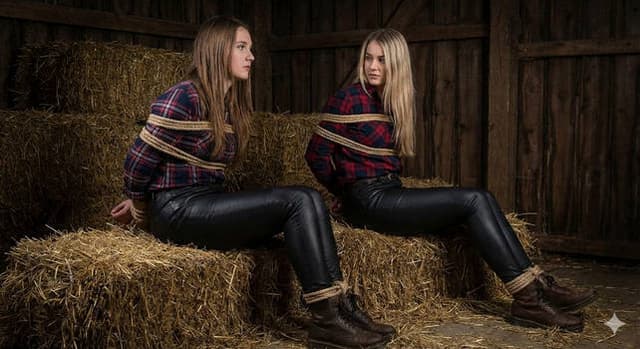
But the men do not give them freedom. They compromise instead, as though making the ropes slightly looser counts as mercy. The girls are tied, seated on the cot, wrists bound behind their backs, ankles secured. The physical vulnerability is immediate and humiliating. Jess feels the coarse rope against her skin, and Emily, though she keeps her voice steady, reacts with a tightly controlled fury. The fact that they can still joke, however darkly, becomes a survival mechanism. Emily reminds Jess of a memory from school, a petty old detention, and the absurdity of the recollection becomes a thin thread of sanity in a room designed to strip it away.
Finn gives them rules, which are really a performance of power. No screaming. No biting. No escape attempts. Callum is left to watch them while Finn goes back outside to check on the plants. That detail matters. The operation is still active, hidden somewhere beyond the cabin, and the girls are being held not because the men are cruel in some abstract sense but because they are protecting something specific and illegal. Their captivity is functional. That makes it more believable and more dangerous.
Emily quickly becomes the emotional center of the girls’ response. She is controlled, sharp, and strategically defiant. Rather than collapsing into panic, she uses sarcasm and probing questions to press at Callum, sensing he is the weaker link. She challenges him about blackmail, bad life choices, and whatever deeper mess they are all entangled in. Jess follows Emily’s lead, but her fear shows more openly. Together, they balance each other, Emily keeping them focused and Jess supplying the blunt honesty that cuts through the absurdity of the situation.
The men reveal just enough to confirm the girls’ suspicions without fully explaining themselves. Finn suggests the girls cannot go to the police because they have seen the plants. Callum insists it is just business. The implication is clear enough to create dread. They are not dealing with an accident or a misunderstanding. They are witnesses to a crime that the men are desperate to protect. Yet even as the girls realize this, they also notice something else: Finn and Callum are not fully aligned. Finn acts like the instigator, the one most willing to improvise violence into routine. Callum seems trapped by circumstance, frightened of Finn’s decisions, and possibly carrying his own secret guilt.
The cabin becomes a psychological stage. Every silence stretches. Every creak of the floorboards feels like a warning. The girls are trying to measure what kind of danger they are in, and the answer keeps changing. There is the physical danger of being tied up in a remote place with two men who have already crossed one line. There is the mental danger of uncertainty, of not knowing whether the next moment will bring shouting, pressure, or something much worse. The girls do not have the luxury of believing in clean villains. They are forced to understand that fear can be messy, practical, and ordinary.
Chapter 2: What They Are Really Hiding
As the hours pass, the story shifts from first-contact terror into a slower, more punishing suspense. Jess and Emily begin to understand that Finn and Callum are not simply keeping them from escaping. They are also keeping something else from coming apart. The hidden operation is more than a vague drug setup. It is the center of a larger problem, and the girls’ presence threatens to expose not just a crime but a chain of decisions, loyalties, and perhaps betrayals that have already gone too far.
Emily takes the lead here. She stays sharp under pressure and uses calm, controlled aggression to keep both herself and Jess from spiraling. She is the one who keeps talking, not because she is fearless, but because silence would hand the room over completely to the men. She tests Callum with questions, forcing him to show where he stands. She keeps pressing on the contradictions in Finn’s stories, trying to identify what exactly the men are hiding. Jess, meanwhile, stays grounded in the details. She notices the rope, the lantern, the tension in Callum’s hands, the way Finn’s confidence flickers at the edges. Her realism is important because it keeps the story believable. Jess does not romanticize the situation. She reads it.
What emerges is that the men’s secret is specific, not random. They are protecting an illegal cultivation operation, something hidden beneath the snow and the trees, and the reason they are so desperate is that the operation connects to a more personal betrayal than either girl initially guessed. Finn is not merely a reckless criminal. He is hiding a deeper motive, and Callum is not just a passive accomplice. He is caught in a pressure system of loyalty, fear, and possible shared history. The tension between them suggests a relationship with stakes beyond simple criminal partnership. The girls sense that something is being unsaid, and that the unsaid thing may be more dangerous than the ropes.
This is where the thriller becomes more than a hostage story. It becomes a story about how people trap each other with secrets. Finn’s danger is not only physical. He is manipulative, casual, and terrifying because he can switch between joking charm and threat in the same breath. Callum is different. He seems to understand that things are going badly, but he does not yet know how to stop them. He becomes the figure of hesitation, the man who may still be reachable, though never fully safe. The girls must decide whether either of them can be used to their advantage, but every attempt to reason with them carries risk.
The cabin scenes grow more intense as the men begin to reveal how little control they actually have. The operation is fragile. The plants, whatever they are, matter enough to justify kidnapping in the minds of the men. That means the girls are not just accidental witnesses. They are liabilities. Finn, sensing this, becomes more openly threatening. He uses the rope, the locked room, and the suggestion of silence to keep the girls frightened and compliant. But his confidence cracks in small ways. The girls see it. Emily in particular seizes on those cracks, using controlled sarcasm to expose his instability.
At the same time, the story refuses to reduce the danger to one kind of threat. The girls are aware of their physical vulnerability, but they are also fighting a psychological battle. What does it mean to be trapped by men who insist they are not rapists while still treating the girls as disposable? What does it mean to be told that harm is temporary when the room itself is designed to erase autonomy? The horror here comes from the combination of ordinary language and coercive reality. Finn and Callum keep talking as if they are discussing logistics, which is exactly what makes their behavior so cruel.
Jess and Emily’s bond becomes the emotional anchor of the second chapter. Emily continually steadies Jess, not by pretending the fear is not real, but by naming the reality clearly and refusing to let the moment become abstract. Jess, in turn, gives Emily the grounding presence of someone who can still read the room, still find the weak point, still notice the shape of danger before it becomes final. Their friendship is not decorative. It is the thing that keeps them from becoming isolated prey.
By the end of the book’s arc, the girls have not simply been victims. They have become investigators trapped inside a nightmare. They understand that the men are hiding a specific crime, that the cabin is only one piece of a larger concealment, and that Finn’s brashness may be covering panic. They also begin to see that Callum’s silence may not be innocence but fear, and that fear can make people dangerous in its own right. The story closes in a place of unresolved tension, with the girls still captive in the immediate sense, but no longer passive. They know enough now to start thinking not only about surviving the ropes, but about what exactly the men are afraid of losing.
The result is a tightly wound dark thriller about disbelief turning into survival, and survival turning into strategy. Jess and Emily do not become different people in the cabin. They become more themselves under pressure. Jess stays grounded and observant. Emily becomes the voice that refuses to let terror have the final word. Together they face a nightmare that is at once physical, psychological, and deeply human, because the most terrifying thing in the story is not just the cabin or the ropes or the men. It is the knowledge that somebody chose this, and chose it because the truth outside the cabin is worse than the violence inside it.