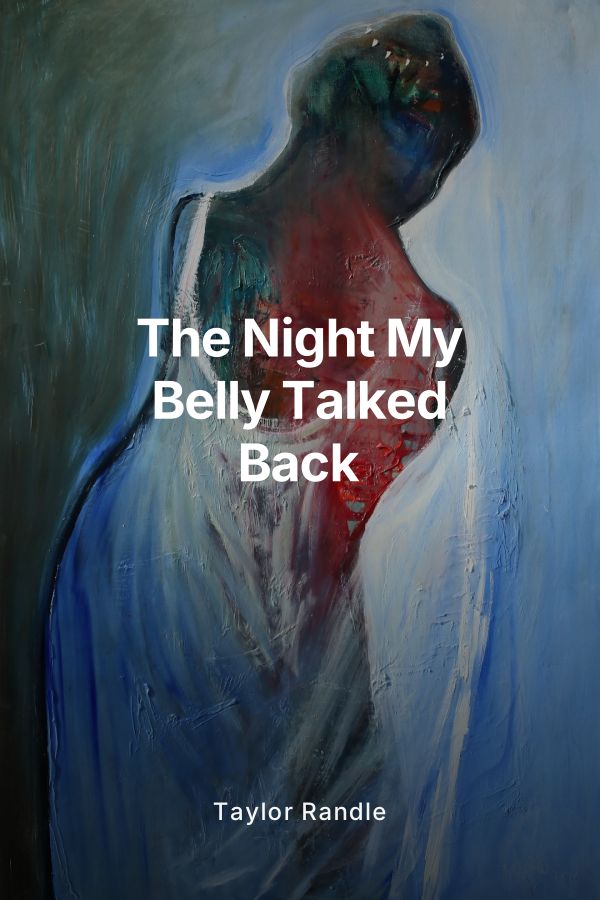
In 2009, a junk food obsessed teenage boy thinks his biggest problem is hiding snack wrappers from his parents, not the slow takeover of his entire life by soda, chips, and microwave dinners. At home, he treats the couch like a throne, the TV like a best friend, and the fridge like a loyal servant. What starts as a normal afternoon of binge eating turns into the strangest, funniest, and scariest night of his life when his overstuffed belly decides it has had enough and literally starts talking back to him.
Told in raw, vivid first person, this coming of age comedy follows one unforgettable day where comfort eating spirals completely out of control. Alone in the living room, the narrator keeps stuffing himself long past full, chasing a feeling of total, mindless comfort. The more he eats, the heavier he feels, his belly stretching, swelling, and bouncing with each breath until it seems to take over the room. At first it feels incredible to him, almost addictive, as if all his worries can be buried under the weight of one more snack. He unbuttons his pants, sprawls back in his cute boxers, and lets himself melt into the couch, sighing with a deep, lazy pleasure that washes away every last bit of guilt.
Then his belly talks.
What begins as a soft grumble grows into actual words, a full conversation rising from deep inside him. His stomach complains and brags at the same time about how stuffed and satisfied it is, groaning with fullness while also demanding more. The boy answers out loud, at first laughing and treating it like a silly private joke. But the more they talk, the more his belly swells. His navel pops outward, transforming into a little outie that he cannot stop poking and playing with, each touch sending gurgles and sloshes rippling through his enormous midsection. The scene is ridiculous, absurd, and yet uncomfortably intimate as he realizes how much of his identity has wrapped itself around the thrill of overeating and the lazy comfort that follows.
The story walks a sharp line between goofy body humor and genuine emotional unease. On one side, there is the pure cartoon chaos of a belly that grows bigger and bigger, bouncing and inflating until it feels “as big as a planet” and the boy lies there like a human beanbag chair, limp, blissed out, grinning like a proud slob. He burps, farts, and sighs with overfed satisfaction, narrating every ridiculous sensation with the shameless honesty only a teenager alone in his house can manage. He lets go of every bit of self control he has, arms behind his head, back sunk deep into the cushions, promising himself and his greedy gut that he will be a fat, lazy blob forever.
On the other side, there is the creeping seriousness that slips into the conversation with his talking belly. At first, the stomach is just as silly as he is, bragging about how full it feels, purring with contentment as it grows. But as it inflates past comfort, past funny, into something unnerving, the tone shifts. The belly begins to warn him. It groans more harshly. It urges him to get up, to move, to work out, to remember that there is a limit. That if he keeps laughing off every warning sign, he will turn the joke into something he cannot undo. The boy fights back, insisting that he does not care, that he wants to stay like this, extra stuffed, overfed, and perfectly still. In his words you hear a teen who is not just clinging to junk food, but to the comfort of not having to change at all.
The belly keeps swelling anyway.
As the night goes on, the quiet house turns into the stage for an outrageous inner battle. The boy and his own body argue, tease, and plead with each other. His belly tilts toward the role of a nagging conscience and a panicked future self, while he plays the part of a stubborn kid who would rather sink deeper into the couch than face who he is becoming. The comedy never disappears, but it grows dark around the edges as the physical exaggeration mirrors an emotional truth. The bigger his gut gets, the smaller his sense of control feels. He realizes that for all his jokes about being “stuffed like a pig” and loving the lazy life, some part of him is actually afraid of where this road leads.
The climax of the nightmare pushes this surreal logic to its fullest extreme. Ignoring his belly’s final warnings, he keeps embracing the fantasy of total surrender. He imagines himself not as a boy anymore but as a huge, heavy, overfed planet with nothing to do but float and feel full. His expression turns almost sacred with bliss as he strokes his oversized gut, pokes his outie belly button, and plays with it absentmindedly, choosing pleasure over every alarm ringing from inside. The gurgles grow louder. The groans turn into roars. His own body rebels, swelling and stretching past anything that could ever be real, until with a sickening, comic horror his belly gives one last, furious protest and explodes. The instant it does, he bolts awake, screaming in his bed, drenched in fear and suddenly desperate to escape the fate he just witnessed.
In the sudden quiet of the real world, the story shifts from surreal comedy horror into a softer, more reflective coming of age tone. Shaken by how real the dream felt, the boy stares down his actual body and his actual choices. The wrappers on the floor, the half finished snacks, the memories of nights spent eating until he could barely move now feel like pieces of a warning he almost ignored. What once seemed like innocent comfort reveals itself as a pattern that could steal his energy, his confidence, and his future if he lets it. Rather than preaching, the book lets the reader feel the turning point from the inside. The narrator does not suddenly become perfect, but the nightmare breaks the spell of junk food as his main source of happiness.
From that morning forward, his relationship with food becomes the quiet, real-world arc beneath the craziness of the dream. Encouraged by the fear still clinging to him, he starts choosing healthier options, not to chase a perfect body but to avoid that helpless bloated numbness he once loved too much. He still remembers the weird comfort of sprawling on the couch, hands on a massive, talking belly, but now it comes with the echo of a groan warning him to move, to live, to take care of himself. He begins to cut back on junk, not out of shame, but out of a new decision to stay in control instead of handing it over to cravings.
The Night My Belly Talked Back uses humor, absurdity, and a wildly detailed dream to tell a grounded story about self control and growing up. The vivid physical comedy of a talking, inflating belly hooks the reader with pure entertainment, while the emotional core asks a quieter question: What happens when the thing that once comforted you starts to own you? Through the narrator’s one night of total surrender to laziness and food, and the terrifying consequence that snaps him awake, the book leads him toward a simple but powerful realization. He does not have to hate his body to change his habits. He just has to stop letting junk food make all the decisions.
By the end, the message is clear without ever sounding like a lecture. Food, especially junk food, is not a villain, but losing control of it can turn even comfort into a nightmare. This surreal coming of age comedy shows how an embarrassing, hilarious, and horrifying dream can be exactly the wake up call a teenage boy needs to finally grow up, take ownership of his choices, and step off the couch.