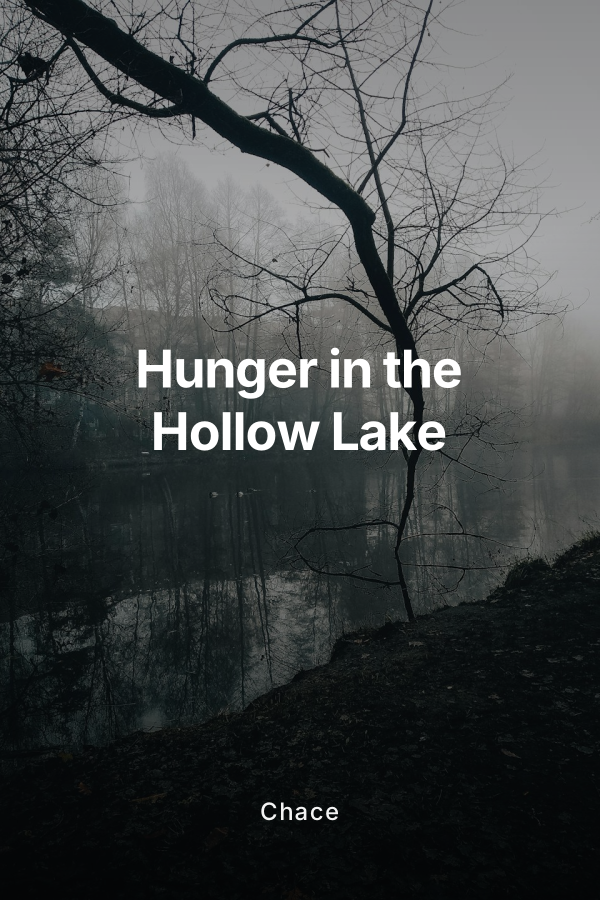
The world does not end with screams from torn throats, but with the slow, wet sounds of chewing.
In Hunger in the Hollow Lake, a mysterious viral plague sweeps through a quiet region and twists the very idea of hunger into something predatory. Victims do not rot or stagger as the dead. Instead, they swell. Flesh piles softly on bone, faces puff and round, bellies balloon and wobble, yet their features remain eerily familiar. They look like themselves, only heavier, softer, impossibly vast. Within one minute of infection, a person is transformed into a ravenous caricature of who they once were, driven by an urge to feed and to fatten others.
At the cold heart of this dark horror tale is a mixed age group of girls who are caught in the first wave of the outbreak. A teenage older sister who always counted her calories. A younger girl who still half-believes in monsters under her bed. A tough, practical friend who never believed in anything she could not punch. A quiet college student home for the weekend. Their different ages and fears collide as the world they know bloats and warps around them, one body at a time.
The infection spreads in a gruesomely intimate way. The “fat zombies” do not bite or claw. They communicate in deep, guttural burps that shake their wobbling bodies, a crude new language of hunger and invitation. They lean in close to the living, pressing their warm bodies near, rubbing and jostling bellies as if in friendly greeting. Then a great, rolling belch blooms against a victim’s face. In less than sixty seconds, bones vanish beneath surging fat, clothing snaps and strains, and an unbearable need to eat, to feel flesh grow heavier and heavier, fills the new host.
As the outbreak escalates, the girls learn that the virus does more than change the body. It reshapes desire. Those who turn become obsessed with food, with the weight and movement of their growing bellies, and with sharing that growth with others. They stroke their own stomachs, knead and jiggle them in a grotesque parody of self-comfort. They press themselves against one another, rubbing bellies with greedy affection, trading echoing burps that mean something only they can understand. From the outside, it looks almost joyful, yet every touch and rumble hides the same consuming urge: to spread the fat, to drown the world in soft flesh.
The girls’ struggle is not just against the infected, but against the ticking clock within their own bodies. Every encounter with a burping, swollen figure is a gamble that could end with one of them gasping as her stomach surges outward and her limbs thicken in seconds. The story narrows its focus to the infection itself, to the cruel speed and intimacy of its transformations. Each close call leaves them shakier, each glimpse of some newly bloated classmate or neighbor forces them to confront the possibility of their own future shapes.
As they move from house to house, then through abandoned streets and into the surrounding woods, the horror grows quieter and stranger. They see families who have given up and surrendered to the virus, clustering in living rooms that smell of grease and sweat, bellies rubbing together in slow, affectionate circles. Burps echo down stairwells like a chant. They see former authority figures, teachers and police officers and medics, now reduced to giggling, swaying towers of fat who beckon with soft arms and inviting stomachs. Survival starts to feel less like an escape and more like postponement.
Throughout, the girls cling to their remaining humanity and to each other. Yet the infection’s pull creeps closer. One of them breathes in a tainted belch and feels her body strain against itself, swelling under her own skin. Another manages to resist infection once, only to wonder what it would feel like to stop resisting. The transformation is terrible, but also strangely comforting. Hunger becomes simple. Fear is replaced by the warm press of other bodies and the contentment of a full belly. The virus does not just make them monstrous. It makes them want to be monstrous.
The climax unfolds at a secluded lake, once a place of summer joy. By the time the girls reach its shore, their luck, their plans, and their thin protections have frayed. The fat plague has closed in from every direction. Burps roll across the water like distant thunder. On the far bank, shapes move, rounded and immense. The girls finally face what they have been running from since the first infected figure lurched toward them, grinning through a mouthful of food.
Here, the line between victim and monster collapses. Exposure becomes unavoidable. One by one, the girls inhale the virus at close range and feel it blossom inside them. The infection takes hold fast. Bones ache, then vanish beneath the rising tide of fat. Stomachs surge outward, rounding and rounding, heavy and unfamiliar. Limbs thicken, faces puff, clothes split and slide from newly swollen forms. In a single drawn out minute, their bodies betray them completely.
Yet something else happens in that minute. Fear does not vanish, but it dulls, smothered under the rush of new sensation. The weight of their bellies dragging them down into the lake’s cool water. The way their hands sink into their own flesh, into one another’s, as if kneading dough. The strange, booming burps that rise from deep inside them, carrying pieces of shattered language that now feel like home. They find themselves rubbing their massive bellies together in the shallows, the water slapping against their sides, their voices replaced by echoing belches and soft, breathless laughter.
The lake becomes a grotesque sanctuary. They bob and wallow in the water, their giant bellies rising and falling like pale islands. Around them, other infected figures drift closer, their own swollen forms shaking with every rumbling burp. Communication shifts entirely into this new, primal language. By the final pages, human speech has thinned to a few scattered whispers, drowned out by a chorus of wet, contented sounds, a symphony of hunger that now feels inevitable.
Hunger in the Hollow Lake is an unflinching exploration of body horror centered on enforced transformation and the collapse of identity into appetite. It lingers on the physicality of the infection: the speed of the change, the heavy swing of a new belly with every step, the unsettling intimacy of touch and shared breath. At the same time, it probes the psychological terror of being turned into something that not only destroys others, but takes pleasure in doing so.
This is not a heroic tale of resistance. It is a slow, suffocating descent into a new kind of existence, where survival and surrender become indistinguishable. The girls start as ordinary people trying to outrun a nightmare. They end as part of it, their last act of agency dissolving in a lake stirred by their own swollen bodies. The horror lies not just in what they become, but in how easily they learn to live with it.
Readers drawn to dark, visceral fiction will find in this book a relentless focus on the infection itself and the transformed body, rather than on global politics or complex conspiracies. The origin of the virus remains peripheral and unresolved. What matters is the texture of the new world it creates: a world of soft, shifting flesh, of bellies pressed together in wordless communication, of a species that has learned to spread not through teeth and claws, but through breath and touch.
By the end, the lake is quiet again. The sky above it is as it always was. The water ripples gently around clusters of huge, floating forms that belch back and forth like a new kind of flock. Somewhere beneath all that softness, the last traces of the girls still exist, watching the surface of the water quiver around their bodies and feeling, against their will, a deep and terrible peace.