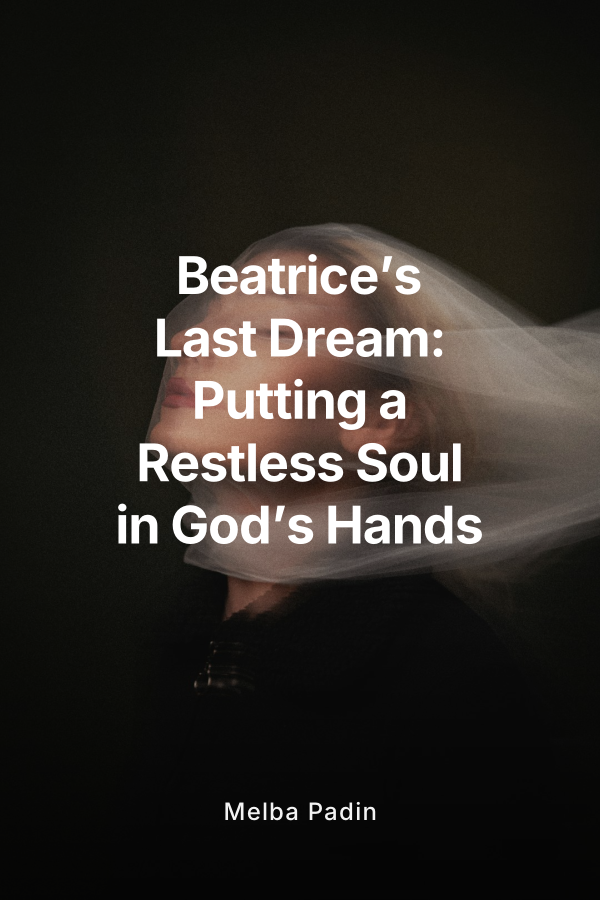
Beatrice’s Last Dream: Putting a Restless Soul in God’s Hands is the culmination of a life story that began in the darkness of a world without God and traveled through the relentless storms of chronic illness, relapse, and misunderstood mental struggle. It is the third and final movement in Beatrice’s saga, following Consequences of Living a Life Without God and Chosen by a Relapse, and it brings her back to the place where everything truly started: her own mind, her fantasies, and the secret world no one ever fully saw.
At its heart, this book is a plea, a confession, and a guiding light for those who feel as lost as Beatrice once did. Before leaving this earth, the narrator’s driving mission is to reach souls who stumble in the same shadows, to show them that the word of God is not a weapon of shame but the only real way to stand, to endure, and to heal. The story does not pretend that faith dissolves suffering. Instead, it walks deliberately into the hardest places: the relentless cruelty of Multiple Sclerosis, the confusion of relapse, the stigma of mental health labels, and the deep, corrosive guilt that society so often lays on those who are already in pain.
Beatrice is the lens through which this world is seen. She is not a symbol of madness. She is not more disoriented than anyone else. She is simply human, with a mind that carries pain, memories, illness, and dreams. In earlier books, her choices and struggles were framed by what it means to live without God, to try to navigate addiction, illness, and trauma alone. Here, the focus shifts inward. Readers are invited into Beatrice’s inner rooms, where fantasies blur with reality, where fear and hope wrestle, and where God quietly waits to be discovered in places that once only held shame.
The book traces four deep currents in Beatrice’s final chapter. The first explores her mind as a living landscape. We see how MS, trauma, and relapse shape her perception, how her fantasies become safe spaces and escape routes, and how what others call “disorientation” is often a reasonable reaction to unreasonable suffering. This part does not diagnose Beatrice. It dignifies her. It respects the complexity of a mind that has been asked to carry more than most people will ever understand.
The second current turns outward to the world that surrounds her. Here, the narrative becomes confrontational and honest. It shows the way people respond to Beatrice’s vulnerability: the way some doctors dismiss her pain, some family members minimize her condition, some church voices mislabel her struggle as personal failure or spiritual weakness. These scenes reveal how easily institutions and individuals make people with mental and chronic illnesses feel guilty simply for being unwell. The book refuses to soften this reality. It insists that those who shame, mock, or publicly parade vulnerable people, tearing at their self‑worth, are the ones who should face judgment, not the ones already fighting for their sanity and dignity.
The third current is the gentle but unwavering gaze of God. This section of the story is quieter, but it is the moral and spiritual center of the book. Here, Beatrice slowly discovers that God is not like the voices that have condemned her. She learns that God does not abandon those who relapse, does not discard those whose minds are tired or confused, does not measure worth by physical strength or flawless behavior. Through prayers, dreams, scripture, and moments of piercing honesty, she begins to understand that she is not her diagnosis, not her relapse, not the names others have thrown at her. She is seen, known, and loved.
Finally, the book brings Beatrice to a place of rest. This is not a neat, sentimental ending. It is a hard‑won peace, a surrender of all the stories she told herself about being “less than,” “broken,” or “beyond help.” In this closing movement, Beatrice learns to accept God’s love on God’s terms, not on the cruel terms society has taught her. She begins to forgive herself for years of trying to survive without divine help and, where possible, to release the hold that other people’s judgments had over her. Putting Beatrice “to rest” does not mean silencing her; it means honoring her story as complete, meaningful, and worthy. Her journey stands for the countless real lives that never receive such validation.
Throughout the book, the narrator speaks not only as a storyteller but as a witness and advocate. The narrative voice carries a clear conviction: no one deserves to be crushed under low self‑esteem engineered by other people’s ignorance and malice. No one deserves to be treated as a spectacle for their pain. No one should be made to feel that their illness or their mental struggle is a moral failure. These are not side notes. They are the moral spine of the entire work.
Beatrice’s Last Dream is therefore more than a personal story. It is a call to action for readers who recognize themselves in her confusion, her fatigue, and her longing for God. It speaks to anyone living with MS or any severe chronic disease, to those who have relapsed after seasons of progress, and to those who carry secret mental battles behind polite smiles. It also speaks directly to friends, families, churches, and caregivers who may have, knowingly or unknowingly, added shame where compassion was needed. The book pleads for a different way: a way of accompaniment, understanding, and practical help.
Spiritually, the book closes the arc that began with the consequences of living a life without God. The earlier works showed what happens when someone tries to navigate darkness alone. This final volume shows what can happen when that same person, scarred and exhausted, finally lets God step into the very places that seemed too messy or too broken for grace. It does not claim that faith removes MS or magically erases trauma. Instead, it reveals how faith reframes suffering, how it interrupts the lie that a person is defined by illness, sin, or failure, and how it anchors identity in something unshakable: being a beloved child of God.
The emotional tone of Beatrice’s Last Dream is raw yet hopeful, confrontational yet tender. It alternates between the intimacy of inner monologue and the sweeping moral clarity of a prophetic voice speaking against injustice. On one page, readers may find themselves walking inside Beatrice’s half‑dream worlds, feeling the weight of her legs that refuse to move, tracing the tremor in her hands as she reaches for her medication. On the next, they may face burning indictments of the systems and attitudes that treat people like her as broken objects instead of sacred souls. Through it all, the quiet thread of God’s presence runs steady, inviting both Beatrice and the reader to step out of shame and into grace.
For lost souls who wonder if they are too far gone, this book whispers: you are not. For those who have been called crazy or weak, it insists: you are more than their words. For those living with relapse and chronic illness, it offers the comfort of being understood and the challenge to believe that God has not abandoned them. For those who have hurt others through judgment or neglect, it offers a mirror and a chance to do better. And for the author who longed to guide others before leaving this earth, Beatrice’s Last Dream stands as both a testimony and a final gift: a story that points beyond itself, to the God who meets people in their most disoriented places and gently leads them home.