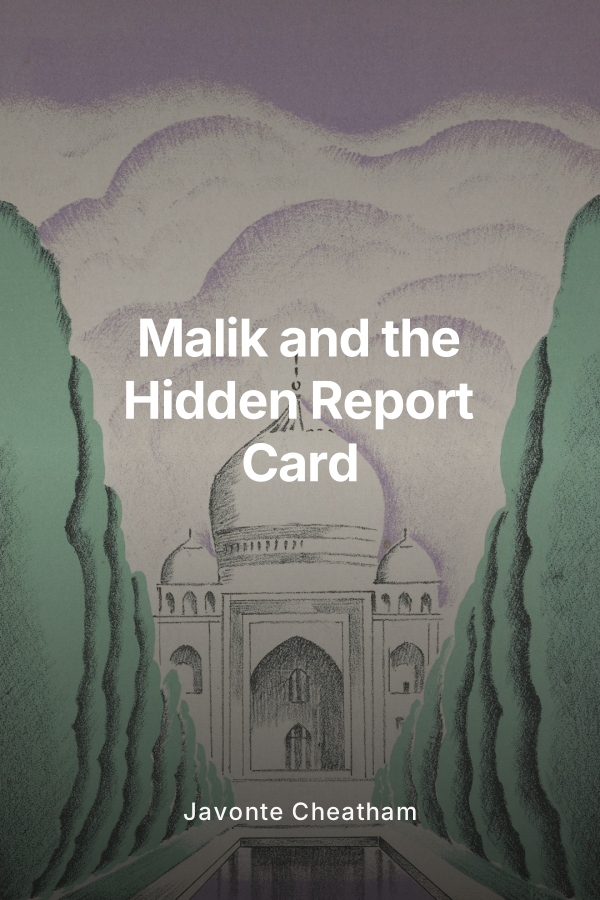
This book follows Malik, a relatable elementary school kid who feels big feelings but does not always know what to do with them. He is playful and kind, funny with his friends, and secretly hates homework even though he really wants to make his parents proud. At school he often seems distracted and fidgety, and sometimes teachers and classmates misunderstand him, which makes him feel like something is “wrong” with him even when he is trying his best .
The story begins when Malik receives a report card that makes his stomach drop: lots of average and low grades, comments about “not focusing,” and a note suggesting an evaluation for attention difficulties. Instead of feeling helped, Malik feels exposed. On the walk home he panics and decides to hide the report card in his backpack, telling himself he will show it to his parents “later” when he feels braver. That one small secret becomes the spark for everything that follows.
Across the five chapters, the book tracks how that hidden report card quietly follows Malik everywhere he goes. At home, normal moments like family dinners, video game time with Dad, or Saturday pancakes with Mom are filled with tension because Malik is always waiting to be found out. At school, he flinches every time the teacher mentions grades or behavior charts, worried that everyone can see right through him. The secret starts to change how he acts with the people he loves most.
The heart of the story is the relationship between Malik and the adults in his life. His mom is calm and steady, always trying to talk things through. His dad is a little stricter at first, serious about school but deeply fair and loving underneath. Malik’s teacher is kind and wants him to succeed, even when she has to be firm about classroom rules. All three adults are clearly on Malik’s side, yet Malik cannot feel that at the beginning because shame, fear, and confusion are so loud inside his head .
As the chapters unfold, readers see Malik in both of his main worlds, home and school. Some chapters center on school days filled with unfinished worksheets, wandering thoughts, embarrassing moments when he forgets directions, and small victories that nobody seems to notice. Other chapters move into the warmth and pressure of home life: sibling teasing, quiet talks at bedtime, and arguments about screen time and chores. The settings are balanced so that kids can recognize how one problem can echo through every place they go.
Each chapter deepens Malik’s emotional journey. At first he feels only scared and guilty about hiding the report card. Soon those feelings are joined by anger at himself, frustration at adults who “do not get it,” and loneliness when he thinks he is the only one struggling this way. But the story also shows flashes of courage and hope: the moment he finally tells a friend about the report card, the time he chooses to stay after class to ask for help, and the first honest conversation he has with his parents about how hard it is for him to focus.
The turning point comes when Malik’s secret can no longer stay hidden. His parents discover the report card, but instead of the explosion he has been rehearsing in his head, he is met with calm questions, real listening, and a new kind of honesty on both sides. They still set boundaries and consequences, yet they also show him that one piece of paper does not define who he is. Together with his teacher, they start exploring what might actually help him at school instead of just telling him to “try harder.”
By the final chapter, Malik has not magically become a perfect student, and the book does not pretend that change is easy or instant. Homework is still annoying. Staying in his seat is still a challenge. But Malik has learned to use his voice, ask for support, and see himself as more than his mistakes. The adults around him have learned to look beyond behavior and grades to the kid who has been trying to be seen all along.
Malik and the Hidden Report Card is a contemporary, emotionally honest story written in a fast paced, young voice that sounds like real kids. It speaks to anyone who has ever hidden a bad grade, dreaded a parent teacher conference, or wondered if they were “too much” or “not enough” at school. Without lecturing, the book shows how secrets grow heavier in silence, how trust is built one conversation at a time, and how second chances are possible when kids and adults decide to be on the same team.
The full book, across about 10000 words and five chapters, will give readers an intimate look at Malik’s thoughts, fears, and small triumphs, painting a hopeful picture of what can happen when a child who struggles with attention and schoolwork finally feels understood and supported instead of judged.