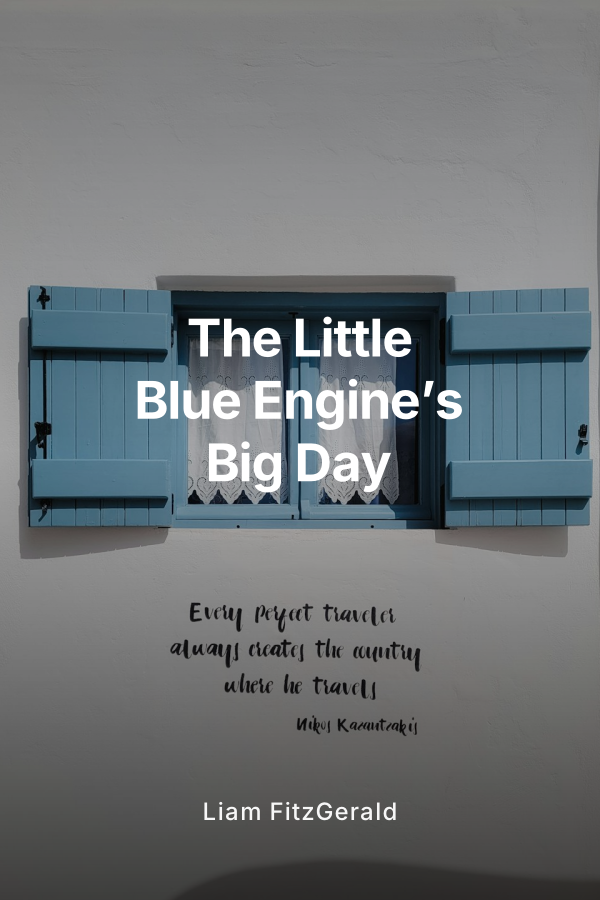
This book is a warmhearted, inspirational children’s story about a small blue engine who discovers that true strength is not measured in size or shine, but in courage, kindness, and perseverance. It is written for young readers and for adults who read aloud to them, blending gentle adventure with emotional reassurance and a clear moral that even the smallest helper can make a mighty difference. The story takes place over one extraordinary, exhausting day when the rail yard faces an unexpected rush of work and the tiniest engine on the tracks becomes the one everyone must rely on.
The book opens in a bustling train yard at sunrise, where engines of all sizes prepare for a busy day. The little blue engine, the youngest and smallest of the crew, usually shunts a few cars here and there while the bigger engines tackle the important routes. He dreams of doing something grand, yet he is used to hearing that “big jobs need big engines.” The other trains and yard workers are not unkind, but their quiet doubts and teasing nicknames leave him feeling like a tagalong instead of a true teammate. This emotional starting point sets up his deepest wish: to prove that he belongs, not by boasting, but by genuinely helping when it matters most.
A sudden spike in demand for coal throws the entire yard into confusion. Towns along the line need extra fuel for heat and power on a day when orders have doubled without warning. Schedules are tight, freight cars are heavier than usual, and there are more urgent calls than there are engines to answer them. Dispatchers scramble, whistles echo, and even the biggest locomotives strain under the workload. In this chaos, small mistakes threaten to ripple into big trouble. A missed connection here, a misrouted car there, and soon the whole system teeters on the edge of delay and disappointment.
When a key coal run is left without an available engine, the little blue engine quietly volunteers. At first, his offer is brushed aside as unrealistic. A stern yard manager worries about safety and timing. A proud big engine doubts that such a small locomotive can possibly pull a full line of loaded coal cars up the steepest hill before nightfall. Yet there is also a kinder voice in the yard, perhaps an older engine or a friendly worker, who gently suggests giving the little blue engine a chance. This mix of doubt and support frames the central emotional conflict: the world is not against him, but it is not convinced he is ready.
After some hesitation, the yard has no real choice. Every other engine is already committed, and the coal must reach distant towns before the cold night settles in. The little blue engine is finally entrusted with a train far larger and heavier than any he has pulled before. The responsibility thrills and terrifies him at the same time. He sets off down the track, cars clanking behind him, his boiler fluttering with equal parts fear and determination. The story lingers on his inner world: his self-doubt, his flickers of pride, and his steady repetition of a quiet promise to himself that he will try his very best.
Along the route, he faces layered challenges that test not only his strength but also his judgment and heart. A steep hill forces him to choose between raw effort and careful pacing. A tight schedule tempts him to rush, yet he must learn to balance speed with safety. A small track switch mistake threatens to derail the entire journey unless he remains calm and resourceful. At one crucial moment, he encounters another train in need, perhaps stalled or delayed, and must decide whether to pass by to protect his timetable or stop to help and risk arriving late. His choice to help, even when it complicates his own task, deepens the book’s moral center: true greatness lies in service, not success alone.
As daylight fades, fatigue weighs on his wheels. The final leg of the journey takes place in the gathering dark, where headlamps and stars guide the way. The little blue engine pushes through weariness and worry, fueled by the thought of families waiting for warmth and light. Tension builds around whether his small frame can withstand such a long, demanding run. When he finally crests the last grade and rolls into the final station with every coal car delivered, his achievement is not just physical. It is emotional completion of an inner journey from uncertainty to earned confidence.
The resolution unfolds back at the rail yard, now lit by the deep colors of sunset. The yard manager calls the crew together in an impromptu ceremony of gratitude. In front of the gathered engines and workers, the small blue engine is honored with a golden medal and a blue ribbon wrapped proudly around his smokestack, a symbol that matches his own bright paint and unique spirit. The gesture is public and clear: the smallest engine has done a big thing that none of the others could have done in his place, because only he was available, willing, and brave at the crucial moment.
What makes the ending truly satisfying is not the medal itself, but how the others respond. The bigger engines, once skeptical, now lower their smokestacks in a respectful salute. Dispatchers and yard workers cheer, their earlier doubts replaced with genuine admiration. The little blue engine is invited into the center of the group, whether for a photograph, a spot in the roundhouse, or a shared whistle call that welcomes him as an equal. He feels, for the first time, not like a spare part, but like a vital member of the team. The last quiet image confirms this feeling, perhaps through a new nickname spoken with affection or a simple shared smile in the soft evening light.
Throughout the book, the narrative emphasizes emotional truths children easily recognize. It validates how painful it can feel to be underestimated, how heavy responsibilities can seem when you are small, and how overwhelming it is to face a task that appears larger than you are. At the same time, it affirms that courage often begins with a single decision to try, not with the guarantee of success. The story gently models resilience, empathy, and mutual respect, showing how communities grow stronger when they trust and celebrate contributions of every size.
Parents, teachers, and caregivers can use this story as a springboard for conversations about self-belief, teamwork, and kindness. The little blue engine’s day mirrors challenges that children face at home, in school, and on the playground: being chosen last, given “small” jobs, or told to wait until they are older. Here, they see those small jobs expand into something vital when taken on with heart and persistence. The narrative avoids scolding or lecturing and instead lets the emotional arc carry the lesson. Children come away feeling that they, too, can rise to big occasions in their own lives, whether that means helping a friend, finishing a tough assignment, or simply trying again after a setback.
Stylistically, the book combines gentle tension with comforting closure. Scenes of rushing trains, tight schedules, and dark tunnels are balanced by warm moments of encouragement, glimpses of friendly faces at station platforms, and the steady companionship of the tracks that guide the little blue engine forward. Rich sensory details of whistles, clanking couplers, and swirling steam anchor the action in a vivid, tangible world, while the internal monologue of the little blue engine offers an emotional anchor for young readers who may share his worries and hopes.
By the final pages, the central theme is unmistakable yet still tender: even little ones can do big things. The story does not suggest that size or strength are irrelevant, but rather that heart, effort, and willingness to help can lift a small soul to great heights. The golden medal with its blue ribbon is less a prize than a visible echo of that truth, a symbol that children can imagine on their own shirts or backpacks when they face their own “extra demand” days.
In summary, “The Little Blue Engine’s Big Day” is a hopeful, emotionally engaging tale designed to be read and reread. It offers young readers a hero who looks up at the world’s big hills and chooses to climb them anyway, not for glory, but for the joy of being needed and the warmth of finally feeling, deep inside, that he truly belongs.