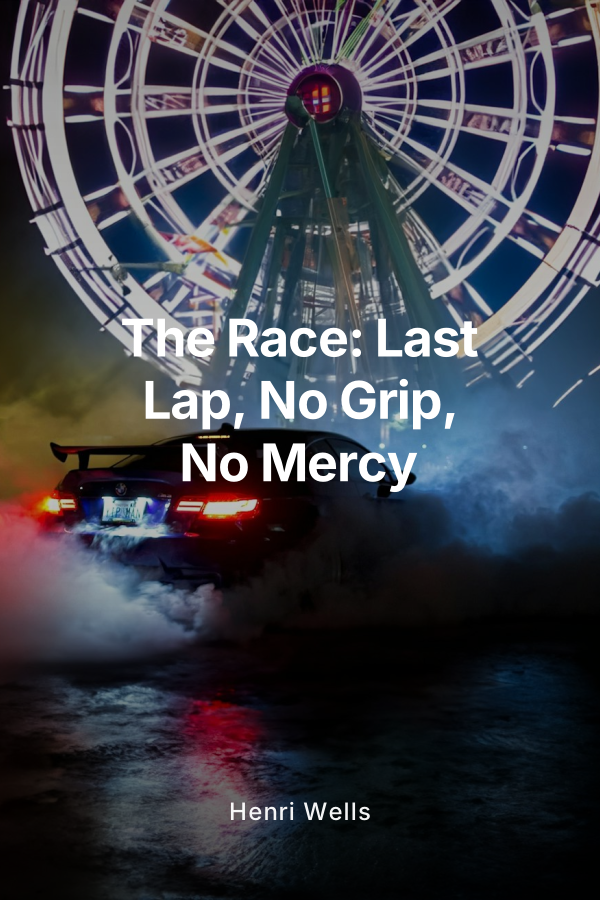
I roll onto the grid with one thing in my head: pole. The air is cold. The track looks slick, dark, and unforgiving. Wet corners wait like traps. There is no traction to trust, only instinct, pressure, and the brutal math of speed. In front of me, the front runners sit like locked doors. And in my mirror, No. 69 waits. Faceless. Silent. A threat with no name. I feel the race before it begins, a pulse under my ribs, a warning that this will not be about comfort or clean lines. It will be about survival. It will be about who can think fastest while the car fights back.
The early laps are controlled violence. Every corner is a gamble. Every exit threatens to snap the rear loose. I can feel the wet surface pulling the tires away from me, stealing confidence inch by inch. No. 69 never leaves my mirrors for long. He stalks, then lunges, then fades back just enough to make me doubt the next move. I hold my line through spray and glare, through the struggle to see, through the constant threat of a mistake waiting in the shine of the asphalt. He attacks hard. I defend harder. The race narrows to skill, nerve, and timing. No radio. No voice in my ear. Just my breathing, my hands, and the machine under me, alive and dangerous.
Then comes the last lap, and everything changes. The tension tightens until it feels like wire drawn across bone. I know this is the lap that will decide everything. The first overtake comes fast, a sharp move under braking as I dive inside a rival and take the line before he can close the door. The second is uglier, a split-second decision out of a wet corner where I carry more speed than I should and force my way through before the rear steps out. The third is pure instinct, a ruthless launch off the next bend, wheels skating, car twitching, my heart hammering so hard it drowns out the engine. No. 69 stays close. Too close. He is still there, still hunting, still refusing to vanish.
Then the final corner hits. We are both pushing too hard. I feel the limit, then the edge, then the crack. He comes at me with a fierce attack, and I answer without lifting. There is slight contact. A shudder. A jolt through the steering wheel. For one impossible second, his car snaps sideways in the wet. The spin starts small, then blooms, the rear stepping out as driver error and pressure finally break him loose. I hold my line by instinct alone, the car barely obedient, the surface offering no mercy. I miss the worst of it by inches. My breath turns shaky. The pole lap is still alive. Maybe. The timing screen says enough. Not by much. Not cleanly. But enough.
When it is over, there is only the brief quiet. My breathing is hard-earned and unsteady, each inhale scratched raw by adrenaline. The track glistens ahead of me, cold and electric, as if nothing happened at all. But I know what it cost. I know how close the race came to taking everything. Pole is mine, or close enough to feel like it. And in that thin silence after the storm, with my hands still trembling on the wheel, I understand the truth of the day: I did not win because the track was kind. I won because I stayed alive inside the chaos long enough to fight back.