Summary
Bell Rope in the Dark: A Memoir of Brothers, Burdens, and Becoming Subtitle: From Saint Anne’s orphanage in Ituna to the streets of Regina—losing, learning, and finding my way home
I grew up where sacred met institutional: Saint Anne’s Convent—the orphanage—was candlelight on waxed wood, starched habits, echoing prayers, and rules that arrived like weather. Sister Elizabeth’s satin‑gloved wooden hand taught me to tie my shoes; dust in the potato cellar became constellations—early proof that light doesn’t need much to work. Sundays began with my father’s ragtime and my mother’s choir rehearsals; awe took root when my brothers and I became altar boys and learned the choreography behind the Mass—incense, chalice, robes—and the joy of tugging the bell rope until we flew, robes lifting like capes.
We were a family braided by love and fracture. Tommy—reckless and radiant—could turn a gas‑station prank into “mailbox philanthropy,” build a potato fort like a general, and make mischief feel like meaning. Neil—precise and loyal—mapped safe routes, turned triangles into defence, and carried a new name (from Barry to Neil) like a promise that protection could be written on paper. Jackie’s smile made rooms warmer; Shauna’s music steadied quiet days. Our mother, Elaine, was steadfast; our father, Jack—a ragtime “poet‑artist” turned alcoholic—was both tender and wounding: Santa Lucia at the piano, a doughnut joke in a jail yard, then public shame and sudden fury. On my mother’s side, Christmas at Grandpa’s and Uncle Harold’s (“antipasto” by house decree) taught me the shape of belonging.
Outsiderhood began at the Ituna curb when the grey bus sighed us into view. We learned the town by temperature: kindness on Mrs. Larsen’s porch; firecrackers in the neighbouring yard; the geometry of survival in hand squeezes and hedges. At Saint Anne’s, dares became tenderness—nurses’ tents and tongue depressors, a night safe in the curve of a nun’s back, cemetery blankets turned trampolines; and friends steadied the table—Robbie’s quiet trades, Jeffrey’s generous “yes.”
Then the slow undertow of schizophrenia pulled at our home. Tommy’s rearview vigilance and license‑plate lists hardened into devils at the door, and a desperate radio‑station plea with his toddler; shock treatments pulled him back without rebuilding the path. Neil later walked the same cliff. Jackie and Shauna faced early symptoms. I learned the intricate craft of caring without answers—through meds, side effects, and the recognizable ache of helplessness—while armour set: perfection behind the salon chair, sarcasm as shield, people‑pleasing to keep anyone from leaving. I succeeded publicly—education tours, thriving salons—yet carried a “spotlight syndrome,” a mask sewn from orphanage labels I never stopped wearing.
Grief arrived at my door: the RCMP asking if I was related to Thomas Lewis Pritchard; my young daughter behind me; a garage that smelled like death; a car turned coffin; Tom’s gold wire glasses placed gently on the dash. Years later, Neil too. Guilt rolled out a cot in my chest and stayed. Strange mercies braided forward: as a bold ninth‑grader, I’d bluffed a “school report” to tour the grand, haunted Darke house (Helmsings Funeral Home—cyclone‑thick walls, bomb shelter); years later, I styled my father’s hair in that same basement, giving him one final dignity addiction had stolen. Marriage faltered under the curtain I couldn’t draw back; I lay beside someone I loved, rehearsing sentences I could not say. Yet fatherhood and a devoted wife taught me family’s quiet beauty—gentle routines I had never known.
The unfastening came bolt by bolt. A friend offered a necessary law: remember without bleeding. A line from a book suggested the dead want your smile more than your punishment (concept inspired by a well‑known work; attribution to be added). I reread it, called my friend Scott, and let laughter return without betraying grief—frog pranks, rooftop riffs, mailbox miracles—coexisting with sorrow. A mental‑health first aid course reframed illness as illness—no more blame than MS or heart disease—shifting survival from shame to assignment: if I stayed, I could be a guardian and a voice. The angel story my mother wrote me—of a night I was carried to the swings and told I’d be okay—became the thread leading me out.
This memoir braids prairie wit with unflinching honesty: Saint Anne’s as a haven and discipline; dares as tenderness; jailhouse glass and mud‑stranded rescues; chosen‑family anchors; small mercies that kept stern rooms humane. It culminates at Holy Rosary Cathedral. I still live nearby; the school behind it is gone. On winter Sundays, the bells ring, and I am both man and boy—running the tower stairs with Tommy and Neil, sunlight turning dust into stars, the rope thick as my wrist, the lift under my gown, brothers shouting my turn. In that blending of now and then, I finally know what the angel meant: I did not fail them; I have never been alone. I turn toward my sisters with steady, practical care; toward my children with open presence; toward myself with mercy—and offer a quiet invitation as the bell’s echo fades: listen for your own bell, remember without bleeding, and let its echo carry you home.
Describe your own biography
Describe your book — freeFree to start · no credit card
Already have a manuscript, transcripts or notes? Bring them in →1 of 33· About 4 hr left
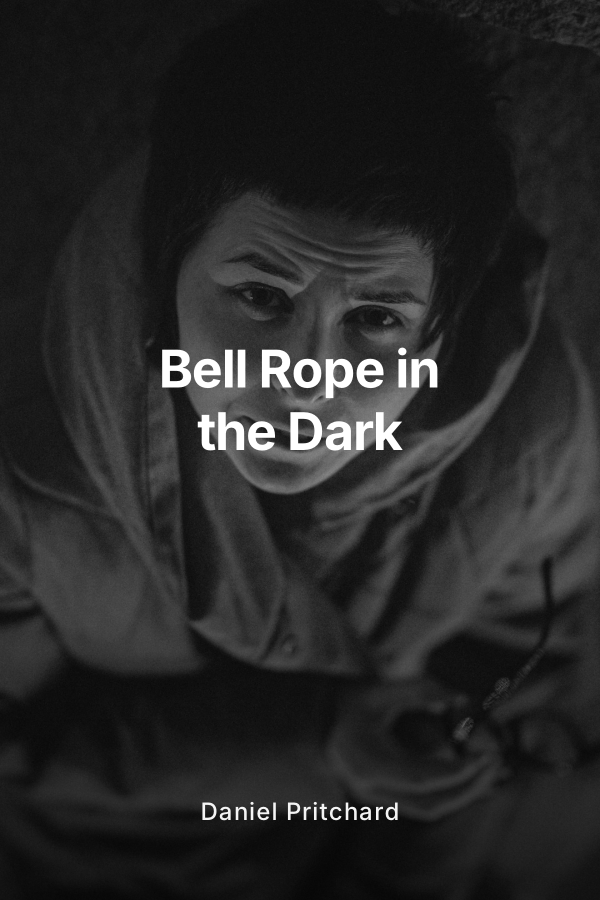
Bell Rope in the Dark
Daniel Pritchard
Tap anywhere to read