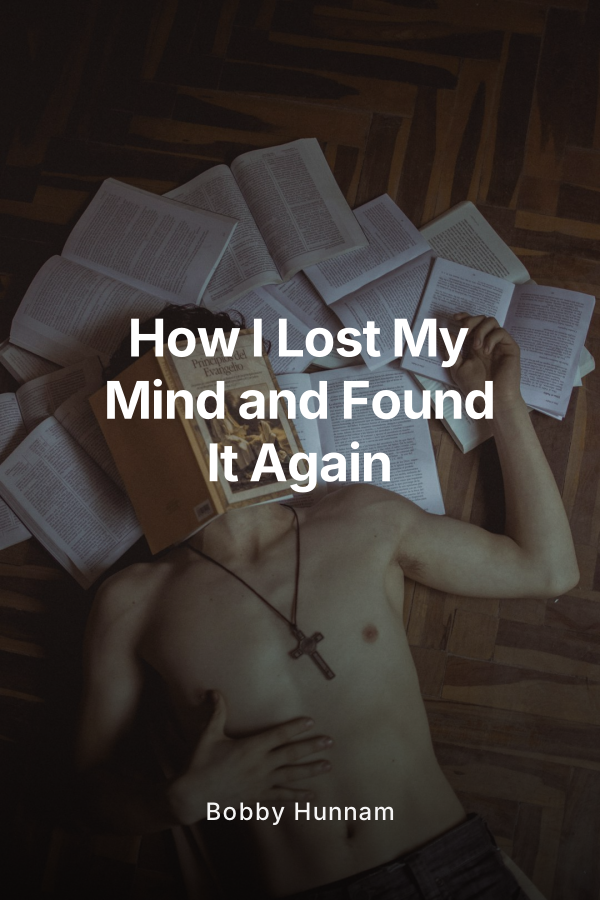
Book Summary
This book is a late‑night confession from someone who has been written off, written up, sedated, sectioned, labelled, and left for dead by a system that claimed to be there to help. It is the story of a life lived under the weight of bipolar disorder and ADHD, tangled with sex, drugs, gambling, and alcohol, and buried for decades under heavy medication that stole more than it ever gave.
Told in a voice that feels like a 3 a.m. conversation with a close friend, “How I Lost My Mind and Found It Again” does not tidy anything up. It moves between past and present, sanity and chaos, hospital wards and late‑night betting shops, prescription pads and empty bottles, numbed days and electric nights. The narrative is raw, detailed, and unfiltered, yet carries a steady thread of insight, bitter humour, and a stubborn refusal to give up.
The book opens inside the locked world of being sectioned under the Mental Health Act: fluorescent lights, plastic cutlery, doors that click shut behind you, and strangers in uniforms deciding what your mind is worth. From there, it jumps back and forth between key moments: early signs that something was different, the first manic rushes and crushing crashes, the lure of sex, substances, and gambling as quick fixes, and the slow drift from “a bit wild” into full‑blown addiction.
Across these scenes runs another story, quieter but just as brutal: the story of overmedication. New pills, new combinations, new promises, each one meant to fix what was “wrong” and instead slowly eroding identity, memory, and time. Twenty‑five years blur into fog, lived in a chemical half‑life. The book shows what that actually feels like from the inside: the weight in the limbs, the dulling of thoughts, the way your own life starts to feel like it belongs to someone else.
This is not simply an anti‑medication rant. It is a witness statement about a broken system that often reaches for control instead of understanding. Psychiatrists and doctors appear as real human beings: some indifferent, some rushed and obedient to guidelines, a few unexpectedly kind. One of them, years later, will describe the author as a “bright light in the very dark tunnel” of the NHS. That compliment, and the friendship behind it, sit alongside rage and grief at how many chances for real help were missed.
Chapter by chapter, the book traces the collision of internal chaos and external control. Bipolar swings drive impulsive choices. ADHD scatters focus, amplifies urges, and sabotages every attempt at a neat, stable life. Addictions sneak in first as relief, then as routine, and finally as rulers of the whole show. Sex becomes a distraction from pain, drugs a shortcut to silence, gambling an illusion of control, alcohol a warm blur where nothing hurts quite so sharply.
Yet woven through the darkest episodes are ordinary moments that make this more than just a horror story. Cups of tea in silent kitchens. Half‑finished messages on a phone. Small jokes between patients on a ward. One nurse who looks you in the eye. A stranger’s random kindness on a day when you are seconds from giving up. These softer scenes are not decoration; they are proof that humanity survives even in the most hostile environments.
The second half of the book shifts towards the question in the title: how do you find your mind again after it has been seized by illness, drowned in chemicals, and fenced in by laws? There is no miracle cure here, no overnight awakening. Recovery appears instead as a messy, stumbling sequence of choices, mistakes, and tiny rebellions: questioning doses, listening to your own body, learning to say no, and daring to believe there might be another way to live.
The narrative explores what it means to rebuild a self when you no longer trust your own brain and no longer trust those who claimed to know it better than you. Reducing or changing medication, facing cravings without the usual crutches, grieving the time that has been lost, and trying to forgive people and systems that may never apologise. Not all relationships are mended. Not all damage is undone. But the direction finally changes.
By the final pages, the reader has walked beside someone who has been caged by both mind and system and has slowly, painfully, learned to unpick the locks from the inside. “Finding it again” does not mean living a perfect life or never struggling. It means owning your story instead of being defined by it, recognising that your brain is wired differently without accepting that you are broken beyond repair, and understanding that recovery is possible even when the world has treated you as a permanent patient.
This book speaks directly to people living with bipolar disorder, ADHD, and addiction, who will recognise the shame, the chaos, and the strange comfort of old habits. It offers them something they rarely get from leaflets and clinicians: a voice that says, “You are not the only one, and you are not beyond hope.” It also forces families, professionals, and anyone who believes the system is always right to confront the gap between theory and reality, protocol and pain.
“How I Lost My Mind and Found It Again” is not polite, not clean, and not easy. It is an honest record of what happens when a vulnerable person meets a powerful system, and how survival sometimes looks like stubbornness, sometimes like surrender, and sometimes like quietly deciding to live on your own terms. It is a story of damage, defiance, and, finally, a fragile but real kind of freedom.