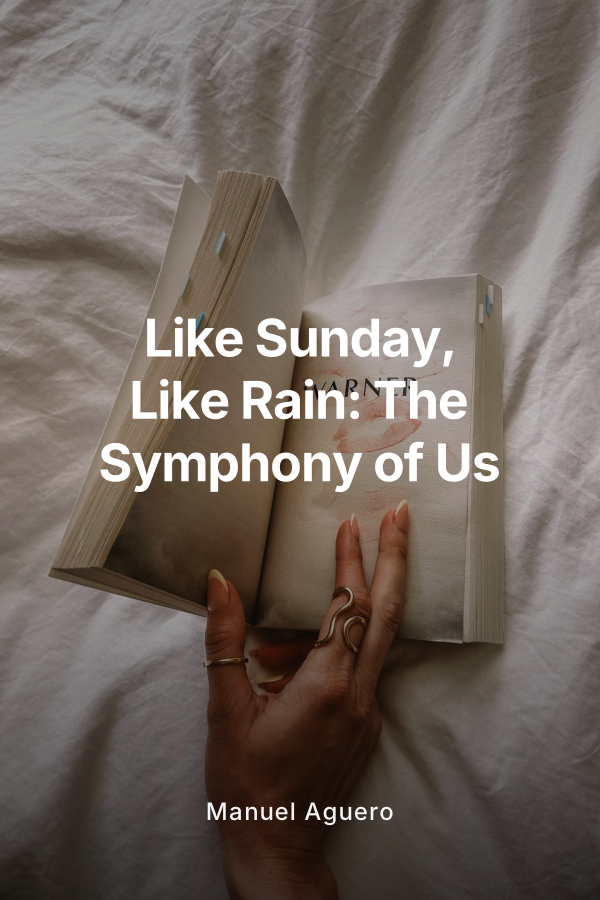
In the quiet, echoing halls of a luxury Manhattan estate, twelve-year-old Reggie Kipper lives like a child apart from the world, brilliant, guarded, and achingly alone. When Eleanor Logan arrives as his summer nanny, she steps into a house of money and silence and slowly becomes the first person to truly hear him. Their connection begins in music, with Reggie’s cello and Eleanor’s cornet answering one another across the stillness, but what first feels like a temporary arrangement soon becomes the start of something much larger, tenderer, and more devastatingly real.
Their summer unfolds as a sanctuary built from shared rituals and private revelations. They visit Barnes & Noble together and choose the complete Harry Potter series, then read all seven books aloud, chapter by chapter, as if the story were a spell meant to keep time from moving too quickly. Alongside the wonder of those books comes the deeper, more difficult work of growing up. Reggie and Eleanor begin to speak honestly about loneliness, identity, adolescence, and the confusing awakening of desire. Their bond deepens through these intimate conversations, through music, through laughter, and through the quiet comfort of being fully seen by another person for the first time. The summer becomes not just a memory, but a foundational experience that reshapes both of them.
When the season ends, the separation is heartbreaking, but it does not end their story. Reggie and Eleanor continue through letters, years of correspondence carrying their voices across the distance of adolescence and into adulthood. These letters become the thread that keeps them tethered, even as life changes them in different ways. Reggie grows into the composer he is meant to become, carrying Eleanor’s influence into his music, while Eleanor, too, matures with the knowledge that one rare, beautiful connection can survive absence, time, and uncertainty. Their relationship becomes less about a single summer than about a devotion that refuses to fade.
At nineteen, Reggie and Eleanor reunite at a prestigious classical concert, where he premieres his symphony, Like Sunday, Like Rain. The performance is not only a triumph of artistry but a declaration of feeling, a work of music shaped by memory, longing, and the woman who helped teach him how to listen to the world. When they find each other again, the unspoken love between them finally comes into the open, and the story turns from youthful attachment into a passionate, consensual adult romance grounded in recognition, trust, and deep emotional history.
From there, their lives expand outward into a sweeping shared future. They travel together on a grand Potter World Tour, revisiting the places and landscapes that first gave shape to their imagination and their intimacy, from Edinburgh to the immersive worlds of the theme parks. Their creative partnership deepens when Reggie is commissioned to compose the score for the HBO Harry Potter series, with Eleanor serving as his closest collaborator, emotional anchor, and muse. What began as a summer ritual of reading becomes a lifelong language of artistry and belonging.
The story culminates in a moving wedding ceremony attended by Reggie’s mother and Eleanor’s reconciled family, bringing love, forgiveness, and healing into the same room. From there, the book opens into the quieter but no less profound poetry of married life, with symphonies, domestic tenderness, and the daily wonder of building a family together. In time, they raise children of their own, carrying forward the warmth, devotion, and music that first saved them.
Like Sunday, Like Rain: The Symphony of Us is a sweeping romantic summary of two souls who begin in loneliness and end in harmony. It is a story about music as refuge, books as bridge, letters as lifeline, and love as the force that turns a passing summer into a lifelong song.