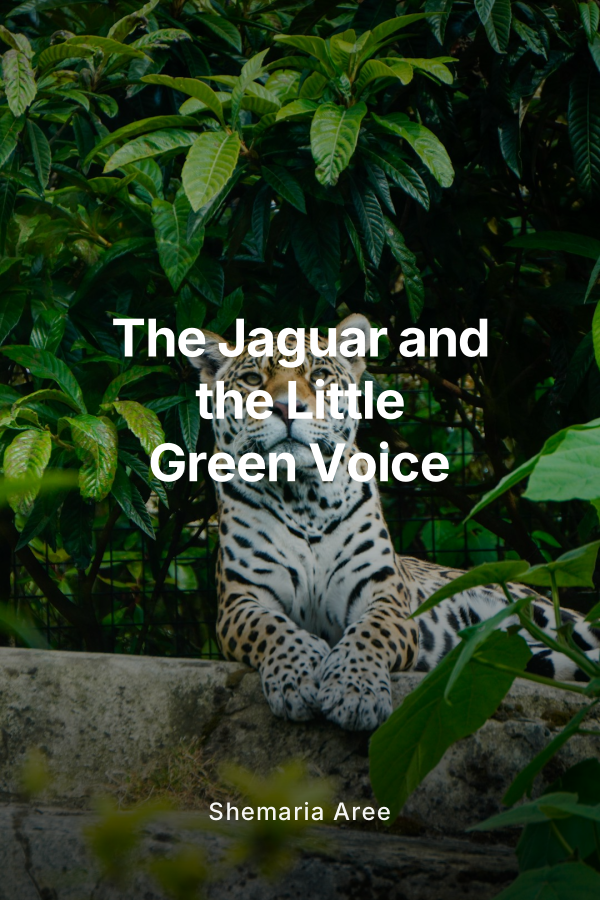
In the heart of a bright, breathing rainforest, where leaves held rain like tiny mirrors and vines twisted through the trees like secret paths, lived a young jaguar named Sol. He moved quietly through the forest, golden and spotted, strong as sunlight slipping over river water. Many animals heard him before they saw him and stepped aside, for jaguars were known as great hunters of the rainforest. But Sol carried in him something gentler than the stories others told about his kind. He carried attention. He noticed the broken wing of a beetle, the leaning stem of a flower, the frightened flutter of small creatures caught far from where they belonged.
One morning, as the forest woke in layers, Sol heard a sound unlike birdsong, monkey chatter, or the hum of insects. It was a thin, trembling cry. He lifted his head and listened. The call came again, soft and wet and frightened, like a raindrop trying not to fall. Following the sound through broad ferns and roots curled like sleeping snakes, he discovered a tiny tree frog perched on a dry fallen branch near the forest floor. The frog was bright green, no bigger than a leaf bud, and his golden eyes were wide with worry.
"My name is Pico," the little frog said. "I was resting on a leaf after the rain, and then I lost my way. I cannot find my home."
Sol looked around. The branch was too dry. The air was too open. Sunlight reached this place in broken, hot patches. It was wrong for a tree frog. Sol knew the forest in the way only those who truly live in a place can know it. He knew that not every animal belonged everywhere. The rainforest was one great home, but inside it were many smaller homes. Some creatures needed the dark river edge. Some needed high branches. Some needed muddy ground, deep hollows, or cool caves. A tree frog needed wet leaves, shade, and the kind of air that stayed soft against the skin.
"I will help you," Sol said.
And so the journey began.
Their path led first through the understory, the dim and crowded middle world of the rainforest, where young trees stretched upward and shrubs pressed close together. Sol told Pico that the rainforest was made of layers, almost like the floors of a giant green house. At the top was the canopy, where many branches wove together and caught the most sunlight. Below that were the smaller trees and plants. Near the ground, the forest was darker, damper, and full of rustling life. Different animals found different places in these layers because each place gave them what they needed.
Pico listened carefully, though he still trembled. "So a habitat is the place where an animal gets what it needs to live?"
"Yes," said Sol. "Food, water, shelter, and safety. A true home is not only where you stand. It is where your body and life can thrive."
As they traveled, they met a troop of monkeys swinging high above them. The monkeys lived where branches were strong and fruit was plentiful. They laughed when they moved, filling the forest with sound. Pico stared upward in wonder, but Sol explained that such a home would not suit a tree frog. It was too open, too busy, and far too high for one so small and damp-skinned. Pico began to understand that admiration was not the same as belonging. A place could be beautiful and still not be yours.
Soon they reached a wide river, green-brown and slow on the surface, though strong beneath. Sol stepped carefully along the bank. He told Pico that some animals made their homes near water, where fish, reeds, mud, and coolness shaped their days. Jaguars, he explained, often traveled great distances through the rainforest. They needed space to roam, shade to rest, and rivers to cross. Their habitat was wide, changing, and rich with many paths. They were powerful animals, but even power needed the right place. A jaguar shut away from the forest would not truly be a jaguar at all.
Pico looked up at him differently then. Sol was not simply large and brave. He, too, belonged to the forest in a particular way.
As afternoon thickened, they entered a place where the air grew wetter. Moss covered trunks. Huge leaves drooped with shining drops. Orchids clung to bark. Tiny insects buzzed in clouds of light. Pico straightened. "This feels closer," he whispered.
But when Sol lifted him toward a cluster of plants, Pico shook his head. "Not here. My home was hidden deeper. There were broad leaves above me, and water gathered in their cups. At night I could hear the forest sing."
Sol paused and considered. He remembered older trees farther in, where bromeliads cradled rainwater between their leaves. Such places sheltered insects, tadpoles, and frogs. He realized Pico did not just need any damp branch. He needed the precise kind of wet, leafy refuge where his small body would stay safe and moist.
The rescue became less a search for a place and more a search for the right place.
Along the way, danger brushed past them in subtle forms. A bright bird swooped low. A snake lay looped like a vine in shadow. The forest, beautiful as it was, asked every creature to know where it belonged. Pico was not made for dry bark in open light. His skin could lose moisture. His small size could leave him exposed. Sol, who had once thought of the rainforest as one endless kingdom, now saw it with sharper tenderness. The forest was not one story but thousands of stories living side by side.
As evening approached, rain began to fall, first in silver dots, then in soft, rushing sheets. To Pico, the rain was a blessing. To Sol, it was a guide. They climbed a gentle slope toward thicker growth, where enormous leaves layered over one another and held water in curved green pools. There, in the dripping hush, Pico gave a sudden cry, this time not from fear but recognition.
"My home!"
Before them stood a cluster of broad plants rising from the branch of an old tree. Water rested inside their leaf cups. The air was cool and damp. Tiny insects moved nearby for food. The leaves folded around the space like walls of emerald silk. Hidden and wet, high enough to be safe yet shaded from too much sun, it was exactly the kind of habitat a tree frog needed.
Pico leaped from Sol's paw onto a shining leaf. At once he seemed transformed. His small body relaxed. His bright skin glowed deeper in the rain. He did not look lost anymore. He looked complete.
From another leaf, a soft voice called out. Then another. Pico's family appeared, green shapes emerging from the wet plants. They had been searching and waiting, listening for him through the storm-dark afternoon. Their reunion was small compared with thunder, but to Sol it felt larger than the sky.
Pico turned back. "You found my home."
Sol lowered himself beside the branch. "No," he said gently. "You remembered it. I only helped you reach it."
For a long moment he remained there, watching the tree frogs settle among the leaves as if the plants themselves had shaped places for them. He understood something then that stayed with him long after the rain stopped. Helping another creature was not only an act of kindness. It was an act of respect. To help well, one had to understand what the other truly needed.
When Sol finally began his journey back through the darkening forest, the rainforest no longer seemed merely vast. It seemed intimate. Every root hollow, riverbank, treetop, and dripping leaf held a life fitted to it. The monkeys needed branches and fruit. The fish needed water. The tree frogs needed wet leafy shelter. Jaguars needed room, shade, and the living paths of the forest. No habitat was better than another. Each was right for the life it held.
That night the moon rose pale behind clouds, and the forest shimmered with calls, chirps, croaks, and rustles. Sol rested beneath a great tree and listened. He thought of Pico safe in his rain-filled home. He thought of all the creatures sleeping where they belonged. And he knew that the rainforest was more than a place full of animals. It was a weaving of homes, each one precious, each one necessary.
The heart of the story is simple: every animal needs the right habitat to live well. A home is not just where an animal ends up. It is the place that gives it what it needs. For a tree frog, that means wet leafy shelter and water nearby. For a jaguar, it means a broad rainforest full of cover, movement, and life. When children follow Sol and Pico through this rescue, they discover that habitats are not just backgrounds to an adventure. They are the reason the adventure matters.
In this warm rainforest tale for young readers, the excitement of a search is joined with gentle science. The story invites children to notice how animals fit their environments and how different parts of the rainforest support different kinds of life. It offers wonder without losing clarity, and feeling without losing facts. By the end, readers are left with an image both comforting and true: in the living world, every creature needs a place that feels like home.
The book concept in the provided context centers on a children's adventure with facts for about age eight, featuring rainforest animals, a talking jaguar, a lost tree frog, a focus on habitats, and a colorful storybook feel