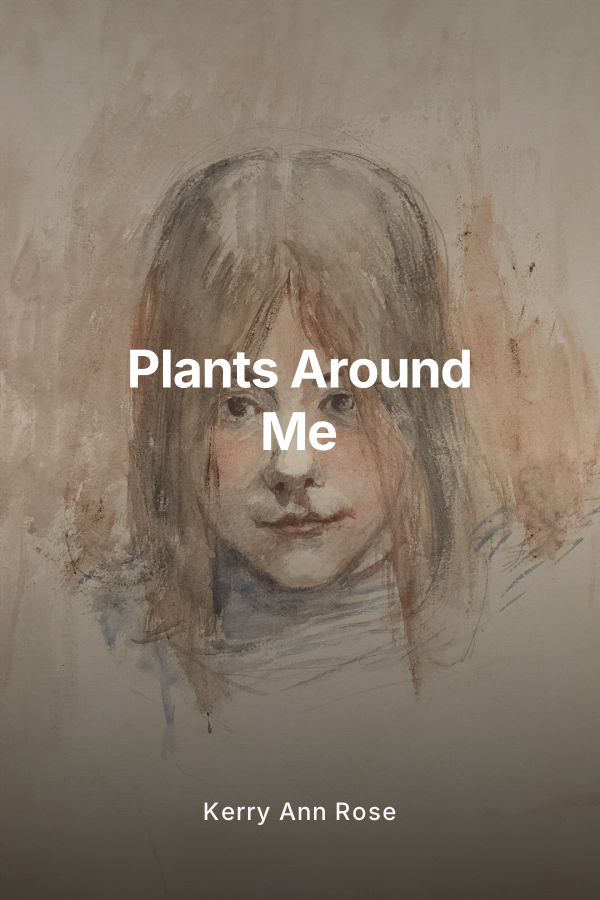
This booklet is an interactive first guide to plants for very young children, carefully designed for ages three to five. It turns early learning about the plant world into a playful, hands-on experience through tracing and colouring. The concept focuses on helping children notice the plants that grow around them and understand that different plants have different parts and uses, all in a gentle, simple way that suits beginning learners .
The book opens with a bright, friendly cover that shows a little boy surrounded by plants. This cover is fully coloured to attract a child’s attention and signal that the inside pages invite creativity. Inside, a clear title page repeats the book’s name, “Plants Around Me,” and credits Kazim Carter. A short safety note follows, written for both children and adults, reminding families that real plants should only be touched or tasted with an adult’s guidance. This sets a caring, responsible tone while still keeping the focus on fun exploration.
A simple contents page helps adults navigate the booklet. It lists each section in the order that guides the child from the easiest, most concrete ideas to slightly broader ones: edible root vegetables, edible leafy vegetables, everyday vegetables, fruits with one seed, fruits with many seeds, big and little plants, plants that grow in water and air, and plants used for medicine . Each topic is given two or three pages, so the full booklet has about twenty pages. The contents page also shows page ranges, making it easy for a parent or teacher to turn straight to a topic they want to use, such as “Fruits with Many Seeds.”
The heart of the booklet consists of black-and-white plant names laid out in clear, capital-first lettering for tracing. There are no colours printed inside the plant pages, so children can freely choose and apply their own colours. Each page has a simple heading, such as “Edible Root Vegetables,” followed by two or three short, easy plant names like Carrot, Potato, or Beet. Children trace over the dotted outlines of each name, helping them develop early writing skills and letter recognition while they also talk about the foods they see at home or in the market. Keeping the names short supports small hands and developing fine motor skills.
The “edible roots” and “edible leaves” sections introduce the idea that some parts of plants grow under the ground while others grow above it and are eaten as leaves. Root pages might feature Carrot, Potato, and Beet, while leafy pages might include Spinach, Lettuce, and Cabbage. Children trace the names, then colour accompanying outline sketches (to be illustrated later) that show the general shape of each plant in a simple but slightly realistic style. This balance helps children recognise the plants in real life without overwhelming them with detail.
Next, the booklet moves into “Vegetables” as everyday foods that may include parts like stems, bulbs, or flowers. Pages in this section might include familiar names such as Tomato, Onion, and Pea. The focus remains on tracing and colouring, rather than on long explanations, so children stay engaged through activity rather than dense text. Short, clear headings give adults a prompt for simple conversations, such as “Can you find a tomato at home?” without cluttering the page.
The fruit sections help children start categorising plants in a playful, visual way. “Fruits with One Seed” includes examples like Mango and Avocado, while “Fruits with Many Seeds” might show Apple, Orange, Watermelon, or Papaya. The idea of “one seed” versus “many seeds” is kept concrete: an adult can cut real fruit with the child and compare what they see to the names they are tracing. The booklet thus becomes a bridge between paper learning and real-world exploration, all at a level suitable for ages three to five.
Big and little plants are introduced in a simple conceptual section that contrasts a Tree, a Bush, and Grass. Instead of long labels such as “big tree” or “small grass,” the booklet keeps to the core plant names only, preserving simplicity while still inviting adults to talk about size and height. Children trace “Tree,” “Bush,” and “Grass” on separate pages or shared spreads, and colour outlines that show one tall plant, one medium-sized, and one very low to the ground, reinforcing the comparison visually.
The booklet then touches on where some plants live. “Plants That Grow in Water and Air” introduces a couple of water-loving plants, like Lotus or Water Lily, alongside at least one plant that seems to grow “in the air” or above the ground, inviting curiosity about how different plants find what they need. Again, names remain short and traceable. Images are kept clean and uncluttered so that even young children can recognise the basic forms and enjoy colouring them.
Finally, a short section on “Plants Used for Medicine” gently introduces the idea that some plants help people stay healthy. Common examples such as Aloe and Mint are chosen because they are both familiar and simple to draw. There are no health claims or instructions, only plant names to trace and pictures to colour, leaving any deeper discussion to parents or teachers while still planting an early seed of awareness that plants have many roles in our lives.
Throughout the booklet, every plant page follows a predictable pattern: a clear heading at the top, one to three plant names written with capital first letters for tracing, and space for simple outline drawings that the child can colour. Page numbers appear at the bottom left corner so adults can easily match them to the contents page. The regular layout gives young children a sense of security and mastery, while the variety of plants and categories keeps their curiosity alive.
“Plants Around Me: A Tracing and Colouring Booklet by Kazim Carter” is therefore both a quiet literacy tool and an early science resource. It gives children the joy of colouring and tracing, supports early writing and observation, and introduces key plant ideas in a way that is gentle, engaging, and perfectly scaled for small hands and short attention spans. By inviting children to trace the names of familiar roots, leaves, vegetables, fruits, and helpful plants, it helps them see the living world around them as friendly, interesting, and worth exploring.