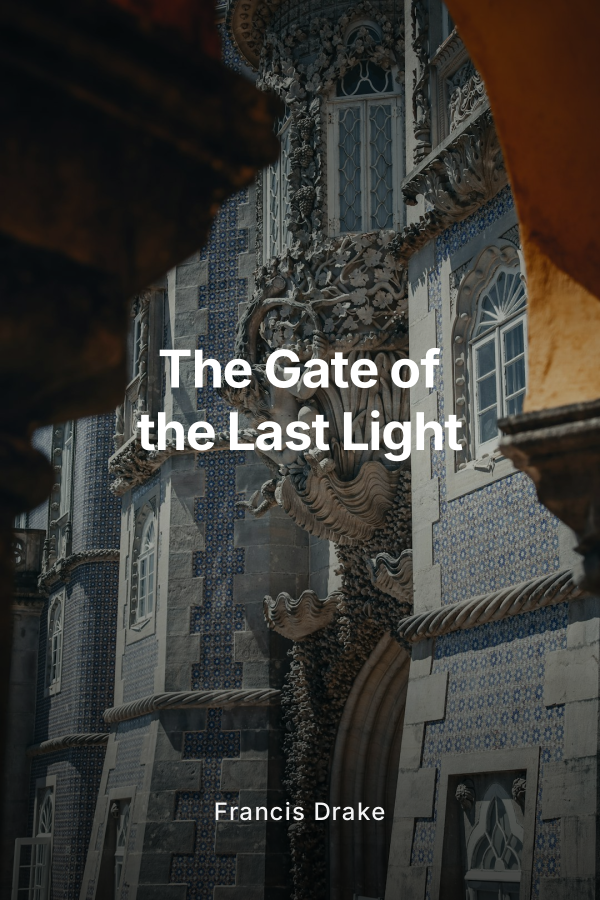
This book follows a band of unlikely adventurers who answer a royal summons that others are too afraid to heed. The king has posted a call for the bravest group in the realm, promising glory, royal favor, and the chance to end a spreading catastrophe. No one who has tried before has returned. Yet the true horror of this mission will not lie in any monster they face, but in a permanent sacrifice that none of them can yet imagine, a cost only revealed at the very end of their journey .
The story begins in a kingdom stalked by growing rifts in reality, cracks in the world that leak nightmares, demons, and strange distortions. The people whisper about a cursed gate far beyond the borders, a structure tied to an ancient bargain the royal line once made. When the rifts worsen and entire villages are lost overnight, the king abandons quiet diplomacy and soft requests. He posts a stark proclamation that spreads from city squares to roadside inns: he seeks the bravest group of adventurers, promising riches and titles to any who can reach the legendary gate and seal it forever.
Those who answer are not shining champions so much as complicated souls who carry scars and secrets. Some come chasing reward, some redemption, some the chance to settle a personal score with the horrors spilling from the rifts. One might have seen the gate in dreams since childhood, another could be a disgraced royal guard seeking to repair a broken oath, while another bears the memory of a village destroyed when the first tear in reality opened at the edge of their fields . Their motives do not align neatly, yet they must learn to move as one if they hope to survive.
Across five chapters, the book traces their passage from ordinary mercenary work into a tightening spiral of impossible choices. At first the mission looks simple, if dangerous. The group escorts refugee caravans, hunts creatures that slip through minor rifts, and negotiates with frightened border lords. They begin as hired blades and quick tongues, squabbling over coin and command. Yet each encounter slowly peels back a layer of the truth. The rifts are not accidents. The gate is not a mere doorway but the keystone of a pact that once saved the world at an unforgivable price.
The middle of the book plunges the party into set pieces that test not only their skills but their trust in each other. They fight in crumbling fortresses where gravity tilts sideways without warning. They cross forests where time slips and loops, forcing them to face versions of events where they failed one another. They negotiate with entities that remember the first opening of the gate and speak in riddles about “balances” and “owed debts.” Moments of dark humor, unexpected tenderness, and fragile alliances help them hold together when logic and physics no longer can.
As they draw closer to the gate, the scale of the task grows clearer. The rifts are symptoms, not causes. Long ago, someone bound an encroaching darkness at the edge of the world by agreeing to keep the gate open just wide enough to vent part of its power into another realm. That binding has started to unravel. To repair it requires a sacrifice that cannot be undone. Not a ritual loss of power or an offering of treasure, but a living soul who will step across the threshold and remain on the far side to anchor the seal for as long as the world endures.
Yet the party does not know this at first. The knowledge is guarded, parceled out by reluctant mentors, cryptic visions, and incomplete manuscripts. The king’s proclamation speaks only of sealing the gate, never of the one who must stay behind. The adventurers suspect that there must be some hidden cost, but they imagine it in terms they can accept: wounds, shortened lives, a burned-out talent. The truth advances on them in fragments, building tension between those who want to turn back and those who insist that too much has been lost already to stop now.
In the final chapter, the permanence of the sacrifice is revealed in full. The party reaches the gate, discovering it as both monument and wound, a tower of impossible stone built over an emptiness that hums like a held breath. Here all the threads of their pasts converge. Old loyalties to crown and kingdom collide with the private vows they have made to each other along the way. The revelation fits every hint they have seen and every half-truth they have been told. One of them must go through, and whoever crosses will never come back.
The choice is not quick or simple. The story lingers on the arguments, the offers, the desperate search for a loophole. NPC allies step forward, willing to take the burden. Enemies from earlier in the book return with their own agendas, some offering a twisted bargain that might save one life at the expense of many others. The demon that first breached the kingdom’s defenses may propose an alternative price, something that sounds merciful yet would simply shift the suffering onto unseen victims in another time or place. The group must decide what kind of salvation they can live with, and what compromises would make the victory hollow.
Throughout the book, tension builds between two ways of facing the inevitable. One side believes that the noblest path is open-eyed self sacrifice, a single heroic act that draws a clear line under the story. The other fears that such stories are often lies told by those who benefit from others’ pain. They search for ways to share the burden, to build a seal that requires not one person trapped forever, but a chain of guardians, each serving a while before passing the role on. Yet the ancient architecture of the gate resists this adaptation. Sometimes, the world is built around older rules than human compassion.
When the final decision comes, it is shaped by everything the characters have endured. Old grudges resolve or remain bitter. Quiet friendships prove stronger than blood ties. Someone steps forward who has the clearest sense of what the sacrifice means, not only for them but for those who will live in the light of a healed sky. Whether this is a protagonist we have followed from the beginning or an unexpected figure who refuses to let the others be taken is revealed only in those last pages. What matters is that the story honors the cost. Nothing magically restores what is lost, and no narrator softens the loneliness of what lies beyond the gate.
Yet the ending is not hopeless. In the aftermath, the survivors carry forward more than grief. They bring back stories, warnings, and a new way of understanding courage. The kingdom that once tried to hide the truth of the gate must now reckon with it in public. The king’s next proclamations are less about glory and more about responsibility. Monuments rise not to a faceless “hero” but to an honest description of what was done and why. The rifts close, slowly, leaving scars in the landscape where future generations will build shrines and cities, never entirely forgetting that the safety they enjoy rests on a single, unreturning choice.
The Gate of the Last Light is written for readers who relish character driven fantasy where magic comes with a ledger, not a punchline. It explores how ordinary people respond when their courage is not about surviving a battle, but accepting a price that will outlast them. It invites the audience to imagine what they themselves would do if called to step forward at the end of the world, when someone must cross the final threshold so that others can go home.