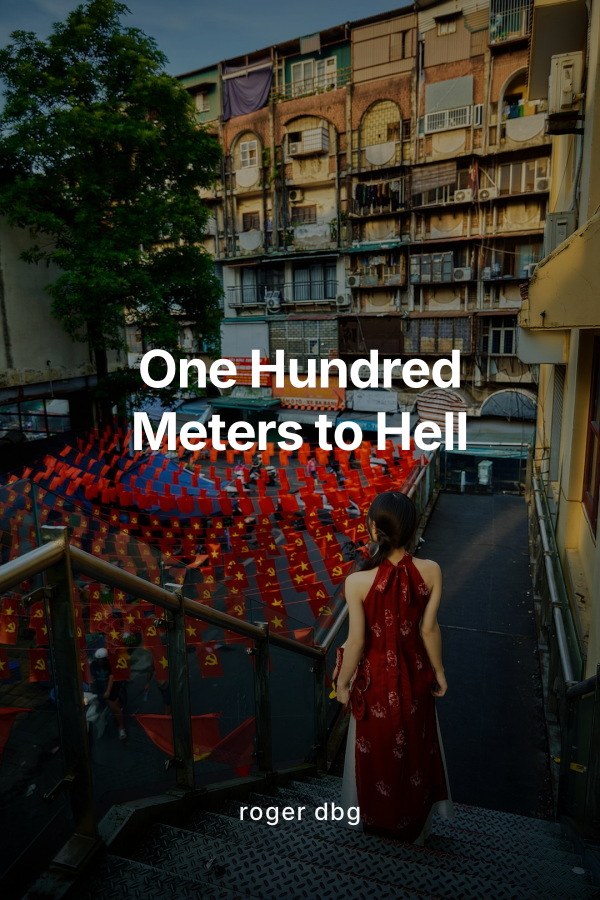
This book follows a single tank crew across the final phase of a brutal campaign, tracing their journey from grim resolve to utter moral exhaustion as each “hundred meters” forward costs them another piece of their humanity. It is a character driven war novel focused not on strategy or politics but on the intimate, suffocating reality inside a steel coffin, and on what remains of a person when the fighting finally ends with one last shot.
At the heart of the story is a close knit crew that begins as a functioning, if frayed, family inside the tank. Each member carries a different way of coping with the permanent nearness of death. One cracks jokes and paints crude cartoons on spent shell casings. Another writes letters he never sends. The commander keeps a meticulous ritual of checking equipment, as if order alone can fend off chaos. As they advance, the slogan “One hundred meters to hell” becomes a dark in joke that measures every new assault, every suicidal push through mined fields and enemy fire, and every narrowing chance that any of them will go home.
The book is structured around five large movements in the campaign, each chapter capturing a new stage of internal and external collapse. In the opening chapter, the reader meets the crew on the edge of a looming offensive. The men already understand that the official promises of quick victory are lies, but they still cling to shards of hope and to each other. There is nervous banter, small acts of kindness, and the fragile comfort of routine. The tank itself is introduced almost as another character, an armored cocoon that smells of oil, metal, sweat, and old smoke. It is both their shelter and their trap.
As the story progresses, the fighting intensifies and the crew’s world shrinks. Long stretches of waiting are shattered by brutal, sensory overloaded minutes of combat. The novel dwells in the details that never make it into official reports the ringing in the ears that does not fade, the terror of being buttoned up inside while shells hammer the armor, the way time stretches when the loader fumbles a shell and the next enemy round might already be in the air. Each battle takes its toll, not always in visible wounds. Characters begin to show cracks: a gunner who once prided himself on precision starts missing easy shots; a normally calm driver becomes paranoid about mines and ghosts phantom obstacles on the road.
Between battles, the crew’s interactions with others widen the emotional canvas. They encounter fresh replacements still flushed with the fantasy of heroism, cynical rear echelon officers who treat them as expendable assets, and other veteran crews who understand, without words, that each day survived is a borrowed day. One of the most poignant threads involves how others react to the tank’s reputation. The crew’s vehicle gradually becomes infamous at the front, a symbol of both bravery and doom. In one scene near the final offensive, soldiers either cheer or fall uncomfortably silent when they see their tank roll past with “100 more meters to hell” scrawled on the armor, and an officer quietly hands them extra ammunition, not as support but as an unspoken acknowledgment that they are unlikely to return.
The psychological descent of the protagonist forms the central arc. Initially, he is capable of anger, fear, affection, and even grim humor. He cares about his crew, feels protective loyalty to them, and reacts with outrage when higher command sacrifices units for a pointless show of progress. As comrades fall, however, each loss is processed with less and less emotional energy. There is grief, but it becomes compressed, delayed, or numbed. The book shows how survival sometimes requires a narrowing of feeling, until what remains is a kind of hard, empty competence.
The climax builds toward a final, desperate battle in which the tank crew is ordered to push “just one more hundred meters” against overwhelming odds. The chapter does not focus on the larger tactical picture. Instead, it clings to the confined interior: shouted orders, the violent recoil of the gun, the scramble to load another shell, the sickening lurch as the tank takes a hit. Characters who have been present since the early pages die in fast, chaotic moments that the narrative refuses to romanticize. There is no grand last speech, only half finished sentences cut off by impact or flame.
By the end of this battle, almost everyone the reader has come to know is dead or irreparably broken. The protagonist emerges as a “survivor” in the narrowest sense, physically alive yet hollowed out. The book’s final movement follows him as he crawls into a new tank to replace another fallen crew. This moment is framed not as rebirth but as a grim continuation. He is given another machine, another assignment, another target. The text dwells on the tiny clues that something human still stirs inside him a tremor in his hand as he touches the worn metal, a flash of a lost comrade’s face, a muscle in his jaw that tightens when he hears a familiar, careless joke from his new crew.
The last pages concentrate on a single act. The protagonist loads and fires one more round. What he shoots at is left deliberately ambiguous in emotional meaning. It might destroy an enemy tank that would have killed another unit. It might be a near automatic reaction to a silhouette in the smoke. On the surface, it is just another job completed, another command obeyed. Yet, for the reader, this final shot contains the entire weight of the book. It crystallizes the novel’s central question: what does it mean to keep going when every step forward is another step into hell, and when the ability to function may depend on the very numbness that makes future peace almost impossible?
Throughout the summary of the full work, several themes interlock. The first is the steady erosion of individual agency under a grinding system of war. Orders arrive from distant headquarters with cruel simplicity “advance one hundred meters” that hides the true cost in blood and psyche. The crew struggles to assert small choices inside that machine: deciding who takes the first watch, who drinks the last coffee, whether to fire on a barely visible figure who might be surrendering rather than fighting. Each such moment tests their remaining moral boundaries.
A second theme is the double edged nature of camaraderie. The bond inside the tank is the crew’s greatest strength and their most profound vulnerability. They need one another to stay sane and effective, but that same closeness makes each death a shattering blow. The book refuses easy sentimentality. The men argue, resent each other’s flaws, and occasionally hurt one another in petty or cruel ways. Yet in critical moments they share unspoken trust. A loader will risk exposure under fire to clear a jam because he cannot bear the thought of the gunner dying helpless. A commander lies about the odds to keep his driver from freezing up. These relationships form the emotional core that makes the eventual losses resonate.
A third key theme is the gap between public narratives of war and private reality. The motto on the tank’s hull, “100 more meters to hell,” becomes a kind of grim counter slogan to official propaganda. To outsiders, it can look like raw bravado or inspirational courage. For the crew, it serves as a blunt truth telling admission that every push forward is measured not in glory but in suffering. Encounters with rear echelon personnel, political officers, and civilians highlight the misunderstandings and willful illusions that surround the front line soldiers. People ask for autographs, pose for photographs with the tank, or deliver rousing speeches that sound hollow inside the cramped turret.
Stylistically, the book aims for a tense, immersive realism. It uses close interior perspectives, clipped dialogue, and careful sensory detail to convey life inside the tank without drifting into technical fetishism. Battles are confusing and frightening, not cleanly choreographed. The narrative often narrows to a single perception the smell of burned insulation, the hot sting of metal fragments on skin, the way time fractures around the thunder of the main gun. Periods of quiet are treated with equal care, capturing the strange normality of men cooking, cleaning weapons, and sharing stories in the shadow of impending violence.
For readers, the appeal of this novel lies less in surprise twists than in emotional depth and honesty. It speaks to those interested in character driven war stories, psychological drama, and explorations of trauma and resilience. The book invites reflection on how people adapt, compromise, and fracture under unrelenting pressure, and on whether any kind of redemption is possible after surviving something that cost so much. The final image of the protagonist loading and firing one more shell in a new tank is not just an endpoint for the narrative, but an opening for the reader’s own judgment. Has he become nothing more than a weapon, or is there still a chance that the faint traces of feeling hinted at in his last moments of interiority might someday grow back into a fuller humanity?
In the end, “One Hundred Meters to Hell” presents war not as a backdrop for heroics but as a relentless, narrowing journey that strips away illusions one layer at a time. Every short advance, every “hundred meters,” requires a trade: safety for risk, hope for acceptance, feeling for numb endurance. By tracking a single crew across the full arc from grim determination to emptied survival, the book captures the tragic logic of a conflict that consumes its most loyal servants. It leaves readers with a haunting recognition that the true distance to hell is not measured on any map, but in the span between who the characters were when they climbed into the tank for the first time and who remains when one man, alone in a new steel shell, shoulders the gun, sights through smoke, and pulls the trigger one last time.