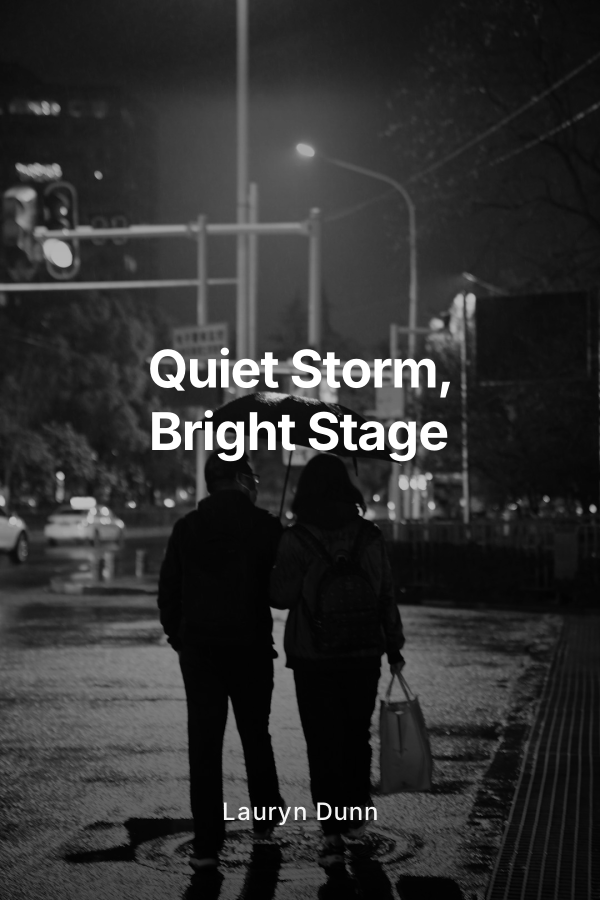
This book is a slow, emotional K pop idol romance that traces how an easy, cozy friendship between two members of the same group shifts into something neither of them can ignore, then explodes under the harshest light possible when one of them is outed against his will. It is written for fans who love long burn dynamics, domestic comfort, aching vulnerability, and the very specific pain of trying to protect both a relationship and a career within an industry that demands silence.
At its core, the story follows Jaehyun and Sunoo, two idols whose chemistry has always looked a little too natural on camera. In the beginning, they really are “just friends” in a way that feels safe to them, even as it reads like a romance to anyone watching. The opening chapters linger in their easy routine: shared snacks in the dorm kitchen, late night drama marathons, casual shoulder bumps in practice, and the kind of eye contact that stays just a second too long. Jaehyun, more guarded with his feelings, keeps drawing a line in his head that he already knows he wants to cross. Sunoo, more open but also more fragile than he appears, chooses to believe that line will hold forever.
As the group’s fame grows, so does the intensity of their bond. What began as playful skinship slowly becomes a private language. A hand on the back to steady the other during a performance says I am here. A hoodie placed over cold shoulders at 3 a.m. rehearsals says I see you. A quiet “you did well” whispered into a hairline when the cameras are off says I care too much to admit. Fans start cutting together compilation videos of their moments, arguing online about whether they are “real” or just good at fanservice. The company turns a blind eye as long as the attention remains profitable. Inside the dorm, however, the mood is more complicated. Members tease them, but they also notice when a joke cuts too close. Family members comment that they “seem very close.” The line is still there, but it is getting thinner every day.
The turning point that shatters this fragile balance is not a confession, but a betrayal. Jaehyun is outed without warning, his sexuality exposed by someone who decides his private truth is a marketable secret. Whether through a leaked message, a stolen photo, or a misinterpreted moment with Sunoo, the result is the same: in a single night, Jaehyun goes from beloved idol to scandal headline. The company pulls him into emergency meetings, not out of care, but out of fear for the group’s image. There are instructions, threats, and media strategies that never once ask what he wants. Jaehyun’s first instinct is to pull away from Sunoo, convinced that staying close will only drag him down. Sunoo’s first instinct is to run toward him. Neither instinct is simple to follow when every step is watched.
The middle of the book is shaped by the long, difficult emotional arcs that follow. Jaehyun spirals through self hatred, guilt, and a crushing belief that he has ruined not only his own career, but Sunoo’s future and the group’s hard work. He convinces himself that his feelings were a selfish indulgence he could never afford. Sunoo, meanwhile, struggles with a different kind of pain. He feels responsible for the timing of the outing and for not seeing the danger sooner. He is furious at the company for wanting Jaehyun silent, and at the world for making love feel like a curse. Their relationship becomes a secret inside a secret, layered under public denials and controlled statements. They start to argue not about whether they love each other, but about whether that love can survive in a life where they are expected to be both visible and invisible at the same time.
Yet within these darkest moments, the story also gives them anchors. Other members, initially shocked, rally around them in quiet but decisive ways. A roommate leaves a light on, waiting up after a bad schedule. A leader covers for them when they need to disappear for an hour to breathe. Families, after an initial struggle to understand the risks, choose to stand on the side of their sons rather than the comfort of silence. Little by little, Jaehyun and Sunoo learn to trust these pockets of support. They begin to see that while the industry is cold, the people in their immediate circle are not.
Once Jaehyun’s outing shifts from breaking news to background noise, the group returns to the public eye. It is here that the book leans hard into slow burn milestones that blur the line between friendship and romance in ways that only they can fully read. Now that everyone close to them “kind of knows,” they maintain secrecy only in name. They still do not speak openly about being together, but they move through the world as if the truth lives between them and needs no announcement. A first night of sleeping in the same bed starts as “you looked like you needed someone there” and becomes a quiet habit that neither of them questions again. A first hand hold in public is staged as a friendly gesture for a variety show, but the way they squeeze each other’s fingers during a commercial break is entirely their own. Jealous moments, misunderstandings about being seen together, and gentle reconciliations deepen their bond instead of breaking it.
The company’s stance remains conflicted. Officially, Jaehyun and Sunoo are just close friends and dedicated professionals. Unofficially, management chooses not to look too closely, preferring plausible deniability over confrontation. This double standard filters down into how fans react. Some are fiercely protective, reading every subtle interaction as proof of a love story and defending them against hate. Others are divided, uncomfortable with the idea of their idols being queer or in a relationship at all. The book does not simplify this divide. Instead, it explores how Jaehyun and Sunoo navigate it, understanding that the same fandom that lifts them up can also become a source of anxiety and hurt.
The final chapters focus on the careful, conscious decision the two make about how to live going forward. They accept that they may never be able to hold a press conference and state their truth plainly. They may never have a grand public declaration. What they can have is a steady, unapologetic presence in each other’s lives that does not back down, even when they cannot name it out loud. They choose to keep acting like themselves, on and off stage, preserving the same dynamic that began as friendship but now carries the weight of shared history, risk, and commitment. Their love story becomes an open secret, something everyone sees but nobody fully claims.
Throughout the book, the tone remains intimate, character driven, and emotionally intense. Rather than centering on external plot twists, it returns again and again to the inner lives of Jaehyun and Sunoo, tracing how their thoughts, fears, and quiet hopes shift from chapter to chapter. Each of the five chapters focuses on a distinct phase of their journey: the safe warmth of early friendship, the dawning awareness of their feelings, the sudden violence of being outed, the long struggle toward self acceptance and mutual trust, and finally the hard won peace of choosing to love each other in a world that refuses to make space for them.
This is a story about queer love in an unforgiving spotlight, but it is also about the ways people build family under pressure. It shows how a relationship can move from comforting to terrifying to unshakable, all within the same four walls of a dorm and the same rectangle of a camera frame. For readers who crave a slow unfolding of tension, a deep dive into emotional fallout, and the bittersweet reality of “everyone kind of knows, but we don’t say it,” Quiet Storm, Bright Stage offers a layered, aching, ultimately hopeful portrait of two boys growing into their own truth together.