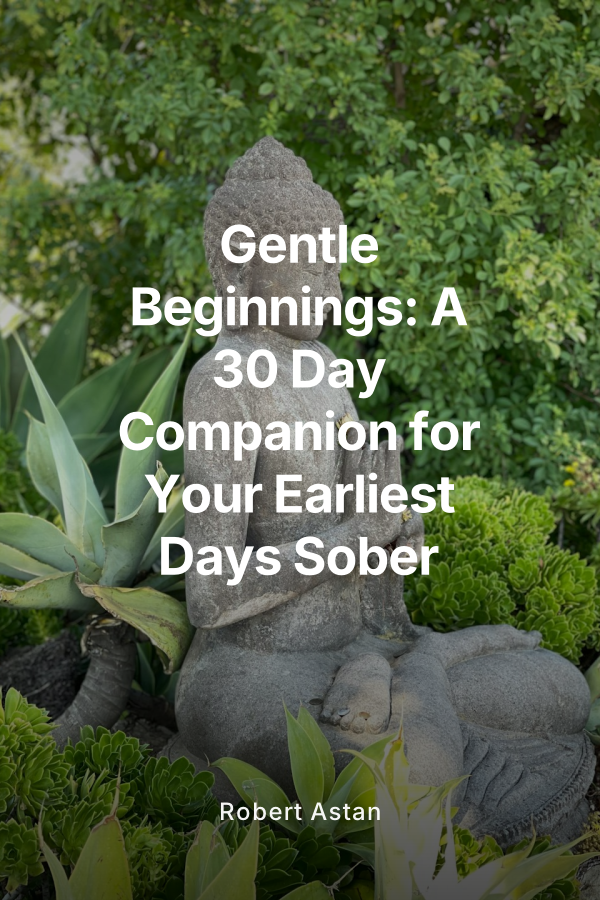
This book is a 30 day guided journal created for people in their very first weeks of sobriety. It is designed as a gentle, hopeful companion, not a drill sergeant or a lecture. The structure, prompts, and tone are all built around three core needs that often appear in early sobriety: the need for safety, the need for softness and self compassion, and the need for a sense of progress that does not overwhelm or shame.
The journal avoids clinical heaviness and instead speaks in a warm, steady voice that helps readers notice what is happening inside them, name it without judgment, and respond with one small, kind action at a time. There is no geographical focus and no “one right way” to recover. Instead, the pages support people who may be walking many different recovery paths while still needing the same basic daily anchors.
Across 30 days, readers return to a gentle rhythm. Each day offers a brief, grounding check in, a few open yet structured reflection prompts, and small, realistic invitations to care for themselves and reach for support. Rather than pushing for dramatic breakthroughs, the book honors tiny but real victories: getting through a craving, making it to bedtime without using, telling the truth to one safe person, or simply being willing to try again after a hard day. This steady repetition of care helps build emotional muscles that are often exhausted in early sobriety.
The safety thread runs quietly but clearly throughout. Many in very early sobriety wake up each day not entirely sure how they will get through the next twenty four hours. For that reason, the daily pages include optional prompts that help the reader quickly assess whether they feel at risk of using today, notice specific urges or triggers, and identify one safe action they can take right now. These might include reaching out to a trusted person, changing their environment for a while, or grounding themselves in their senses. The language is intentionally soft and non directive, offering suggestions rather than commands so that the reader maintains a sense of agency.
Equally important is the book’s commitment to hope and softness. Each day intentionally circles back to what is going right rather than only what is hard. Prompts invite the reader to notice something they handled even slightly better than before, to acknowledge one thing they are proud of, and to rewrite a harsh thought into a gentler, more truthful one. This daily practice of replacing shame with curiosity and care becomes a quiet backbone of the journal. Over time, these small shifts help loosen the grip of self hatred and failure stories that can be so loud at the start of sobriety.
Another ongoing feature is the subtle encouragement to use support without prescribing any specific program or location. Instead of offering lists of resources tied to a place, the journal simply makes space for the reader to consider whether there is anything they want to share with a counselor, sponsor, peer-support person, or any trusted person in their life. A recurring prompt, “Is there anything I want to talk about with someone I trust?” appears throughout. Some days this will remain blank. Other days, the reader can jot down a sentence or two that they can bring into a conversation later, so they do not have to hold everything in their head. This light touch respects privacy and autonomy while still gently reinforcing that sobriety does not have to be carried alone.
To keep the book from feeling like homework, each chapter frames a group of days around a simple, human theme rather than a complex lesson. The early days focus on arriving in the present, noticing the body and breath, and making room for all the mixed feelings that come with putting down a substance. The middle days move slowly toward rebuilding self trust, learning to ride out cravings, and finding small routines that help. The later days explore hope, future self, and the possibility of joy that is not built on escape. Throughout, the emphasis remains on presence and kindness rather than perfection or performance.
The tone of the writing is intentionally quiet and reassuring. Instead of pep talks or warnings, the narrator feels like a calm friend sitting beside the reader, reminding them that they are not broken for struggling and that it is enough to take this one day at a time. Shame is never used as motivation. There is no tally of “good” or “bad” days, only honest days. Each prompt is crafted to be simple enough for a tired mind, yet deep enough to help the reader slowly know themselves better.
By the end of the 30 days, the reader has not “finished” recovery. Instead, they have practiced showing up for themselves repeatedly, even when they did not want to write, even when they felt numb, angry, or scared. They have written through cravings, small wins, slips or close calls, and quiet, ordinary days. They have collected evidence that they can stay present without the substance, that their feelings are survivable, and that they can ask for help when they need it. This accumulated evidence is one of the most powerful gifts the journal offers.
“Gentle Beginnings: A 30 Day Companion for Your Earliest Days Sober” is not a solution in itself. It is a soft structure that holds someone through the most fragile first stretch of sobriety, helping them move from white knuckling each hour to walking with a little more steadiness and self compassion. It is built for people who are tender, tired, and trying, and who need a quiet place each day where they are not judged, only met exactly where they are.