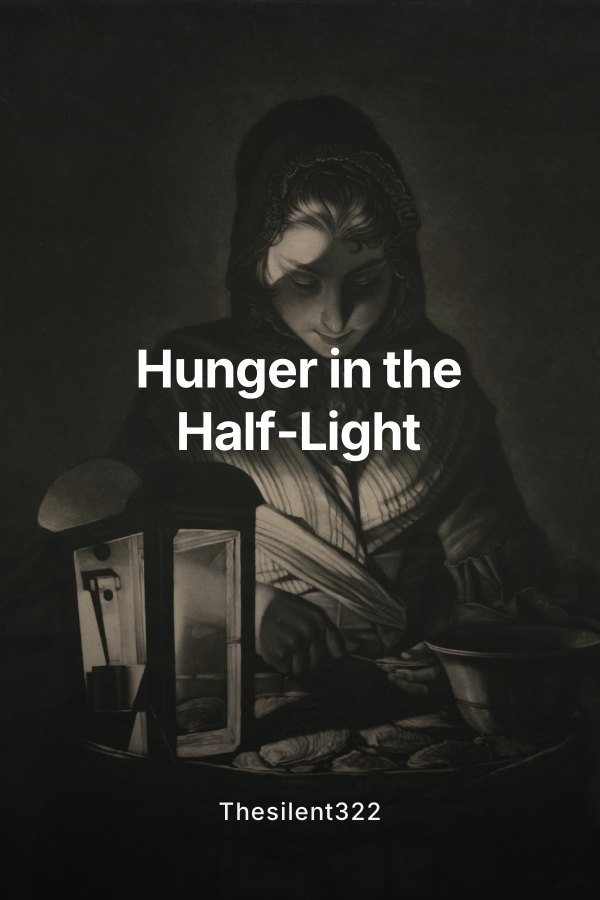
This book is a 10,000 word, five chapter work of intimate queer paranormal romance that follows Vincent, an anxious, poetic vampire, and Tyler, a blunt, possessive wolf shifter, as they move from wary attraction to feral devotion. Their journey is written in close alternating points of view with clear section breaks marked by their names, so that each shift in voice feels like a new breath in the same dark room .
Across the story, Vincent’s narration is lush, self conscious, and steeped in sensory detail, circling every emotion before he dares to name it. Tyler’s chapters cut through that haze with a more direct, often dirty voiced interiority that does not apologize for want. The contrast between them pulls the reader into the charged space where their bodies and secrets meet. Intimacy is not treated as an interruption to the plot but as its primary language, the arena where power, fear, and love keep changing hands.
A recurring signature of their bond threads through each chapter. Tyler calls Vincent “pretty boy” in a way that starts as teasing possession and slowly becomes a vow. Vincent’s preferred way of feeding from Tyler settles, early on, into a ritual of wrist and throat, the pulse beneath Tyler’s skin becoming an anchor for both of them. During their first truly raw night together, Tyler growls a filthy, reverent line about how perfectly Vincent takes his knot. What begins as feral praise returns at the end of the book, almost unchanged in words yet transformed in weight, whispered softer when they finally acknowledge themselves as chosen mates .
Chapter One introduces the city’s half-lit underbelly where vampires and shifters circle each other in an uneasy, mostly unspoken truce. Vincent works the late shift at a small bar whose regulars are mostly human, feeding discreetly and living carefully, half convinced that his hunger is a flaw he must manage rather than a part of him that might be cherished. Tyler walks in one night trailing forest and cold air, a wolf shifter with a reputation for never staying anywhere long. Their first interaction is all edges. Vincent reads every angle of Tyler’s posture like a poem he is afraid to misinterpret, while Tyler notes Vincent’s restraint with a predator’s fascination. They part unsettled, both more affected than they planned to be.
In Chapter Two, their paths keep crossing. A scuffle behind the bar drags Tyler into Vincent’s night, and Vincent is forced to feed from Tyler’s wrist in a rush that is anything but neat. This becomes the scene where their recurring physical language is born. Vincent lingers at Tyler’s pulse, embarrassed by how much he wants, while Tyler tastes the outline of Vincent’s self denial and decides, quietly, that he will not allow this pretty vampire to keep starving himself. The chapter closes on the first clear section of layered intimacy: the feeding, the aftercare, and the quiet that follows are all held in the same narrative breath, foregrounding that for them, touch and trust will always exist in the same room.
Chapter Three deepens the emotional knots between them. Tension blooms into overt desire. Tyler is blunt about what he wants from Vincent, both in bed and beyond it, yet he fumbles when asked to name his own fears. Vincent, who has spent decades listening more than speaking, begins to push back. Their sex scenes in this chapter are explicit yet introspective, focusing as much on their shifting inner landscapes as on physical detail. Tyler’s “pretty boy” begins to land differently every time he says it, tilting from objectification toward protection. Vincent learns to ask to feed at Tyler’s throat, discovering how vulnerability becomes a form of power when it is offered instead of taken.
Chapter Four introduces real risk. A brewing conflict in the supernatural community threatens the fragile balance that has allowed them to orbit each other in relative safety. Whispers of old laws resurface, laws that cast relationships like theirs as dangerous aberrations. The external threat forces Vincent and Tyler into close quarters and shared decisions. Here, intimacy is not only erotic but strategic. They map out plans between sheets and in alleyways, negotiating not just how to survive, but how much of themselves they are willing to show each other. Tyler’s possessiveness sharpens as he realizes that his hunger to keep Vincent safe is not only instinct but love, while Vincent wrestles with the terror of being chosen so fiercely by a creature who could tear worlds apart.
In the final Chapter Five, everything converges. The outside danger peaks, pulling Vincent into the open and forcing Tyler to decide which loyalties he will betray to keep Vincent alive. The climax entwines violence and tenderness: Vincent feeds from Tyler against the backdrop of real peril, and Tyler repeats that once filthy line about how perfectly Vincent takes his knot, only this time the words are spoken like a promise of a shared future rather than a claim of dominance. The phrase that began as carnality now carries the weight of their entire history. When the dust settles, they stand not as accidents who collided in the dark, but as chosen mates who have named each other, with full knowledge of every shadow that lives under their skin.
Throughout the book, clear section breaks punctuate the alternating Vincent and Tyler POVs, functioning like small stage lights that come up on each man’s interiority in turn . These breaks allow the language to shift: Vincent’s sections luxuriate in metaphor and anxious repetition of sensations, while Tyler’s cut in with clipped thoughts, explicit praise, and the kind of dirty talk that becomes a dialect of devotion. The prose leans into bodily detail without losing its reflective core, always returning to the question of what it means to be truly seen in the places one has been taught to hide.
At its heart, Hunger in the Half-Light is about two monsters learning that their hungers do not make them unlovable. It is a love story that treats sex as central rather than peripheral, that lingers on aftercare and quiet post climax conversations as carefully as it does on bite marks and bruises. By the final pages, Vincent and Tyler have not solved every problem of their dangerous world, but they have chosen each other, fully aware of the teeth on both sides of the bond. Their love is not a softening of their monstrosity, but a mutual decision to live, together, in the half light where their true selves can finally breathe.