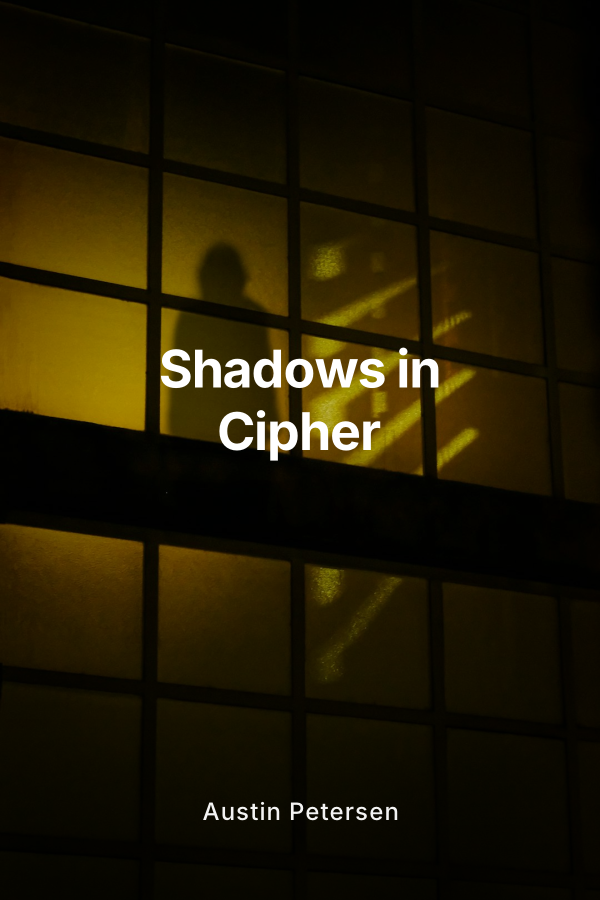
This book is a gritty historical spy thriller set in the crucible of the American Revolution. Drawing on real espionage figures and code-makers of the era and interweaving them with vivid fictional characters, it follows a hardened courier who risks life, limb, and soul to stop a British plan that could crush the rebellion at a single stroke.
Across five tightly woven chapters, the novel explores the hidden war that raged behind the battle lines. Instead of focusing on generals and open-field clashes, it plunges into the shadow world of secret ink, smuggled dispatches, and coded messages ferried through occupied streets and along treacherous coastal routes. The tone is unsparing and realistic, rooted in the harsh material conditions of the time and in the lethal consequences of even the smallest mistake.
At the heart of the story is the courier, a battle-tested figure whose job is deceptively simple: carry messages between a famed code-maker and the scattered cells of a Revolutionary spy network. Yet every journey passes through a gauntlet of suspicion, ambush, and betrayal. The courier moves under the cover of a modest, ordinary trade that allows travel between patriot strongholds and British-held territories, but that same mobility makes them a tempting target for both sides. Their life is reduced to a series of choices measured not in comfort or honor but in survival and the fragile hope of independence.
The courier’s personal stakes are as dire as the fate of the rebellion itself. Family members live under British occupation, vulnerable to raids, reprisals, and the casual cruelty of war. Each mission risks not only the courier’s capture but retaliation against everyone they love. Past operations have already left scars, including lives lost because of delays, misjudgments, or messages that never arrived. Guilt and fear ride with the courier on every road, turning the work of espionage into a constant moral trial.
The novel’s central threat is a British operation of devastating scope, built around intelligence, deception, and timing rather than sheer force of arms. Through intercepted whispers and half-burned scraps of correspondence, the revolutionaries slowly uncover the outline of a strategy designed to cripple the rebellion. The British aim to bring about a rapid collapse by striking at a point of maximum vulnerability, a moment when a single misstep or broken code could decide the war’s outcome. The plan is not just a sudden attack but an intricate weave of misinformation, coded orders, and secret detachments that rely on penetrating or shattering the patriot spy network itself.
Real historical code-makers and spies form the backbone of this hidden conflict. Within their world, invisible ink recipes are guarded like treasure, numerical ciphers replace names and places, and seemingly harmless letters conceal orders that can move entire regiments. Their opponents in British intelligence are equally determined, dissecting captured documents, torturing sources, and exploiting any hint of disloyalty within patriot ranks. The resulting contest of wits and nerve gives the story its relentless tension, as each side races to outguess the other before the true scope of the British plan is revealed.
The fictional elements center on the courier’s relationships to this network and to a small circle of allies who straddle the line between ordinary life and clandestine service. Among them are a weary tavern keeper who shelters messengers beneath the eyes of British officers, a pragmatic smuggler whose loyalties are tested each time profit conflicts with principle, and a quiet clerk who transcribes and encodes messages while dreaming of a war story that history will never openly tell. Their lives intersect in fleeting, dangerous moments, each encounter marked by what cannot be spoken aloud.
Throughout the book, suspense builds around a series of missions that tighten the noose on both the courier and the British plan. Messages go astray, coastal patrols close in, and a growing trail of arrests hints that the enemy may have already pierced parts of the network. The courier must weigh every risk: which roads to take, whom to trust, when to break orders to save a life or to preserve a more valuable secret. The thriller element emerges not from constant gunfire but from the knowledge that a single intercepted scrap of paper could doom entire armies.
Moral ambiguity runs through the narrative. Patriots commit harsh acts in the name of liberty, while some British officers show honor even as they serve imperial power. Informers act out of desperation, greed, or hope for protection, and their choices blur the line between villainy and survival. The courier, forced to live a life of lies, must confront the cost of deception not only to others but to their own sense of self. In moments of solitude along dark roads or in cramped garrets, the weight of those compromises becomes almost unbearable.
The climax converges on a final mission in which the courier must decide whether to preserve a crucial code or save someone personally dear. This decision determines whether the enemy’s war-crushing plan will be thwarted or fulfilled. Every piece of hard-earned knowledge gathered throughout the story, every precarious alliance and scarred memory, narrows toward that desperate choice. The outcome carries both immediate consequences for the characters and broader implications for the future of the Revolution.
By the end of the book, readers are left with a portrait of the war that seldom appears in formal histories. The victory or defeat of armies depends not only on battlefield courage but on those who labor in obscurity, shuttling secrets through enemy lines. The courier’s journey illuminates how precarious the struggle for independence truly was, and how much of it hung on the courage of men and women who could never expect public glory.
“Shadows in Cipher” is written for readers who crave tense, character-driven historical thrillers that refuse to romanticize war while still honoring the grit and sacrifice of those who fought in silence. Combining real espionage figures with original characters, grounded political stakes with intimate emotional drama, this novel reveals the American Revolution as a shadow war of coded messages, hidden loyalties, and choices that echo far beyond the men and women who first made them.