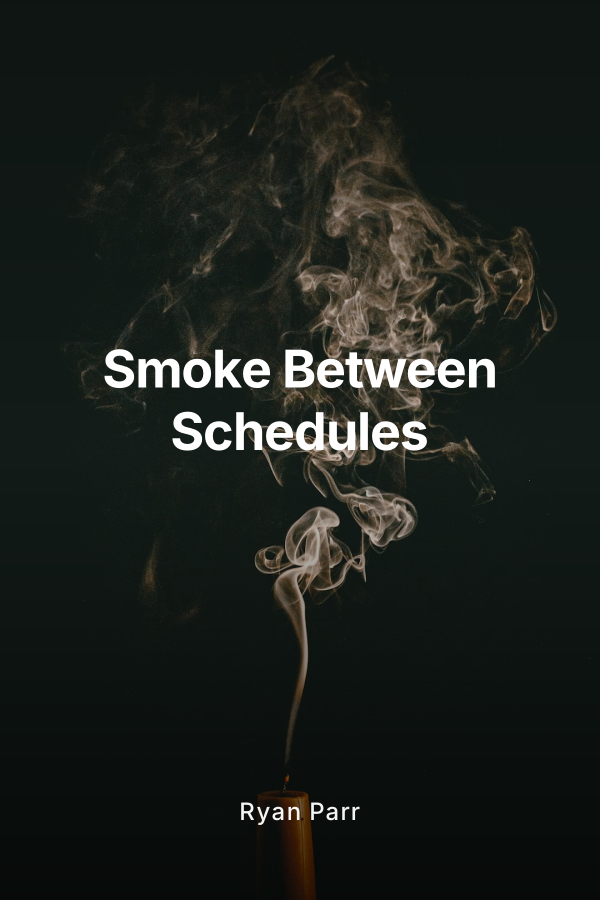
This book follows a single fictional idol living inside the relentless machinery of a K pop girl group, in a world loosely inspired by the dynamics of groups like ITZY yet clearly and fully invented. At its center is a protagonist who resembles Ryujin in public poise and presence: disciplined, sharp, and hyper aware of cameras, staff, and fans. In private, however, she has slipped into a small, dissonant habit that does not match the image she has worked so hard to maintain. She has started smoking, not as an act of rebellion or romance, but as a quiet, practical coping mechanism she barely respects in herself. The cigarettes are never grand, never aesthetic. They are rushed, furtive, and faintly disappointing, even to her.
The story does not unfold on the public stage. Instead, it lives in dorm hallways, cramped van seats, practice rooms that smell of sweat and makeup remover, shared bathrooms, and late night kitchens. The other members of the group are always near her in these pages. They drift in and out of scenes, sharing blankets on the sofa, snacks at the counter, earbuds in the van. Their closeness is affectionate and familiar, never hostile. Yet this same warmth makes concealment harder to bear. The book studies the peculiar tension that rises not from threat or scandal, but from loving proximity and the fear of letting down people who trust you.
Across five chapters, the narrative stays close to the protagonist’s interior life while remaining restrained and grounded. It resists melodrama and spectacle. Instead, the reader learns her through habits, silences, and the way her body reacts to small pressures. There are no explosive confrontations, no tabloid style discoveries, and no moral lectures. Meaning surfaces slowly through repetition, glances, and small changes in routine. The members never turn into villains or naïve onlookers. They remain what they are to her: anchors, witnesses, and the reason her secret feels heavier than its physical size.
The first chapter immerses the reader in the daily structures of idol life. Morning alarms, makeup chairs, choreography drills, live recordings, and variety show appearances accumulate until the schedule begins to feel like an additional character. The protagonist’s inner voice appears in short, precise flashes, revealing how discipline has shaped her sense of self. In that compressed space between obligation and performance, the first cigarette arrives as an almost administrative decision. It is not a cinematic turning point, but rather something she slides into while telling herself it will remain contained and temporary. The narrative shows, without moralizing, how quickly one compromise can blend into routine when there is no time to examine it.
Chapter two shifts the focus to shared spaces. Here the group’s intimacy becomes the canvas. Readers see one member who is casually physical, draping herself over shoulders and knees; another who is observant and quiet, catching details others miss; a third who cracks jokes about stress and fatigue; and perhaps a more nurturing presence who tidies, reminds, and checks in without fanfare. These everyday interactions are rendered through scenes such as late night kitchen raids, van rides with shared earbuds, hushed makeup room waits, and exhausted collapses on the practice room floor. In each setting, the protagonist’s secret lightly distorts her behavior. She steps out for a moment too long, lingers near an open window, times her showers and laundry. Nothing is confronted, but everything grows slightly more calculated.
The third chapter deepens the emotional cost of concealment. The cigarettes themselves are never glorified. Their taste, smell, and aftermath are described in blunt, practical terms, stripped of glamour. The real focus lies on what it means to lie by omission inside a life built on rehearsed honesty. A comment from a member about stamina during rehearsal, an offhand joke in the van about “clean lungs,” a fleeting grimace when someone smells smoke on a stylist’s clothes all become small jolts of alarm. The protagonist starts to read unintended meanings into everything. The tension is internal. She is not hunted, accused, or punished. Instead, she quietly interrogates herself: whether the small relief is worth the constant recalculation of angles, timings, and distances from the people she loves.
In chapter four, the narrative holds several one on one moments that brush close to honesty without crossing into full confession. Perhaps a member finds her out on a balcony late at night and assumes she is simply tired, prompting an unplanned talk about burnout. Another scene may take place in the van, where shared music shelters them in a wordless bubble that feels safe enough to admit, “Sometimes I want something that is just mine,” without clarifying what that something is. There might be a quiet exchange in the dorm kitchen where one member mentions her own small, private habit unrelated to smoking, inadvertently offering the protagonist a mirror. These scenes do not resolve anything. Instead, they thicken the atmosphere of almost sincerity and underscore how much she could say, and how much she chooses not to.
The final chapter brings the protagonist to a private, unannounced decision. There is no dramatic vow, no sudden transformation, and no external ultimatum. The shift occurs when she finally understands the real cost of her habit inside a shared life. She recognizes that the cigarettes, trivial on their own, have begun to distort her experience of the group’s closeness. The habit has become less about relief and more about separation: an invisible wall she keeps shoring up between herself and the members, even as they continue to trust her. This realization, shaped by countless quiet moments rather than a single dramatic event, leads her to choose a path that matters only to her. She may move toward quitting, toward confiding in someone, or toward reexamining why she needed the habit in the first place. The ending is emotionally complete yet deliberately unresolved, leaving room for the reader to feel both the weight of her choice and the uncertainty that follows.
Throughout the book, the tone remains calm, observational, and softly strained. The style favors clean, controlled prose with an interior focus, reflecting a life lived under scrutiny and self management. Interior monologue appears sparingly but precisely, offering sharp glimpses into the protagonist’s fear of disappointing the people who know her best. Body language, routine, and unspoken rules carry most of the emotional load. The book respects its characters as working professionals navigating pressure rather than as tragic figures or moral lessons. Any conceptual echoes with real world discussions about celebrity stress, private coping mechanisms, or the ethics of idol culture are presented generically here so that proper, specific attribution can be added later if needed.
Ultimately, Smoke Between Schedules is not about smoking as an issue. It is about what it means to carry a small, shame soaked secret inside a life with no locked doors. It invites readers to inhabit the narrow corridors between affection and concealment, discipline and quiet defiance, routine and self recognition. In doing so, it offers a restrained yet affecting portrait of a young woman who has mastered the art of being seen, and who is only beginning to understand the risks of keeping one corner of herself unseen.