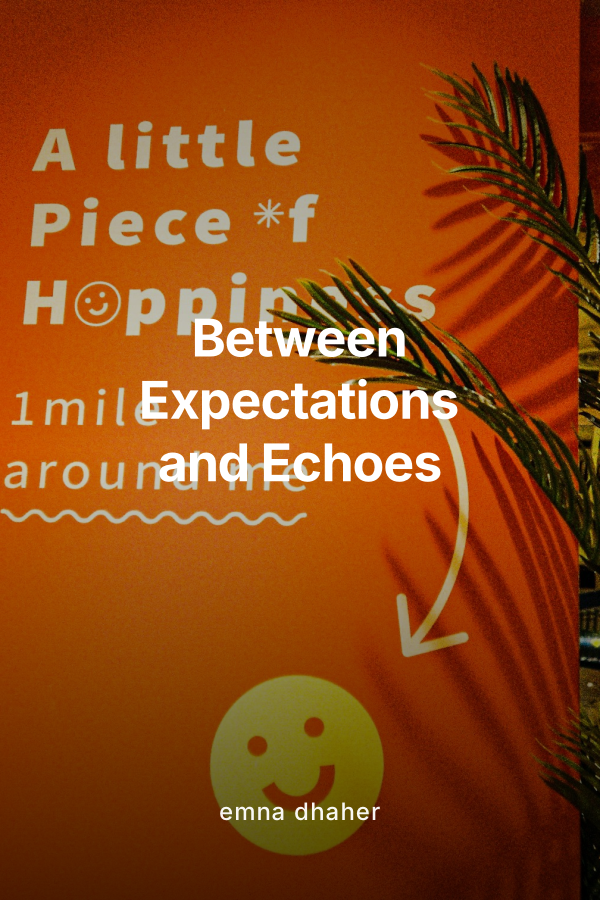
This book follows a teenager caught between who she is and who everyone expects her to be, guided by the quiet, compassionate voice of her future self. It explores how it feels to be deeply loved yet constantly misunderstood, the way humor becomes both shield and lifeline, and how academic pressure slowly turns a home into a battlefield. At its heart, the story is about a girl learning to see her own worth long before the world does, and about a future version of her who reaches back through time to say, “You are not failing at life just because you are struggling in school.”
Across five chapters, the narrative moves between present‑day scenes of suffocating expectations and reflective moments narrated by an older, wiser “you.” The older voice does not arrive as a magical ghost or a dramatic time traveler, but as an intimate, internal guide that gradually takes shape through diary entries, late night spirals, and quiet realizations. This structure lets the reader witness the same events twice: first through the confused, overwhelmed eyes of the teenager, and then through the calm, contextual lens of the adult she will one day become.
Central to the story is the ache of being “loved but not understood.” The protagonist’s mother is not a villain. She cooks, worries, sacrifices, and repeats how much she only wants the best. Yet her love is measured in grades, rankings, and comparisons, and every disappointing test result feels like proof of being a disappointment as a person. The book shows this tension in small, specific scenes rather than abstract complaints: report cards left on the kitchen table, phone calls with relatives where the mother praises other children while falling silent about her own, the sharp contrast between a warm breakfast and a cold comment about “wasting your potential.”
Alongside this, the book celebrates the bright, unpredictable humor of Maram, the protagonist’s closest friend. Maram is not the “funny side character” for decoration; her jokes land in the middle of arguments, panic attacks, and nights spent pretending to study. When the main character feels crushed after yet another lecture about not studying enough, Maram is the one who shows up with ridiculous impressions of teachers, exaggerated exam horror stories, and banter about a future where their kids are best friends and laugh about all of this. Maram’s humor never magically fixes reality, but it gives the protagonist enough air to survive it. That laughter becomes a thread the future‑self narrator keeps returning to, recognizing that those moments were quiet lifelines, not distractions.
Academic pressure and “not studying as expected” work as the primary external conflict. The protagonist is intelligent yet exhausted, not lazy but drowning, and the gap between effort and outcome becomes a source of deep shame. In different chapters, the mother’s reaction shifts from constant nagging to tense silences to one particularly explosive argument where unspoken fears erupt into harsh words. The book does not shy away from showing how comparison to other students, threats to take away freedoms, and the constant message of “this is your only chance in life” erode self esteem. At the same time, the older narrator gently unpacks these moments, offering the reader context the younger girl did not have: the mother’s own past sacrifices, her fear of poverty, and the cultural weight behind her obsession with grades.
The emotional backbone of the story is the relationship between younger and older self. The older voice does not judge the teenager for procrastinating or crying over exams. She speaks with tenderness, describing how each scene that once felt like the end of the world became a stepping stone, how the “failure” to meet academic expectations did not kill her future, and how one day she would understand that her worth was never in her report card. Some chapters end with a single clear sentence that the teenager never dared to say out loud at the time, such as admitting that being loved is not enough if you are not seen, and that pressure dressed up as concern still leaves bruises on the heart.
Across the five chapters, readers see the protagonist move from confusion to clarity, from silent guilt to cautious self advocacy. Her dynamic with her mother shifts from passive endurance to honest, difficult conversations where she finally names what she feels. Her bond with Maram deepens as they both realize humor is not just entertainment but a form of resistance and care. And the inner connection with her future self gradually turns from a faint echo into a solid, trustworthy voice that helps her navigate choices, apologize when needed, set boundaries, and forgive both herself and her mother.
By the final chapter, the protagonist has not magically solved every problem or turned into a perfect student. Instead, she has done something far braver: she has accepted that struggling in school does not make her unlovable or broken, and that her life can still unfold in meaningful, beautiful ways beyond the narrow path others planned for her. The closing scenes offer a quiet but powerful resolution, where love and misunderstanding finally appear side by side, named honestly. The future self speaks directly, once, in a clear line the reader will immediately recognize as the culmination of everything the book has been building toward, wrapping the narrative in a sense of hard earned peace.
“Between Expectations and Echoes” is written for teenagers and young adults who feel crushed by academic standards, as well as for anyone who has ever felt unseen by the very people who care about them. It is also a mirror for parents and caregivers, inviting them to reconsider how their fears and hopes sound in the ears of the children they love. With a voice that blends intimacy, reflection, and sharp emotional insight, the book promises not a perfect roadmap out of pain, but something more enduring: the assurance that even in your most misunderstood moments, there is a future you who will one day look back with compassion and say, “You made it through.”