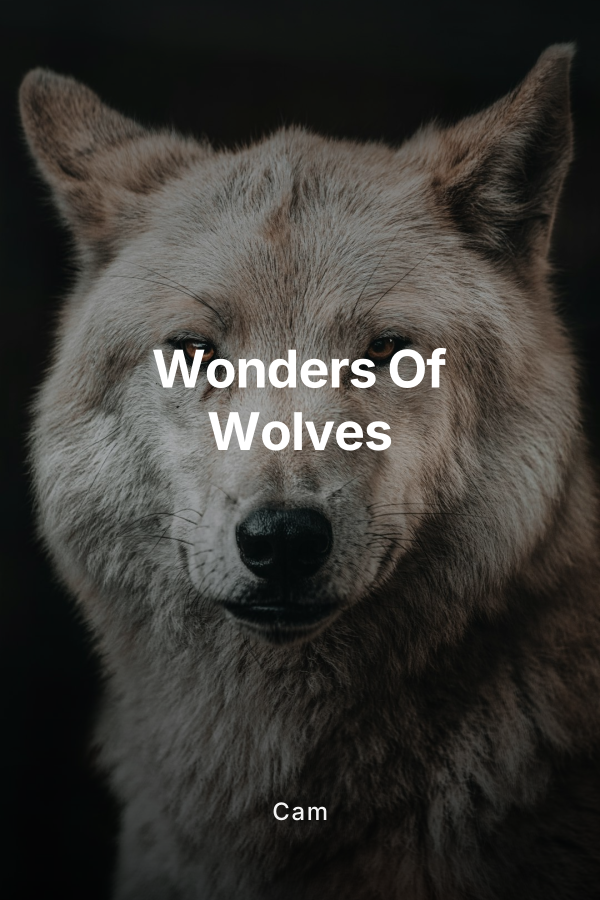
This book is a short, concentrated manifesto written in a voice that is very direct yet gentle. It speaks to anyone who has ever feared wolves, loved them, misunderstood them, or simply been told to pick a side. It is for readers who want to feel more than outrage, who want to leave not only informed but grounded in hope, trust, and passion for a different way of living with the wild.
Told in the first person by a lifelong learner and advocate, Wonders Of Wolves follows a simple two chapter arc. The first chapter carefully exposes how wolves became symbols of terror, trophies for hunters, and targets of policies that treat them as expendable. The second chapter rebuilds from that broken story, showing how ordinary people can move from fear and apathy into a living partnership with wolves and wild places. The whole book stays close to the emotional truth of the narrator's journey, so the facts never float above real human experience.
In Chapter One, the author walks the reader straight into the tension. Without softening the truth, the chapter lays out what has been done to wolves: relentless hunting, habitat loss, and the stubborn myths that present them as monsters or rivals instead of fellow beings. Each section names a different kind of harm, then pauses to ask a disarming question: why did we believe this story about wolves in the first place. The answers take readers back to childhood tales, local rumors, and news headlines that rewarded fear.
Yet this opening chapter refuses to treat "the other side" as an enemy. Hunters, ranchers, parents who worry about their children, and people who simply do not know wolves are allowed to speak in their own imagined words. Their worries are taken seriously. The author listens first, then responds calmly and firmly with what is known about wolf behavior, ecosystems, and actual risk. Instead of shaming, the chapter invites readers to recognize themselves in those fears and then to outgrow them.
The narrator also turns the same honesty inward. They admit where they once believed half-truths, looked away from cruelty, or spoke about wolves with more anger than understanding. This vulnerability is not a performance. It is how the author begins to build trust as a guide: by showing their own learning process, their past mistakes, and the way they still study and listen. The result is a chapter that feels like a long, searching conversation rather than an argument. By the end, readers see that the real problem is not wolves themselves, but the old, unexamined stories we built around them.
Chapter Two answers the question that naturally rises from the first: if our stories created so much harm, can new stories help us heal it. This chapter is built out of real examples that show hope in action. The author shares accounts of wolf recovery and return, moments where land once emptied of howls has slowly come back to life. They describe people who once cheered for wolf hunts but later changed their minds after witnessing wolves in the wild, learning more science, or talking with advocates in good faith.
These are not miracle tales. Each story includes the messy steps in between: hesitation, anger, confusion, and the quiet courage of people who chose to listen anyway. The chapter also highlights small but meaningful wins in laws and community decisions. A local group that blocks a cruel policy. A school that invites a speaker instead of repeating old myths. A single family that chooses to protect rather than persecute the wolves that wander near their land. No single victory is presented as enough on its own, but together they sketch a future that feels reachable, not abstract.
Throughout this second chapter, the author keeps testing their own voice. They ask how to speak in a way that both calls out cruelty and protects their own compassion. They experiment with phrases that hold a calm but firm tone, and they show readers what happens when that tone is used in real conversations. Some talks end in agreement, others end with respectful disagreement, but each one leaves a door open for change. The reader is shown that influence is not about winning arguments. It is about building relationships that are strong enough to carry the weight of new truths.
As the narrative deepens, the book slowly reveals its core promise: that Wonders Of Wolves is not only a title but a living commitment. The author shares a personal vision statement about their lifelong dedication to wolves and to the broader project that carries this name. They picture a world where children grow up hearing honest, awe-filled stories about wolves, where communities see them as neighbors in a shared landscape, and where laws finally reflect that moral shift.
The closing pages form a kind of quiet vow. The narrator commits to keep speaking for wolves, to keep learning and correcting themselves, and to keep inviting others into this work. They extend a direct invitation to the reader: to stand beside them, not behind them, in defending wolves and re-enchanting the wild. This invitation is both practical and spiritual. Practical, because it suggests concrete next steps: learning more, talking differently, supporting better policies, protecting habitat. Spiritual, because it asks the reader to decide what kind of person they want to be in relation to the wild world.
Across its two chapters, the book holds a disciplined focus. It does not try to say everything that can be said about wolves. Instead, it concentrates on three promises to the reader. First, that the voice will remain very direct yet gentle, never watering down the truth and never forgetting the humanity of those who are still afraid. Second, that the reader will leave with genuine hope, not the kind that denies pain but the kind that grows out of real examples of change. Third, that trust and passion will be earned, not demanded, through honest storytelling and visible commitment over time.
Wonders Of Wolves is therefore more than a nature book. It is a carefully crafted conversation about fear, responsibility, and belonging. It helps readers see wolves with new eyes and, just as importantly, see themselves as capable of choosing another story. In a crowded world of loud opinions, this book stands out by its combination of clarity, compassion, and moral courage, guiding readers toward a future in which the howl of a wolf is not a threat but a reminder of everything wild and worthy that still survives.