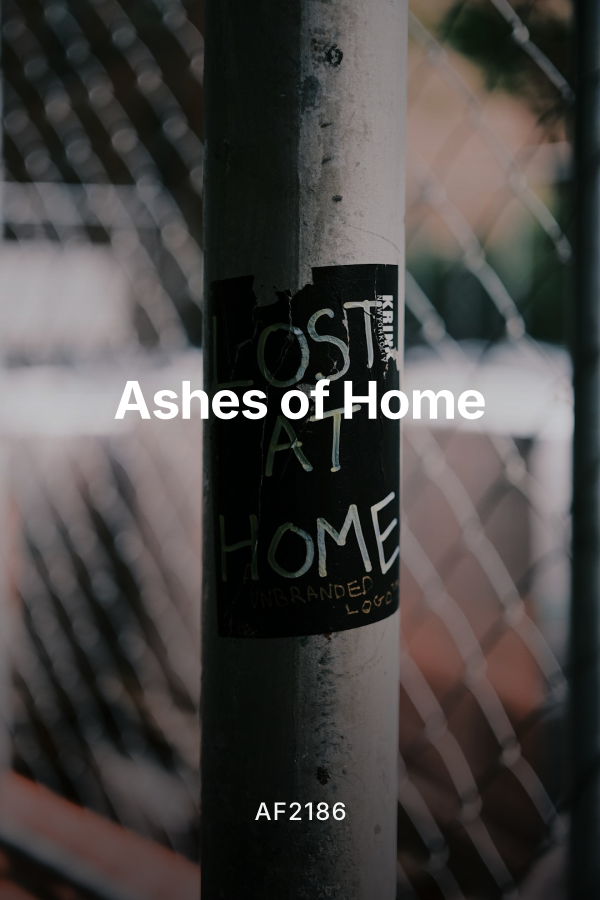
This book follows Chrystal and her younger sister Trill as they try to stay alive, stay kind, and stay themselves in a world overrun by the dead. Their story is intimate and emotional rather than epic, told from Chrystal’s viewpoint as she shoulders the brutal weight of being both big sister and makeshift parent after everything collapses. The treehouse that once symbolized childhood wonder becomes their fortress, their prison, and ultimately their most devastating loss, as the world outside keeps pressing in with hunger, smoke, and hard choices.
Across five chapters and roughly ten thousand words, the book traces their journey from fragile safety to irreversible change. It focuses on the bond between Chrystal and Trill, the scars left by the people who fail them, and the small, stubborn acts of hope that keep them human in the middle of horror.
Chapter 1 introduces Chrystal and Trill in the aftermath of the outbreak, already raw and exhausted, clinging to a rickety sense of normal in their hidden treehouse. We see how Chrystal protects Trill with strict rules and quiet tenderness, and how the world’s cruelty has carved sharp edges into a girl who only ever wanted to play music and draw. The chapter establishes the rhythms of their days, their careful foraging runs, and their nightly rituals of whispered stories and songs that muffle the distant moans below.
Chapter 2 brings in other survivors and forces Chrystal to navigate complicated loyalties. Trust becomes both a risk and a necessity. As food dwindles and tensions rise, the treehouse shifts from refuge to pressure cooker. Chrystal begins to realize that being strong for Trill does not always mean being gentle, and every protective decision she makes carries unseen costs.
Chapter 3, centered on the chapter concept “Ashes of Home,” is the turning point. The treehouse, long treated as sacred ground, burns. The decision to destroy it is not an accident of fate but a grim, deliberate choice tied to survival, betrayal, or the threat closing in around them. Flames climb the trunk and swallow the platform where they once drew constellations and shared secrets. The sisters are forced to flee into the night, watching their childhood burn behind them, their silhouettes cut against the blaze. That final image of the tower in flames becomes the emotional spine of the entire book.
In Chapter 4, the sisters wander through a harsher landscape with no “home” to retreat to, meeting the best and worst of what remains of humanity. Chrystal’s leadership hardens; Trill’s innocence frays. Yet they keep choosing each other, over and over, even as loss and danger pile up around them. The story explores how love can become both a weapon and a wound, and how the idea of home must change when the place that held your memories no longer exists.
Chapter 5, “Home at Last,” offers a quieter, earned ending. The world is still broken, moans still drift on the wind, and ash still lies in the cracks of their boots, but Chrystal and Trill finally find a small, defendable space where they can breathe. The final scene focuses on a single, concrete detail, like Chrystal’s hand resting over one of her scars as Trill curls against her, or the glint of their shared keepsake in the sunset as they sit together. The moment is peaceful without pretending the danger is gone. The last lines settle on the image rather than a grand speech, letting readers feel that “home” is now something they hold in each other instead of in walls or wood.
Throughout the book, the tone remains intimate, tense, and emotionally grounded. The horror elements serve the character journey rather than overshadow it. Violence is present but focused on its impact rather than spectacle. The narrative keeps returning to small, human gestures in the midst of catastrophe: the way Trill grips Chrystal’s sleeve whenever she is scared, the quiet way Chrystal counts Trill’s breaths at night, the simple, steady line Trill whispers into Chrystal’s ear during a final goodbye hug that nearly breaks them both yet keeps them moving.
Ashes of Home is written for readers who love character driven post apocalyptic stories with deep sibling bonds, bittersweet hope, and a focus on the cost of survival. It aims to leave them haunted not only by the image of a treehouse burning against the night, but by the understanding that even when the world is on fire, the most fragile and powerful refuge a person can find is another hand holding on to theirs.