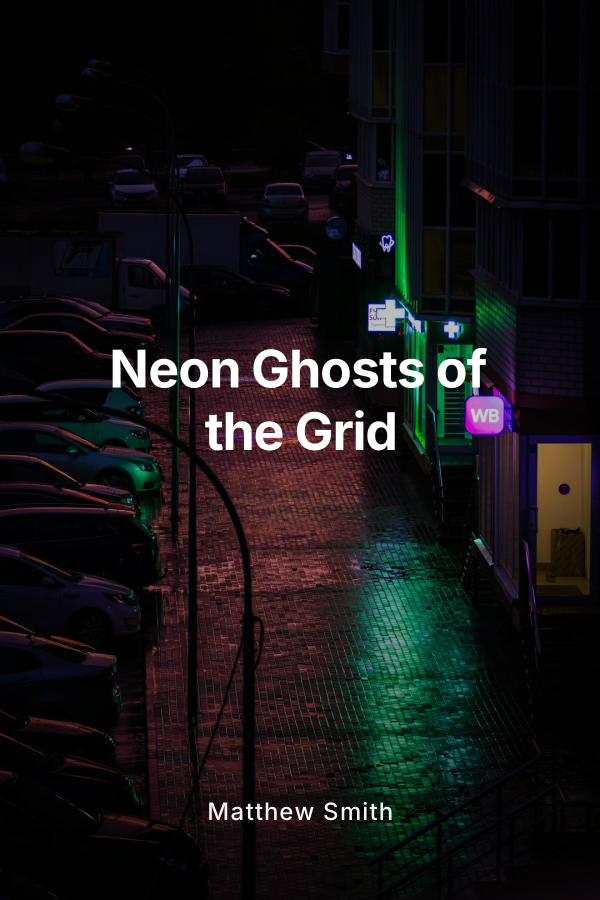
In a drowned, neon‑scarred megacity where corporations function as nations and the line between human and machine has thinned to a trembling filament, a small crew of digital outlaws prepares for the one job no one sane would attempt: stealing the operating soul of the regime that rules them. This book follows a single, intense heist that culminates in a core hack against a tyrannical corporate state, with a messy yet meaningful victory that hurts the powerful while scarring the people who dared to try. The tone is adult and unflinching, yet focuses more on psychological depth than graphic excess, drawing readers into the emotional and moral cost of rebellion rather than reveling in gore. At the end, readers are left with a bittersweet sense of triumph threaded with loss, a feeling that something important has been won but at a cost that will haunt both characters and audience long after the final page.
At the center of the story is a gifted but damaged netrunner who has spent years as a digital ghost in the city’s underground networks. This protagonist carries a past shaped by coerced corporate experimentation, chemical dependence, and shattered loyalties. Their brilliance in the Grid is matched only by a crippling mistrust of others and a near‑obsessive need to bring down the system that turned them into a test subject instead of a person. When an encrypted data fragment surfaces hinting at a weakness in the core architecture of the ruling mega‑corp’s control system, the netrunner assembles a crew of misfits who each embody a different kind of brokenness under techno‑capitalist rule: an ex‑corporate security operative seeking redemption, a street‑level chem‑synth cook who fuels both the city’s addictions and its resistance, and a quietly radical medic who patches up bodies while secretly leaking biometric data to dissident networks.
The heist is not just about plundering credits or data. Their true objective is to corrupt the heart of the city’s predictive governance engine, the algorithm that forecasts dissent and eliminates it before it can coalesce. Pulling this off demands a multilayered operation that stretches across physical and digital fronts: infiltrating sensor‑choked corporate towers, subverting drone swarms, diving into black‑ice protected mainframes, and navigating gang‑controlled zones where loyalty is rented by the hour. As the crew edges closer to the core, the book explores the insidious forms of control that define their world, from algorithmic scoring systems that determine housing and healthcare to bio‑tracking implants that map emotional states and potential threats in real time. These systems, and the drugs and mods that interface with them, create a web of dependence where every form of escape is also a new chain.
Throughout the story, the drug culture and body modifications of the city are depicted with an adult, unsanitized realism yet without gratuitous sensationalism. The focus is on how these substances and surgeries shape identity, vulnerability, and autonomy. The netrunner relies on performance enhancers and focus locks that burn out synapses even as they extend their reach in the Grid. The chem‑synth cook’s latest designer compound becomes both a tool of resistance and a new avenue for corporate influence when it begins to spread beyond the undercity. Cybernetics promise strength, speed, and beauty yet come bundled with quiet firmware hooks that silently report behavior back to corporate servers. The narrative repeatedly asks whether any choice made within such a managed ecosystem can be truly free, and what it means to carve out pockets of authenticity within a life constantly scored and surveilled.
As the operation unfolds across five escalating phases, each chapter digs deeper into the personal stakes driving the crew. Early sections highlight the rush of planning, recruitment, and early incursions, framing the heist as a near‑impossible yet exhilarating chance to strike at an untouchable enemy. Midway, the tension ratchets up as the characters begin to realize that information is missing, allies are compromised, and the corporation seems uncannily prepared for every move they make. This is where the theme of predictive tyranny comes fully into focus: it appears that the system they are trying to break has already modeled them, anticipated them, and built them into its contingency plans. Doubt and paranoia fracture the team’s fragile trust, forcing the protagonist to confront their own capacity for betrayal and sacrifice.
The climax centers on the core hack itself, a prolonged, cinematic sequence that intercuts between the physical infiltration of a fortified data citadel and the protagonist’s deep dive into a virtual construct engineered to disorient and assimilate intruders. The Grid is presented not as a separate realm but as an intensification of the city’s logic, a place where control is more transparent yet still terrifyingly effective. To succeed, the netrunner must weaponize their own trauma and addiction, channeling chemically induced hyperfocus and experimental neural mods to outmaneuver security architectures that feel like living predators. The price of this peak performance is immediate and devastating: neurological overload, burned pathways, and a blurring of self that may never fully reverse.
By the conclusion, the crew manages to inject a carefully prepared virus into the governance engine, corrupting its predictive datasets and seeding it with subtle distortions that ripple outward across the regime’s decision‑making processes. On the surface, little appears to change overnight. There is no sudden collapse, no spectacular revolution broadcast on the city’s holo‑feeds. Instead, tiny cracks begin to appear in the system’s seemingly perfect control. Arrest squads arrive late. Blacklists produce anomalies. Protest clusters form where none could before. The victory is strategic and slow, and the only people who truly understand its magnitude are those who gave everything to make it possible.
The emotional cost, however, is immediate. Not everyone survives the heist. Those who do are marked by permanent loss: of friends, of bodily integrity, of cognitive stability, of the illusions that once kept them going. The protagonist emerges alive but neurologically altered, haunted by phantom code and broken sensory filters that keep part of their consciousness trapped in a feedback loop with the Grid. Relationships forged under the pressure of the mission are left ambiguous and fragile, shaped by both genuine connection and calculated necessity. The ending leaves readers with a feeling of bittersweet vindication: tyranny has been hurt in a way that cannot easily be undone, yet the people who achieved this have paid with pieces of themselves they will never get back.
Stylistically, the book is written for mature readers who appreciate complex worldbuilding, morally tangled characters, and high‑stakes action anchored in emotional realism. Each chapter expands the scope and depth of the story without repeating earlier beats, moving from the intimate scars of individual characters to the macro‑scale implications of sabotaging an algorithmic regime. The narrative foregrounds defiance, but never lets readers forget its toll. Victory is presented not as a clean, heroic triumph, but as a wounded, hard‑won opening in a world designed to close every door before anyone can walk through it.