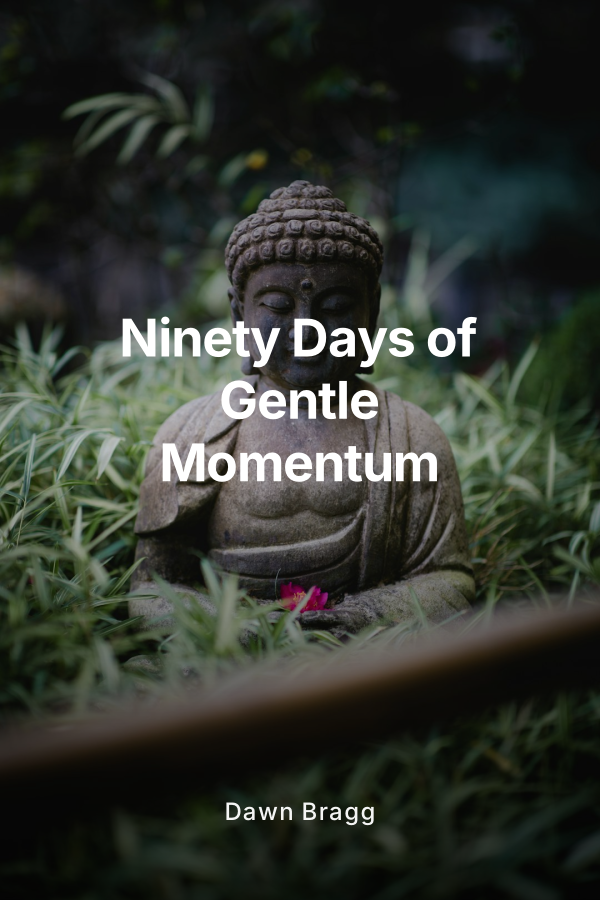
This book is a warm, conversational 90 day guided journal designed as a colorful and fun daily companion for anyone who wants to feel a little calmer, a little prouder, and a lot more supported in everyday life. Built around a simple two pages per day structure, it walks the reader through small, repeatable practices that gradually build real change: affirmations, gratitude, mood check ins, daily goals, self care reflection, and a minimalist habit tracker, all framed with a tone that feels like a kind, slightly witty friend cheering from the sidelines rather than a strict coach or distant expert .
At its heart, the book rests on three ideas. First, big transformations grow from tiny, consistent actions. Second, most people do better when spoken to with kindness, not pressure. Third, mental wellness tools work best when they fit into real life instead of demanding a complete overhaul of it. Every prompt, layout choice, and gentle nudge in this journal is tailored to feel light, doable, and emotionally safe, especially for readers who feel intimidated by traditional productivity systems or deep therapeutic work.
The tone throughout is deliberately friendly and lightly humorous. The narrator on the page sounds more like a supportive friend on a walk than a self help lecturer. The language avoids jargon and instead leans into simple, grounded phrases that reassure the reader they are not behind, not broken, and not alone. Many micro prompts are designed to disarm perfectionism with wit, for example asking for “one hilariously small win” from the day or inviting the reader to rate their mood using silly but relatable anchors instead of abstract numbers. The goal is to make self reflection feel lighter, safer, and more sustainable.
STRUCTURE OF THE 2 PAGE DAILY SPREAD
Each of the 90 days has the same two page rhythm so that the practice becomes effortless and predictable over time. The left hand page focuses primarily on intention setting at the start of the day, while the right hand page is oriented around gentle reflection and tracking in the evening. Within this, the same core pillars repeat every day so the reader never has to decide what to write, only how they honestly feel.
On the intention side, the reader is guided to write a few short daily affirmations, each one rooted in self respect and realistic encouragement rather than forced positivity. Next, a compact gratitude section invites mention of very small, specific moments or comforts. This trains the mind to notice ordinary sources of support instead of chasing only dramatic breakthroughs. After that comes a simple area for top goals for the day, limited in number to keep expectations sane and reduce overwhelm. The prompts nudge the reader toward choosing what would actually feel meaningful rather than what merely looks impressive.
On the reflection side, the reader checks in with a mood section that favors playful icons or labels over complex scales, encouraging honesty without over analysis. A small self care review then asks what the reader did to care for their body, mind, or spirit, with plenty of reassurance that even tiny acts count. To close, a stripped down habit tracker uses quick checkboxes or marks so habits can be tracked in seconds rather than minutes, reinforcing the idea that consistency matters more than volume. The entire spread is built so it can be completed in a few minutes, making it very hard to fall into all or nothing thinking about “using the journal correctly” .
THE EMOTIONAL ARC ACROSS 90 DAYS
Although each day stands alone, the 90 day journey has a subtle emotional progression. The first three weeks focus on easing the reader into the routine with heavy emphasis on self kindness, low pressure, and celebrating microscopic progress. The prompts during this phase explicitly normalize missed days, uneven moods, and messy attempts at new habits. The intention is to help the reader feel safe trying without fear of “failing” the journal.
Around the middle third of the book, the tone shifts slightly toward curiosity and gentle challenge. The daily pages begin to introduce questions that help the reader notice patterns in their moods, triggers for stress, and small habits that keep paying off. Without ever becoming clinical or heavy, the journal lightly encourages the reader to experiment. They are invited to try adjusting one habit at a time, to reframe unhelpful self talk, and to design smaller, kinder versions of their goals when life becomes chaotic.
In the final third, the prompts highlight growth, resilience, and self trust that have been building quietly. The reader is regularly asked to name evidence of their own progress, however subtle. There is more space given to “what I am proud of today” and “how I showed up for myself” to reinforce a narrative of capability. By the time the reader reaches day ninety, they can look back through pages of proof that they can maintain a gentle practice over time, even when their mood fluctuates or motivation dips.
KEY THEMES
Several themes weave throughout the book. Self compassion is present in nearly every section, both explicitly through prompts and implicitly through tone. The message is clear: you do not have to earn kindness from yourself. Instead, kindness can be the starting point that makes everything else easier.
Another recurring theme is tiny wins. Rather than glamorizing big, dramatic achievements, the journal keeps directing attention to very small shifts: going to bed ten minutes earlier, drinking one extra glass of water, pausing before replying when stressed, or taking two deep breaths between tasks. By regularly capturing these mini victories on the page, the reader slowly updates their internal story from “I never follow through” to “I keep showing up in small but real ways.”
Emotional honesty is also prioritized. The mood sections and reflective questions never demand that the reader “fix” their feelings on the spot. Instead, they normalize mixed moods and low days, offering language that validates how the reader feels while still pointing gently toward what might help. The underlying stance is that feelings provide information, not a verdict on personal worth.
Finally, realistic motivation runs through the structure. The book does not assume endless willpower or ideal circumstances. It offers strategies for low energy days, reframes around setbacks, and suggestions for how to keep the habit alive when life inevitably gets crowded. The design of the two page layout, with its brevity and familiar structure, is part of this philosophy.
INTENDED AUDIENCE
This book is for readers who want emotional support and structure without the intensity or formality of clinical tools. It especially suits those who feel:
• Overwhelmed by long, complex planners
• Intimidated by traditional self help books that sound preachy or intense
• Curious about affirmations and gratitude but unsure where to start
• Tired of beating themselves up for not being “consistent enough”
It can serve as a gentle entry point into self reflection for people new to wellness practices, and as a stabilizing daily touchpoint for those already in therapy or coaching who want a friendly, low stakes supplement. The inclusive, non judgmental language aims to be accessible regardless of background, belief system, or current life situation .
TONE, DESIGN, AND FORMAT
Stylistically, the writing leans on short, clear sentences with a light personal flavor. Some prompts read as if a friend is talking directly to the reader, using “we” and “you” to reinforce that the journey is shared, not graded from above. Gentle humor appears in the phrasing of prompts, occasional playful examples, and the way imperfect days are acknowledged and accepted.
The visual concept behind the pages imagines colorful accents, doodle like icons, and section dividers that feel joyful rather than sterile. While the written content does not specify exact designs, it actively encourages a sense of play. Many pages invite readers to draw simple shapes, color in mood icons, or add stickers and highlights if they wish, emphasizing personalization and creative expression over perfection.
The two pages per day are organized to reduce decision fatigue. Headings are consistent across the 90 days so the reader always knows what comes next. The amount of writing space for each section is intentionally small to prevent overthinking: just a few lines for affirmations, a few for gratitude, a narrow column or row for goals, a compact mood area, a single line for self care, and a small, repeatable grid for habits. This structure underlines the message that a little is enough and that completion, not exhaustive detail, is the target.
SUPPORTIVE FRAMEWORK AND BOUNDARIES
While the journal touches on emotional wellbeing, it stays carefully within the realm of everyday coping and self kindness. Early pages suggest a gentle safety note that clarifies the journal is not a substitute for therapy or professional help, and that seeking additional support is a sign of strength, not failure. Topics such as trauma, heavy body image commentary, or intense relationship analysis are either avoided or kept very light, in keeping with the intention to create a safe, low pressure space for most readers .
Instead of digging into painful histories, the prompts stay anchored in the present day. The reader is asked what they need today, what felt supportive today, and what one small thing might make tomorrow slightly kinder. This present focused approach keeps the journal from becoming overwhelming and makes it more likely the reader will come back to it regularly, even when they are stressed.
THE PROMISE OF THE PRACTICE
By the end of the 90 days, the book aims for the reader to experience several quiet but meaningful shifts. They will likely have a stronger habit of noticing what is going well instead of only what is wrong. They may find it easier to speak to themselves in a kind, encouraging voice, since the journal models this voice on every page. Their awareness of mood patterns and triggers will probably be sharper, which can make it easier to plan for support on hard days.
Most importantly, they will have lived experience of following through on a gentle commitment to themselves for three months. This is the core promise of the book: not that life becomes perfect or problems vanish, but that the reader proves to themselves they can show up, consistently and kindly, in their own corner. The two pages per day become a ritual of self respect rather than a chore, a place where they can be imperfect and still feel welcome.
In a world that constantly urges people to do more, be better, and optimize every second, this journal offers a quieter invitation. For a few minutes each day, sit down with a pen, breathe, and acknowledge that you are trying. You are allowed to take up space on the page, exactly as you are. Over ninety days, that simple act of attention adds up to a new kind of momentum, one powered not by pressure, but by gentle, steady care.