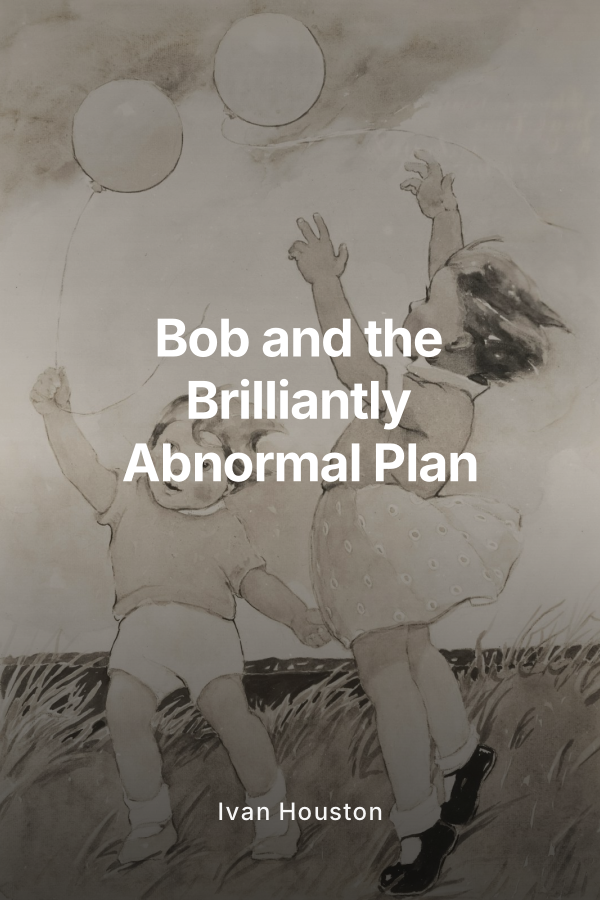
Bob and the Brilliantly Abnormal Plan is a warm, funny chapter book for kids about a rule-following boy who slowly discovers that his safest habits are also his smallest ones. Through three tightly woven chapters, it follows Bob from quiet background kid to thoughtful risk taker, showing young readers that normal and abnormal can both be good and that courage often begins with one small, shaky choice.
At the start, Bob is the kind of student teachers love and classmates barely notice. He always does his homework, follows every rule, and never raises his hand unless he is absolutely sure he will be right. He eats the same thing at lunch, sits in the same seat, and would rather miss out than mess up. His whole goal is simple: stay normal, stay safe.
Enter Jerry. Jerry is the loud kid who likes to call people nicknames and point out anything that looks different. He is not cruel, but he is careless. Jerry’s teasing rarely crosses the line into real bullying, yet it still stings, especially when he jokingly calls Bob “Mr Normal” in front of everyone. Bob tells himself it does not matter, but secretly he wonders whether Jerry is right. What if “normal” is all he will ever be?
Throughout the book, the school and town setting feel familiar and slightly silly at the same time, with playful details and a class full of kids who are each “weird” in their own small ways. The tone stays light and humorous, even as it explores uncomfortable feelings like embarrassment, fear of failure, and the pressure to fit in. There is no harsh bullying, no cruel language, and no characters who harm adults. The story uses gentle teasing and misunderstanding instead of real meanness, making it safe for young readers while still honest about how words can hurt.
Chapter One: The Safest Kid in School
Chapter One introduces Bob’s everyday life and his tightly controlled routine. Readers see him double checking his homework, lining up his pencils, and choosing the same seat in class and at lunch. He never volunteers to read out loud, never joins new games at recess, and keeps his head down whenever Jerry starts joking around.
In class, the teacher assigns a small project that asks everyone to share “something different” about themselves. This simple assignment terrifies Bob. He decides to choose the most boring, normal fact he can think of so that no one will laugh at him. When Jerry overhears Bob practicing his answer, he laughs and calls him “Normal Bob,” which earns a few giggles from nearby kids. Bob feels his face burn.
During recess, we meet other classmates who are comfortable being unique: the kid who always invents new rules for tag, the artist who draws on every scrap of paper, the musician who hums in the hallway. Bob notices that Jerry teases them too, but they roll their eyes and keep being themselves. Bob cannot imagine doing that.
The chapter ends with Bob realizing something unsettling. Even while Jerry teases everyone, he saves a special kind of joke for Bob: Bob is not mocked for being strange, but for being ordinary. For the first time, Bob wonders whether trying to be invisible might actually be the thing that makes him stand out.
Chapter Two: The Almost-Abnormal Choice
In Chapter Two, the project about “something different” grows into a bigger class activity. The teacher announces a “Mixed-Up Talent Day,” where everyone will share or try something they have never done before. It does not need to be impressive, only honest. The only rule is that it has to feel at least a little bit brave.
Bob panics. His instinct is to find a way around the assignment so that he can still look perfectly normal. But tiny doubts start to whisper. He remembers how confident his classmates seemed even when Jerry joked with them. He remembers how small he felt when everyone laughed at “Normal Bob.”
This chapter follows Bob through a series of small near-choices. He almost raises his hand to join a new recess game, then pulls it back. He almost tells the teacher he wants to try writing a silly poem for Talent Day, then switches to a safe idea at the last second. Each near-choice shows readers how courage grows in quiet steps, even when nothing “big” happens yet.
Meanwhile, Jerry keeps up his teasing, but we also see his human side. He forgets his lunch and looks embarrassed when a classmate offers to share. He fails at a math problem and covers it with a joke before anyone can see how much it bothers him. Bob, watching from his usual corner, starts to realize that Jerry uses humor to hide his own fears. Jerry may act abnormal and wild, but he is just as scared of looking foolish as Bob is.
A turning point comes when the class practices for Talent Day. The teacher invites volunteers to go first. As always, the room fills with the same loud voices. To Bob’s surprise, one of Jerry’s closest friends refuses to go up, shaking his head and laughing nervously. In that moment Bob sees that even “brave” kids feel afraid. Difference is not a magical costume they put on. It is a choice they make, shaky knees and all.
At the chapter’s end, Bob makes one quiet promise to himself. He will do one thing for Talent Day that is a little bit abnormal for him. He does not yet know what it will be or how he will survive the attention, but for the first time, the idea of staying exactly the same feels scarier than the idea of changing.
Chapter Three: The Brilliantly Abnormal Plan
Chapter Three begins on Talent Day morning. Bob hardly sleeps the night before. He considers faking a stomachache, but the promise he made to himself keeps tugging at him. On the bus, he hears Jerry boasting loudly about the outrageous stunt he plans to pull. Everyone laughs and crowds around to listen. Bob feels that old familiar feeling of fading into the background.
In class, volunteers begin presenting. Some kids share quirky talents they already have, like strange sound effects or speedy tongue twisters. Others try something brand new, like speaking in front of the class for the first time. The teacher applauds every attempt equally and reminds them that courage is not about being perfect.
When Bob’s turn arrives, he almost follows his “emergency plan” and shares something painfully safe. Instead, he takes a deep breath and chooses the idea he secretly wanted from the start. He tells the class he is going to perform a short, silly story that he wrote about a boy who is “too normal for his own good.” The story is clearly about him, but he never says his name. The class listens, then starts to laugh, not at Bob, but with him. His story is funny and honest, and his classmates recognize pieces of themselves in it.
Jerry jokes at first, but even he quiets down as Bob continues. For the first time, Bob is not hiding from Jerry’s attention. He is using it. By the time Bob finishes, the room breaks into applause. A few kids call out that they feel “a little too normal” sometimes too. Bob’s knees are still shaking, but there is a new kind of feeling inside him - a proud, buzzing warmth that he has never known before.
Later at recess, Jerry walks over with a half-teasing, half-impressed comment about Bob’s performance. The moment could easily tip back into old habits. Instead, Bob makes a choice. He answers Jerry calmly, jokes back a little, and even challenges Jerry to try something that scares him next time instead of always doing what feels easy. Jerry is taken off guard but laughs, not unkindly. The balance between them shifts. Bob has not defeated a villain. He has simply stopped giving his power away.
The book closes with Bob sitting in a new spot at lunch, not because he was forced to move, but because he wants to see what it feels like. He talks more, laughs more, and listens for the quiet kids around him who still sit where he used to sit. He understands now that “normal” is not a prison and “abnormal” is not an insult. They are just words people use when they are afraid of standing out. What really matters is choosing the kind of different that feels true and kind.
In a brief author’s note at the back, written in simple, direct language, the book speaks straight to the reader: it reminds them that it is okay to feel scared of trying new things, that everyone is a little bit normal and a little bit abnormal, and that their small acts of courage are worth celebrating. The hope is that when children close the book, they feel a little braver, a little kinder to themselves, and a lot more curious about the wonderfully unusual person they already are.