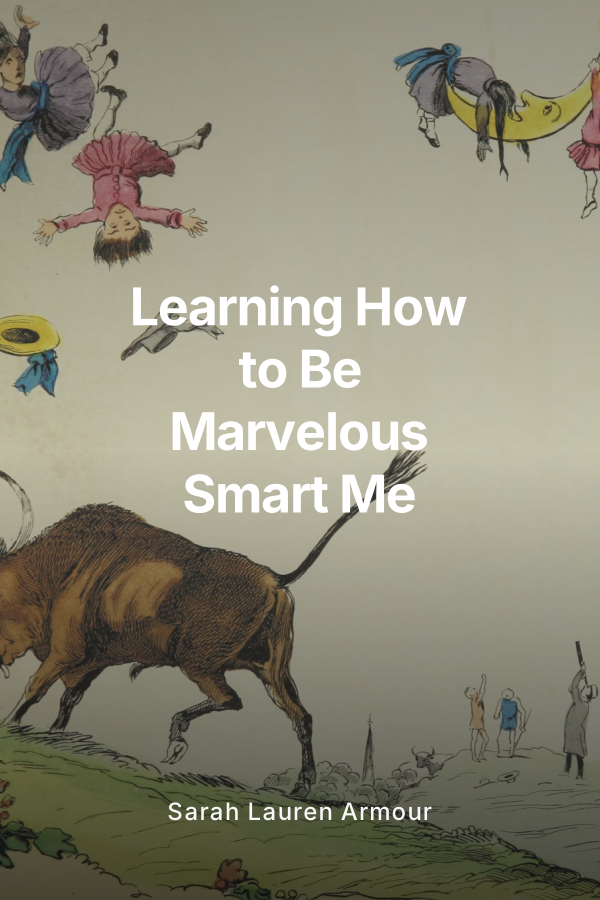
This book is a heart-centered, practical guide disguised as a story. Inspired by the vision of “a journey of acceptance, love and empowerment” for children with disabilities, it weaves together storytelling, reflection, and gentle coaching to help young readers, families, and educators see disability, difference, and “marvelous smart” in a new light.
At its core, the book follows one central child hero who lives in a world that often only sees what they “cannot” do. Through school days, friendships, medical appointments, and quiet moments alone, the child discovers that their way of thinking, moving, feeling, and solving problems is not broken. It is different, and it is powerful. Across the chapters, readers watch the hero move from confusion and self-doubt to a grounded sense of identity, pride, and agency.
The narrative highlights daily realities that many disabled children know well: staring, unkind words, being left out of games, classrooms that are not designed for their bodies or brains, adults who talk over them, and systems that assume “normal” is the only right way to be. Alongside these challenges, the book also lifts up small acts of kindness, true friendship, and the strength that comes from family support and self-belief. Each turning point in the story connects to a skill or mindset that the reader can practice for themself.
“Marvelous smart” is the guiding theme. The child hero does not shine in the usual, narrow ways that schools and tests often measure. Instead, their strengths show up in pattern-spotting, empathy, creativity, problem-solving, persistence, or unique sensory awareness. Through mistakes, experiments, and supportive adults, the hero learns to name these abilities and trust them. As they do, the reader is invited to notice and name their own “marvelous smart,” whether it is obvious to others or quietly hidden inside.
The book balances emotional honesty with hope. It does not pretend that ableism, bullying, or exclusion are simple to fix. Instead, it gives children language and tools to respond: how to ask for help, how to explain their needs, how to set boundaries, and how to recognize when a problem is not them, but the environment around them. While written for children, the lessons are powerful for parents, teachers, and peers as well.
Across its two chapters, the complete book (about 4000 words) blends:
- A warm, engaging story that children with disabilities can see themselves in, without being reduced to stereotypes or “inspirational” props.
- Practical self-help and empowerment strategies presented in child-friendly language, such as self-advocacy skills, asking questions at the doctor’s office or at school, and coping with big feelings.
- Guided reflections and gentle prompts that encourage readers to think about times they felt left out, times they felt strong, and how they want to be treated.
- Concrete examples of inclusion and accessibility, showing how classmates, teachers, and families can change their behavior and environments to welcome every body and every brain.
By the end, readers are left with three powerful messages:
- “I am not broken. I am marvelous smart in my own way.”
- “I deserve acceptance, love, and real inclusion, just as I am.”
- “I can use my voice, my strengths, and my community to shape a world where everyone belongs.”
This book summary sets the stage for a practical, motivational self-help story that does more than comfort. It equips. Children with disabilities, and the adults who love them, will find language for experiences they have struggled to name, models of courage that feel real, and a gentle invitation to live as their fullest “marvelous smart” selves.