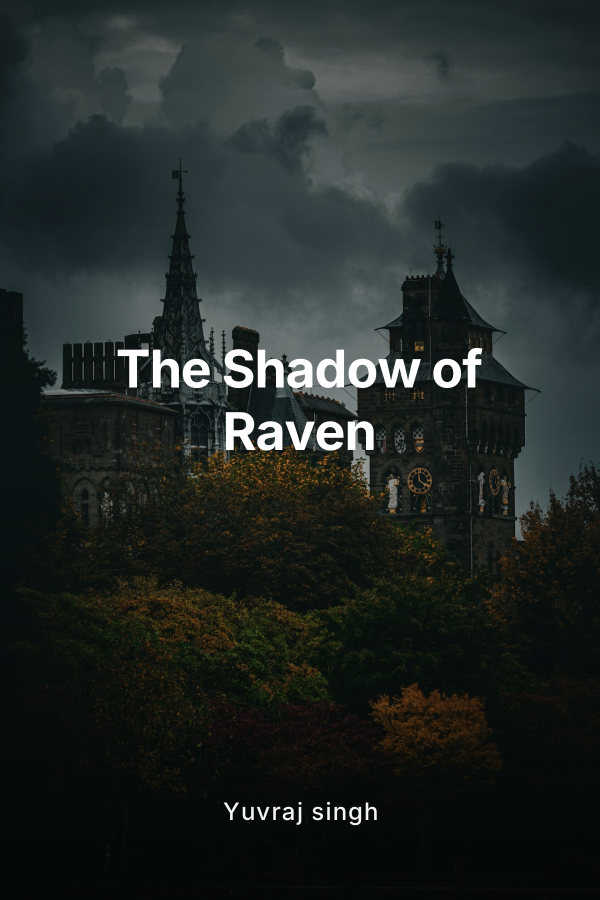
The Shadow of Raven is a gothic mystery set in a remote, insular village where the past has never truly been buried. Conceived as a psychologically tense, suspenseful narrative, it follows a hired investigator drawn into an old unsolved murder and a web of secrets that the villagers protect with a rigid nightly curfew and a culture of silence. At its core lies a chilling question: what if the person officially mourned as dead, the beloved spouse whose supposed murder shattered a life, never died at all?
The story’s central mystery revolves around a man once declared murdered, whose body was never found. The official conclusion claimed that circumstances explained the missing corpse, yet an ignored trail of clues suggested otherwise: a vanishing blood trail, footprints that did not match the recorded account, and a missing personal item that should have been on the dead man when he vanished. Over time, the village accepted a convenient tale about a killer at large, a tale that suited those in power far better than the murky truth.
Years later, a local authority figure, burdened by the compromised investigation and frightened of what might surface, secretly hires an outsider to revisit the case. This authority is both gatekeeper and prisoner of the village’s history. If the truth emerges, their own career, reputation, and fragile control over a fearful community may collapse. Yet the weight of a covered‑up detail and the relentless rumors about the roaming killer compel them to gamble on an investigator who owes the village nothing and trusts no one.
The investigator arrives to find a place frozen in ritual. After dusk, doors are barred and streets emptied. The curfew is enforced not only by watchmen but by collective superstition. Villagers whisper of a killer who walks after dark, a figure associated with the old murder and subsequent disappearances. Some describe a ghostly presence glimpsed near the woods, others swear they have seen a masked shape at the edge of lamplight. Officially, these tales justify the curfew. Unofficially, they serve as a smokescreen that keeps questions from being asked and secrets from being disturbed.
At the emotional center of the book stands the widowed spouse of the man declared dead. Their grief shaped the village’s understanding of the tragedy. Yet the investigator soon discovers that the widow’s past testimonies contain subtle inconsistencies, and their present life shows signs of uncanny vigilance, as if they are watching for someone only they expect to return. The possibility that the beloved dead might still live under a new identity in the same village is a revelation that threatens to unmake not only the widow’s story but the village’s entire moral foundation.
The narrative blends atmospheric suspense with psychological depth. The remote village is not merely a backdrop but an active force in the story, a place defined by its isolation, its unspoken rules, and the crushing power of communal fear. The narrow lanes, candlelit chapels, and looming woods create a sense of encroaching darkness that mirrors the investigator’s descent into hidden histories and buried motives. Each tradition and superstition hints at something carefully constructed to conceal the true relationship between the curfew, the supposed killer, and the missing body that was never recovered.
The book unfolds across five chapters that trace the investigator’s journey from wary outsider to a figure caught in a dangerous moral dilemma. Early chapters establish the old murder, the official narrative, and the rigidly maintained curfew, showing how fear has been institutionalized. Subsequent chapters pull back the layers of personal loyalty and quiet collusion. The investigator begins to suspect that some villagers know more than they admit, and that the legend of the nighttime killer may have been sustained on purpose. The deeper the inquiry goes, the more it appears that someone once thought dead may have accepted a false grave in exchange for a hidden life in the shadows of the village.
Suspense arises not only from the risk of physical danger after dark, but also from the emotional stakes of revelation. If the truth of the beloved’s survival emerges, the widow must confront years of constructed grief and the possibility of complicity in a broader deception. The local authority risks ruin, while the villagers face the shattering of a narrative that has governed their fears and justified their obedience to curfew. The investigator, having uncovered too much, must decide whether to expose everything and accept the chaos that follows, or to accept a compromised resolution that preserves a semblance of order at a moral cost.
Throughout, the tone remains shadowed and tense, with quiet conversations in candlelit rooms, guarded exchanges at doorsteps before curfew, and surreptitious searches through archives where key reports have been altered. Clues are not simply found; they are pried loose from the grip of those who benefit from silence. The mystery’s resolution hinges on understanding why the village chose the legend of a killer over the messy truth, and how one person’s secret identity became the foundation for a community’s fear‑based peace.
The Shadow of Raven ultimately explores the cost of enforced ignorance and the lengths to which people will go to preserve a fragile sense of safety. The title evokes both the literal darkness that blankets the village each night and the figurative shadow cast by a single person who stepped out of the light of their own life to inhabit a new name. For readers who enjoy claustrophobic settings, complex motives, and steadily intensifying suspense, this book offers a slow burn of revelation, culminating in a confrontation that forces every character to reckon with the dangerous power of secrets left too long in the dark.