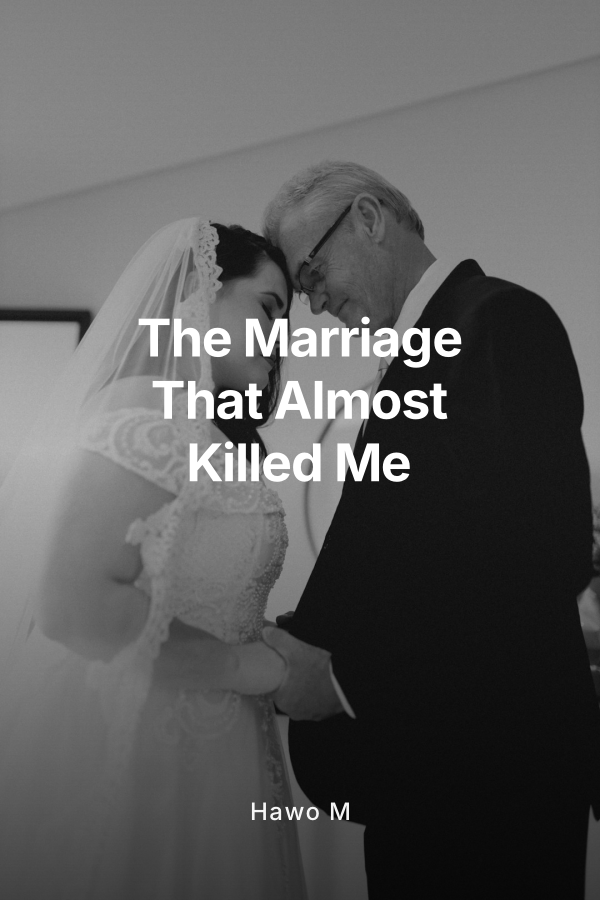
This book traces the inner and outer journey of a woman whose marriage nearly cost her everything, including her life. While the events are shaped for story impact, they are anchored in the emotional reality of a toxic union that spirals from charm and romance into control, spiritual manipulation, and psychological collapse. The narrative is written for women and men who either feel trapped in unhealthy relationships, are afraid they might repeat destructive patterns, or want to understand how seemingly “normal” love can turn deadly to the soul.
Across two chapters, roughly four thousand words in total, the book moves from the bright promise of marriage into the dark maze of emotional and spiritual abuse, and then into the slow, painful work of reclaiming self, sanity, and hope. Rather than dwelling on suffering for its own sake, the story exposes red flags, shows how isolation and confusion take root, and then walks the reader through the practical and spiritual steps of escape and healing. It is both a cautionary tale and a survival map.
Chapter 1 follows the protagonist from the first spark of attraction through engagement and wedding, highlighting subtle warning signs that she overlooks out of love, naivety, and pressure from family and faith circles. Step by step, the charming partner reveals controlling tendencies, jealousy disguised as protection, and spiritual language used to demand submission. The chapter chronicles the slow erosion of her identity as she tries harder and harder to be “a good spouse,” while insomnia, anxiety, weight changes, and isolation set in. The phrase “almost killed” embodies not only moments of physical fear but also the near destruction of her mind, voice, and will to live. The chapter closes with a crisis point where she finally realizes that staying might mean never making it out alive, at least not as herself.
Chapter 2 shifts from survival inside the marriage to the terrifying decision to leave, and the long, messy aftermath. It explores the complex mixture of guilt, loyalty, religious fear, and social shame that keeps people bound long after abuse is visible. The protagonist confronts disbelief from some loved ones, victim blaming, and her own internalized idea that enduring suffering is proof of faith or strength. The narrative then charts the rebuilding process: seeking help, naming abuse for what it is, setting boundaries, and learning that love without respect is not love at all. Practical elements surface through story moments, such as creating a safety plan, finding trustworthy mentors, and reconnecting with faith in a way that heals instead of harms.
By the end of the book, readers do not simply witness a narrow escape from one bad marriage, they see a larger pattern many live with in silence. The conclusion leaves them sober about the cost of ignoring red flags, yet empowered to choose life, truth, and authentic love. It encourages those still inside destructive relationships to believe their own pain and to reach for help, and it reassures survivors that they are not crazy, not alone, and not beyond restoration. Far from being an attack on marriage itself, the book honors healthy covenant while sounding a clear alarm against any union that demands the death of one partner’s soul in order for the other to thrive.