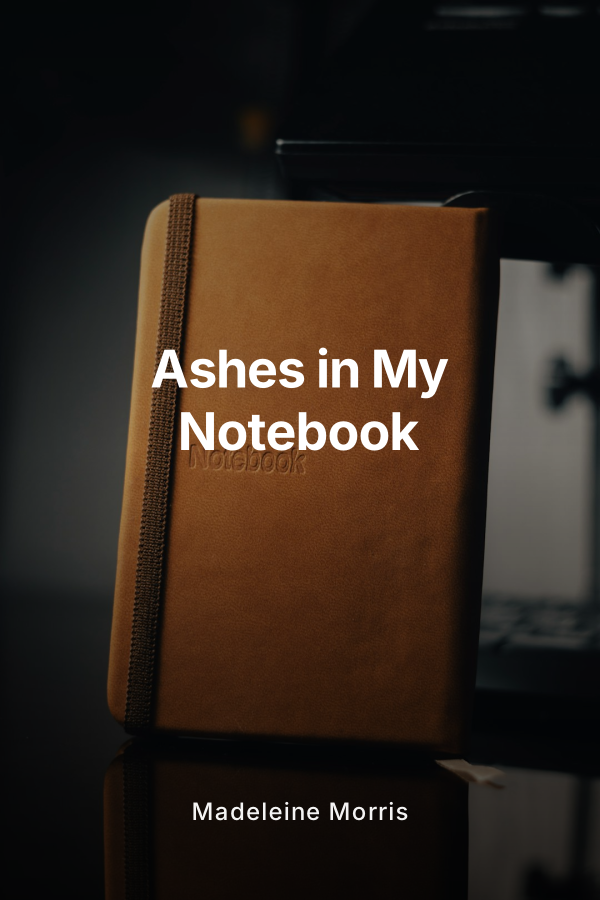
This book is a teenage cricket fan’s full-series journal of the 2025–26 Ashes, written like a personal diary that accidentally turned into a complete player-by-player conclusion of the whole contest. It mixes serious analysis, long stats, and honest verdicts with a bit of teen sarcasm, so it feels casual and personal while still giving real cricket insight, just as you asked for a “serious with a bit of teen sarcasm” tone and a journal-like structure for the entire series.
Instead of sounding like a stiff match report or a stats-only almanac, the book reads like one teenager privately processing every Test, every collapse, every miracle session, and every strange selection call. The narrator sticks with you through all five Tests of the 2025–26 Ashes, reacting in real time, then circling back to write long-form conclusions on each player from both sides, with detailed stats and emotional notes that reflect how it actually felt to watch them play.
The series becomes a long emotional timeline. Early entries carry the nervous hype before the first ball, quick sketches of who is expected to dominate, and shaky predictions about which players will be heroes or disasters. As each Test finishes, the journal dives into what went right, what fell apart, and who quietly changed the game without grabbing all the headlines. You see weather, crowd moods, media noise, and selection drama in short, sharp bursts, but the main focus always comes back to the players themselves, because this is a series built around individual stories wrapped inside a historic rivalry.
The heart of the book is the “Player Files” concept you described. Every cricketer who takes the field in the 2025–26 Ashes gets their own conclusion. These sections are long, detailed, and built around numbers that matter, like Tests played, runs, averages, big scores, wickets, economy, clutch spells, important catches, and those “bottled it” moments you wanted captured in a stat-based teenage style. Each player’s spread combines a clear statistical snapshot of their Ashes with a short final verdict in the narrator’s voice.
Those verdicts feel like end-of-year school reports written by a cricket-obsessed classmate rather than a dry commentator. Players are quietly praised, lightly roasted, or firmly called out, but never in a way that ignores the pressure and difficulty of Test cricket. The narrator writes with honesty and a bit of bite, but always with respect for the game and for how hard it is to deliver in the middle of an Ashes storm. Rating labels follow the teen-journal energy you discussed earlier: terms like “hard carry”, “quiet win”, “stat padder”, or “disappeared when needed” pop up as shorthand summary tags, turning complex performances into quick, memorable impressions without relying on cringe slang.
Structurally, the book is arranged to read like a continuous journal while still feeling complete and organized. It opens with a short setup of the rivalry and stakes of Ashes 2025–26, told through the narrator’s own build-up: school life blending with late nights following the matches, group chats melting down after batting collapses, and the sense that this series is the only thing that really matters for those weeks. Each Test is then covered with several dated entries, starting from the first morning through to the final wicket, capturing mood swings, turning points, and growing opinions about individual players.
After each Test, there is a focused mini wrap-up that bridges emotional reaction with early judgment. The narrator decides who was the hero, who turned into the villain, and who slipped by as a low-key game changer. These inter-Test reflections slowly build the backbone for the later Player Files, where the entire series is weighed in one place for each cricketer. This structure keeps the reading experience journal-like and personal while still building toward a satisfying, data-rich conclusion where every player’s Ashes story is tied off properly.
Because you wanted “everything” and a sense that it is like a journal when you read it, there is deliberate attention to detail without drowning the reader in lifeless tables. Major batting and bowling numbers are always present and clearly laid out, but the narrator constantly connects them back to context. A gritty forty that changed a match is treated as more important than a flashy but meaningless fifty. A long spell in the heat that broke a partnership gets spotlighted next to the final wickets tally. Dropped catches, strange captaincy calls, and late-session nerves are logged not just as events, but as emotional notes the narrator keeps returning to.
The diary tone is reinforced with recurring personal touches. The narrator has running jokes about certain habits or recurring patterns, like players who always seem to get out at the worst possible time, or bowlers who randomly turn into superheroes for just one spell every series. There are imagined doodles and margin notes described in words, not pictures, such as “storm cloud” icons for a total meltdown or a “rocket” for a breakout innings, echoing your idea of doodle-style reactions around stats without copying any specific existing series. These touches make the numbers feel alive and underscore that this is not a neutral report, but one teenager’s full emotional record of a famous cricket battle.
The book is aimed at readers who love the Ashes, enjoy stats, and appreciate a slightly sarcastic teenage voice more than corporate commentary. Younger cricket fans can relate to the narrator’s school-year angle, while older fans recognize familiar Ashes rhythms seen through a fresher, more personal lens. Even readers who did not follow the 2025–26 series ball by ball can understand what happened through the match entries and the final Player Files, which compress the entire storyline of each cricketer’s campaign into a single, clear, sometimes painfully honest conclusion.
Across its five chapters, the book moves from anticipation to lived chaos to reflection. The early chapters are full of expectation and rough, half-formed judgments. The middle sections grow more analytical as the narrator learns how to read the series patterns. By the final chapter, the tone is more mature and considered, as every player’s Ashes journey is weighed fairly, using both long stats and remembered moments. This subtle shift in the narrator’s perspective gives the book an arc beyond the series itself: it becomes the story of a fan learning how to see the game more deeply without losing the raw, emotional reactions that make following cricket fun in the first place.
In the end, “Ashes in My Notebook” is both a chronicle and a verdict. It captures the full 2025–26 Ashes through teenage eyes, then distills that entire experience into a conclusion for every player who walked out in baggy green or Three Lions. It balances long, serious stats with journal-style feelings and a light touch of sarcasm, exactly matching your vision of a teenage, stats-heavy, diary-like book about the Ashes that still reads like one fan’s private notebook rather than a dry official record.