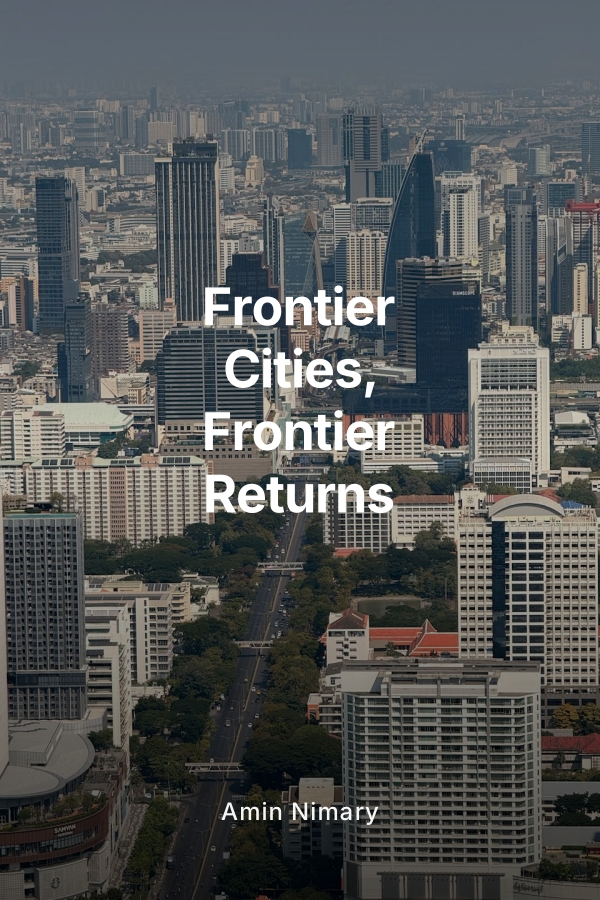
This book is a strategic, step by step guide for professionals and aspiring investors who want to use real estate in fast growing cities as a vehicle for wealth creation, but who are held back by two core barriers: fear of risk and the absence of a clear, actionable plan. It transforms a vague ambition to “get into property in emerging cities” into a concrete roadmap, from choosing the right city and neighborhood to closing legally sound, high potential deals and building a scalable portfolio.
The narrative follows the journey of a cautious but ambitious investor archetype who starts with limited capital, no local network, and a strong fear of making an expensive mistake. Through this lens, the book shows how to de risk each decision using data, simple legal checks, and repeatable processes, rather than intuition or hype. Every concept is framed for readers who may be new to fast growing markets, but who think in business terms and care about risk management, capital efficiency, and long term upside.
Across three tightly structured chapters, the book delivers a complete investing system:
-
How to overcome psychological and informational barriers to action by translating “risk” into measurable factors, building a personal investing mandate, and designing a staged entry plan that starts small, learns fast, and compounds wins.
-
How to identify, compare, and prioritize fast growing cities using a concise set of indicators such as population and job growth, infrastructure pipelines, and policy signals, then zoom in from city level to neighborhood level opportunities with clear, repeatable screening criteria.
-
How to handle the legal basics and on the ground research required to find, verify, and negotiate deals, including practical checklists for titles, zoning, contracts, partners, and due diligence, alongside a framework for building a local information edge through agents, developers, public data, and direct observation.
The tone of the book is professional and analytical but highly pragmatic. Each section emphasizes concrete tools that readers can immediately apply, such as:
- Simple scorecards to compare cities and submarkets.
- A risk budgeting approach that aligns deal size and leverage with personal risk tolerance.
- Modular checklists for legal and regulatory review that can be adapted to different jurisdictions.
- Field research tactics for validating growth narratives on the ground before committing capital.
- A deal funnel framework that turns scattered leads into a focused pipeline of qualified opportunities.
Rather than relying on abstract theory, the book translates the disciplines of strategic planning, corporate due diligence, and data driven decision making into a language and process suitable for individual investors and small firms entering dynamic, high growth urban markets. Where it draws on concepts that are widely discussed in investing and urban economics literature, it does so conceptually so that formal references can be added as needed, without reproducing or paraphrasing any specific proprietary frameworks.
By the end, readers will not simply “know more” about fast growing city property markets. They will hold a complete operating manual for moving from uncertainty and hesitation to their first, second, and third well structured investments, with the confidence that each step is grounded in clear logic, transparent risk analysis, and practical safeguards. The book positions real estate in frontier and growth cities as a professional, system driven endeavor, not a speculative gamble, and gives readers the tools to participate accordingly.