Only the first page of this book is left. We lost the rest in October 2026.
We lost access to the service that stored them, and no other copy exists. We're sorry.
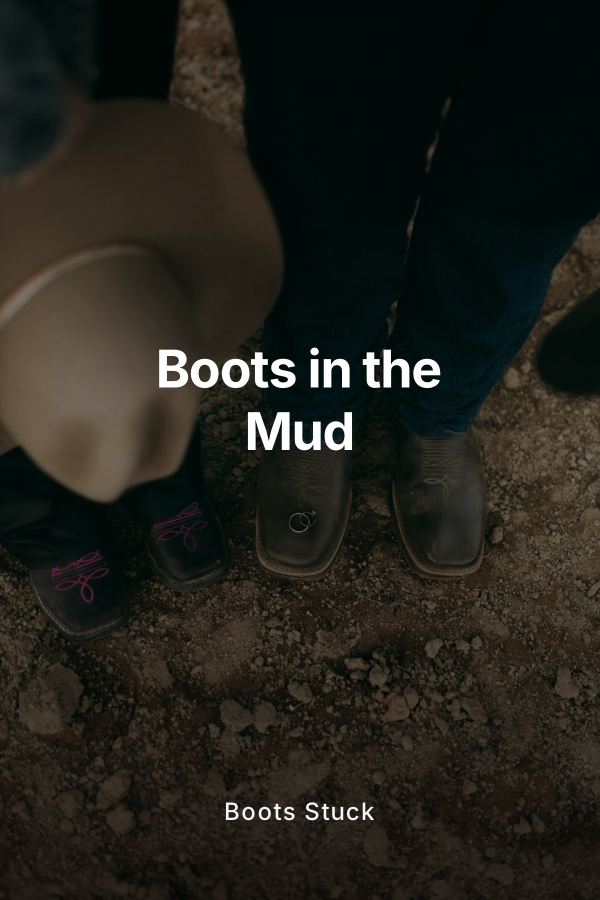
Boots in the Mud is a compact, two chapter, high tension male male romance that turns a simple forest walk into a life changing collision of bodies, boundaries, and buried feelings. It blends vivid sensory writing, physical comedy, and slow burning emotional honesty as two long time friends discover that one muddy misstep can make it impossible to keep pretending they are only friends. The story centers on a soft, skinny, boot obsessed brat in tight black knee high rubber boots and a taller, quieter, more muscular companion in worn hiking shoes, both clearly adult and used to trading jabs and inside jokes on weekend hikes together.
Luca, the shorter friend, hides nervous energy behind sarcasm and swagger. He loves clothes that make him feel seen, so he shows up for the hike in an almost theatrical outfit that includes a cat themed sweater and glossy rubber boots that hug his calves a little too tightly. The boots are new, black, knee high, and he is just cocky enough to declare that nothing on the trail will get the better of them. Theo, taller and quieter, has the steady build of someone who lifts more boxes than weights. He is practical in scuffed hiking shoes, a worn pack, and a calm presence that makes people instinctively trust him. Their friends joke that Luca talks enough for both of them, but underneath the banter lies a thin line of tension that neither has dared to name.
Chapter One follows their journey into the woods on a day when the trail is slick from recent rain, the air heavy with the smell of wet leaves, and every puddle hides uncertain depth. Luca treats the hike like a stage, splashing into shallow patches, showing off his boots, and teasing Theo for being cautious. Theo, as always, hovers a step behind, ready to steady him when he slips yet pretending that he is only there to enjoy the scenery. The path grows rougher, mud thickens, and the forest around them grows quieter, pressing sound inward so that every squelch, breath, and laugh feels amplified.
The turning point arrives when Luca steps into what looks like another shallow patch and sinks far deeper than he expects. Cold mud clamps around his boot, swallowing him almost to the knee. What begins as a joke about his precious boots quickly becomes a genuine struggle as suction and sticky earth refuse to let go. The story lingers on the physical reality of being trapped in the mud, the drag against his leg, the tight pinch of rubber around his calf, the way each attempted step only makes him tilt and sink again. Panic mixes with embarrassment as Luca realizes he might actually need help, and that the only person around to haul him out is the one friend he secretly wants to look strong in front of.
Theo moves in without hesitation, bracing himself on the firmer edge of the trail and wrapping his hands around Luca to pull him free. At first it is purely practical rescue - he grips Luca’s boot, his ankle, then his hips, trying to find leverage against the sucking mud. They breathe hard, bodies straining in opposite directions, the quiet of the woods broken by grunts, splashes, and Luca’s uneven laughter. The closer Theo gets, the more their balance falters, until one particularly desperate shift of grip sends his hand where neither of them meant for it to go.
In a heartbeat, the rescue tilts from awkward to charged. The accidental touch is brief but unmistakably intimate, an intrusion created by mud, momentum, and poorly judged leverage. Luca goes very still, overwhelmed, unsure if he should call attention to what just happened or pretend he felt nothing. Theo, focused on freeing him, does not register the exact nature of the contact at first, only that Luca’s body tenses. The story lets the moment stretch - the burn of Luca’s blush, the shock of discovering how much he does not want Theo to let go, the way his own silence becomes a choice that neither of them can fully undo.
When Theo finally pries the trapped boot loose, the force of it sends them both crashing onto the path. Luca lands on top of him, straddling his hips, boots and clothes smeared with mud, breath punched out of his lungs. Their eyes meet, faces far too close, and the forest seems to hold its breath. Chapter One ends with this tumble, a tangle of limbs and muddy fabric, and the dawning realization that the line between “best friends” and something else has already been crossed, even if they have not yet found the words to explain how.
Chapter Two picks up in the long, stunned silence after the fall. Luca scrambles upright, flustered and babbling jokes that fail to land. Theo, still catching his breath, finally begins to piece together what happened during the struggle to free him. Shame, fear, curiosity, and a flicker of desire knot together between them. The trail home suddenly feels very long, and neither wants to walk it while pretending that nothing has changed.
Instead of immediately retreating, they move off the path to a small clearing where the ground is firmer and a fallen log offers a place to sit. There, with mud drying on their clothes and boots still streaked and heavy, they begin the conversation they have avoided for years. The chapter focuses on their emotional unravelling. Theo is horrified by the thought that he might have hurt or violated Luca without realizing it. Luca is equally horrified by how much he liked the sudden closeness, and by the fact that he kept quiet rather than setting a boundary in the moment.
What follows is a careful negotiation of memory and desire. They talk through each beat of the struggle in the mud, naming where it stopped being simply clumsy and started to feel like something neither of them expected. The narrative foregrounds consent and communication rather than simply glossing over the accident. Theo asks Luca directly what he felt, what he wanted, and what he wants now. Luca, in turn, admits that his silence was not only shock but also a frightened kind of wish, a longing for Theo to touch him on purpose instead of by mistake.
As they talk, physical details remain present but no longer chaotic. Theo notices the faint tremor in Luca’s fingers as he peels mud from the edge of his boot. Luca becomes aware of the warmth of Theo’s shoulder pressed lightly against his. The setting that earlier trapped and embarrassed them now becomes a cocoon where they can speak honestly without being overheard. They confess the crushes they have nursed, the fears of ruining their friendship, the way each past hike held small moments of almost crossing this line.
Once feelings are finally in the open, the second half of the chapter shifts from crisis management to deliberate choice. The two friends decide that if they are going to risk their relationship, it will be by stepping toward each other intentionally, not through accidents created by mud and panic. The physical closeness that follows is therefore framed as a mutual decision, discussed and agreed upon with new clarity about boundaries and trust. The story does not linger on explicit mechanics in the summary, but in the full book these scenes are written for adult readers who want intimacy that is both intense and unambiguous about consent.
The novella closes not with a neat return to how things were, but with a new kind of walk. After cleaning up as best they can and establishing that both feel safe and wanted, Luca and Theo make their way back along the same trail. The mud is still there, the ruts and puddles unchanged, yet every step feels different. The earlier mishap becomes part of their shared mythology, the absurd, messy catalyst that finally forced them to stop hiding. At the trailhead, when the forest gives way to the open world again, they choose not to let the spell break. They plan another hike for the following week, this time openly as something more than friends, determined that any future slips or stumbles between them will be by choice, not by accident.
Boots in the Mud is designed for readers who crave tactile, sensory rich storytelling combined with emotional vulnerability. Across two concentrated chapters, it explores how a comic physical disaster can reveal deeper attraction, how shame can be dismantled through honest conversation, and how two people can turn one muddy mistake into a foundation for a braver, more truthful love.