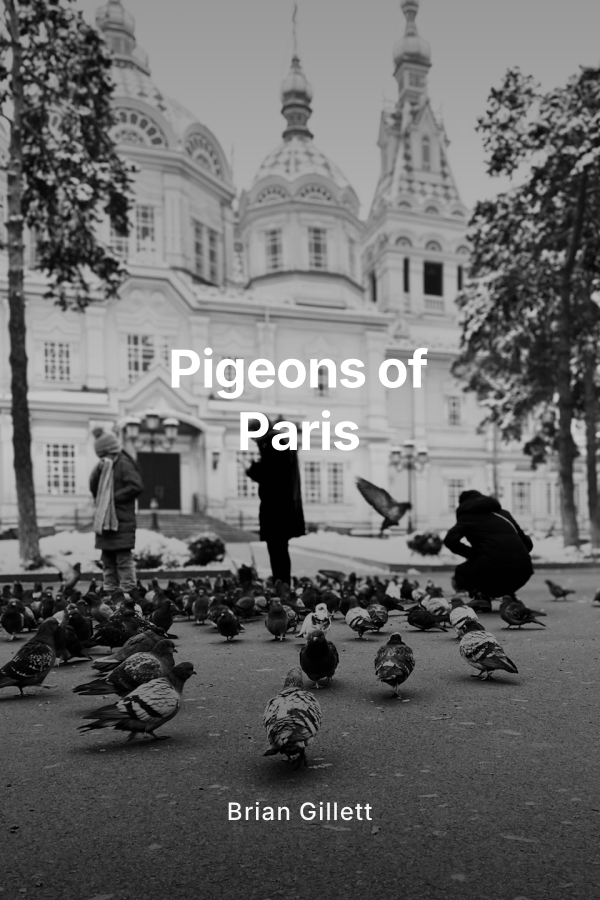
This picture book follows one wide eyed toddler on a family trip through Paris, as seen through the most unreliable narrator imaginable. In the child’s mind, the city is not filled with romance and museums, but with secretive pigeon armies running an elaborate crumb based conspiracy. Each famous landmark turns into a battleground where ordinary birds become marching soldiers, helmeted generals, and relentless crumb hunters, all obsessed with the snack box clutched in the toddler’s fists.
The story unfolds across six iconic locations, turning a simple sightseeing day into a full scale “pigeon invasion.” At a cozy café terrace, the adventure begins quietly. The toddler notices pigeons gathering under tables and around chair legs, their beady eyes fixed on fallen croissant flakes. In the toddler’s telling, this is not casual scavenging but a “first suspicious meeting,” as if the birds are plotting. A particular pigeon with a makeshift “helmet” a crooked bread crust or bottle cap features as the self appointed general, always just a step closer to the toddler’s snack box than any adult seems to notice. Nearby, a second pigeon with a comically minor “injury” a limp, a bandaged wing, or a tiny crutch keeps appearing a beat behind, reinforcing the sense of a returning cast and growing threat.
From the very first pages, the narration wildly exaggerates everything. A handful of birds becomes “hundreds, maybe millions,” flapping and whispering in secret pigeon language. A single crumb becomes a “golden treasure” that “all of Pigeon Paris” desperately wants. The toddler’s unreliable voice turns normal city moments into scenes of suspense, while the art repeatedly undercuts this drama with visuals of ordinary tourists sipping coffee, scrolling phones, and paying no attention at all.
At Notre Dame, the tension escalates. The toddler insists that the cathedral entrance is “heavily guarded” by pigeons that shuffle and strut along the steps like solemn sentries. Each coo and hop is interpreted as a coded signal. The helmeted general reappears, puffed up and proud, staring directly at the toddler. The child becomes convinced this flock is deciding whether the family will be allowed inside. Shadows stretch, wings flare dramatically, and stone gargoyles loom in the child’s imagination as possible pigeon allies, though the illustrations playfully reveal that the birds are really just fighting over a dropped baguette in the corner.
By the time the family reaches the Louvre courtyard, the story’s scale has blown far past reality. In the toddler’s version, the pigeons have formed strict marching ranks between the glass pyramid and the museum façades. To the narrator, they are perfect soldier lines, drilling in formation, copying the poses of nearby statues and tourists. The helmeted general inspects the troops while the limping sidekick struggles to keep up. The toddler becomes certain they are practicing for a “crumb attack,” with the precious snack box now framed like a sacred relic tucked under a small arm. Adults drift through the scene taking photographs of art and architecture, while the child is convinced an entire pigeon army is rehearsing for battle.
The Jardin du Luxembourg fountain brings the panic closer. Here, children sail small model boats, but the toddler sees the pigeons “swarming the fleet,” hopping near the water’s edge and landing on empty benches. Every flutter feels like a near miss, every peck a test of defenses. The narrator describes “waves of pigeons” trying to sink the boats or steal the crumbs that cling to the toddler’s fingers. The crumbs themselves take on magical importance. The toddler is sure that if even one crumb escapes, the entire flock will descend. In the art, though, it is clear that some birds are more interested in the pond, some in distant wrappers, and others simply perched in the sun. The unreliable narration generates drama that the pictures constantly soften, keeping the tone humorous rather than frightening.
At the Eiffel Tower, the perceived danger hits its peak. The toddler declares that the pigeons have launched a full siege on the “iron mountain,” circling its base and spiraling up its beams. The helmeted general takes pride of place, seemingly directing traffic from a railing or lamppost. The limping pigeon finally reaches the party, visibly worn out yet determined. To the toddler, this is a last stand, a desperate effort to protect the snack box from total capture. The narration becomes breathless and dramatic, full of grand language about “defending the tower” and “saving Paris,” even though the pictures show the child simply refusing to let go of a crushed pastry while parents line up for tickets and vendors sell keychains nearby.
Throughout the book, several running visual gags reinforce the unreliable voice. The same general pigeon pops up in almost every location, always closer to the crumbs than seems possible. The limping pigeon with its tiny crutch or bandage brings slapstick charm, forever one step late to the big moment. The toddler’s snack box appears repeatedly as a glowing or highlighted object, elevated by the art to match the narrator’s belief that it contains legendary “special crumbs.” These repeated elements create continuity for young readers and make the tall tale feel like a single continuous mission rather than separate episodes.
The climax arrives on a Seine river boat, where the toddler finally reaches a breaking point. Hemmed in by flapping wings on the quay, coos from the roof, and the helmeted general perched at perfect eye level, the child feels overwhelmed. The narration frames this as a final showdown. There is nowhere to hide the crumbs. The city slides by on both riverbanks, and the pigeons appear to be everywhere at once, gliding overhead and gathering on the railing.
Here the story pivots from fear to courage with the “special crumb sacrifice.” The toddler decides to take control and, instead of clutching the snack box, deliberately opens it and offers a single, carefully chosen handful of crumbs. In the narrator’s version, this is a heroic, ceremonial act, like a treaty between two great nations. The pigeons, previously painted as a chaotic horde, suddenly become orderly. They line up at a designated spot on the deck or along the river wall, waiting their turn. The helmeted general bows or salutes. The limping pigeon finally reaches the front and, in a small comic beat, gets its crumb just as the boat begins to move away.
Visually, the frenzied “zombie horde” has transformed into a tidy honor guard. The birds may still squabble a bit, but they are clearly following some new, unspoken agreement. The toddler’s posture changes from hunched and defensive to upright and confident. A small, proud smile replaces the fearful grimace. The unreliable narration now puts a brave spin on everything. Instead of saying the pigeons scared them, the child proclaims that they “saved Paris” by feeding the birds and teaching them manners. The adult world continues to look oblivious in the background, but the toddler walks away feeling like a secret hero.
In the closing images, Paris appears once more, calmer and brighter. Subtle touches show that the city has found a funny balance between people and pigeons. Perhaps tiny “pigeon zones” appear on signs at landmarks, or small fenced areas suggest a tongue in cheek recognition of the birds’ importance. The helmeted general lounges contentedly in one of these zones, while the limping pigeon pecks happily beside it. The toddler, now more relaxed, watches a few pigeons from a safe distance, offering a casual crumb with no fear. The narration still exaggerates a little, but it now leans into pride rather than anxiety.
The book’s heart lies in this transformation. Pigeons of Paris uses hyperbolic toddler narration and visual irony to explore how huge and scary the world can feel when you are very small, especially in a noisy, flapping, unfamiliar city. By laughing at the over the top descriptions and noticing the calmer reality in the pictures, young readers learn to question their own first reactions and see that feelings, though real, are not always accurate maps of what is happening.
At the same time, the story respects the intensity of toddler emotions. The pigeons may be ordinary birds, yet in the moment they genuinely feel like an invading force. Rather than dismiss this as silliness, the book validates the fear, then gently guides the narrator, and the reader, toward a moment of agency. The “special crumb sacrifice” becomes a metaphor for facing worries with a conscious choice rather than just running away. The toddler does not defeat the pigeons in a conventional sense, but negotiates a truce that restores a sense of safety.
For parents, caregivers, and educators, the story offers multiple talking points. The unreliable narration opens the door to discussions about perspective: what the toddler says versus what the pictures show. Children can be invited to spot differences between the voice and the visuals, practicing early critical thinking in a playful context. The recurring pigeon characters invite prediction and pattern recognition, as young readers can search for the helmeted general and limping sidekick on each spread. The iconic locations introduce Paris in a kid friendly way, providing glimpses of world famous sites without turning the book into a travel guide.
Stylistically, the book balances humor and gentle suspense. The language mimics the rhythms of toddler storytelling, full of dramatic claims, wild numbers, and shifting logic, while staying clear and read aloud friendly for adults. Repetition of phrases like “totally true” and “absolutely not scared” reinforces the unreliable tone and sets up running jokes. Meanwhile, the art supplies a second, more grounded narrative, anchoring the tale in a recognizable family trip.
By the final page, young readers who may have their own worries about animals, crowds, or new places are likely to see themselves in the narrator. The journey from curious to scared to overwhelmed to brave and finally proud maps closely to their emotional arcs in real life experiences. The book offers reassurance that feeling small or frightened is normal, but also that they are capable of small, brave choices that can change how a situation feels.
Pigeons of Paris ultimately becomes more than a funny travel misadventure. It is a story about learning that the world is not always plotting against you, that flocks of worries can sometimes be fed and befriended, and that even the tiniest traveler can find courage on a big city street. Through its mix of unreliable narration, visual humor, and heartfelt resolution, the book captures the drama of toddlerhood and the magic of seeing a grand city for the first time with a mind that turns every coo and flutter into an epic tale.