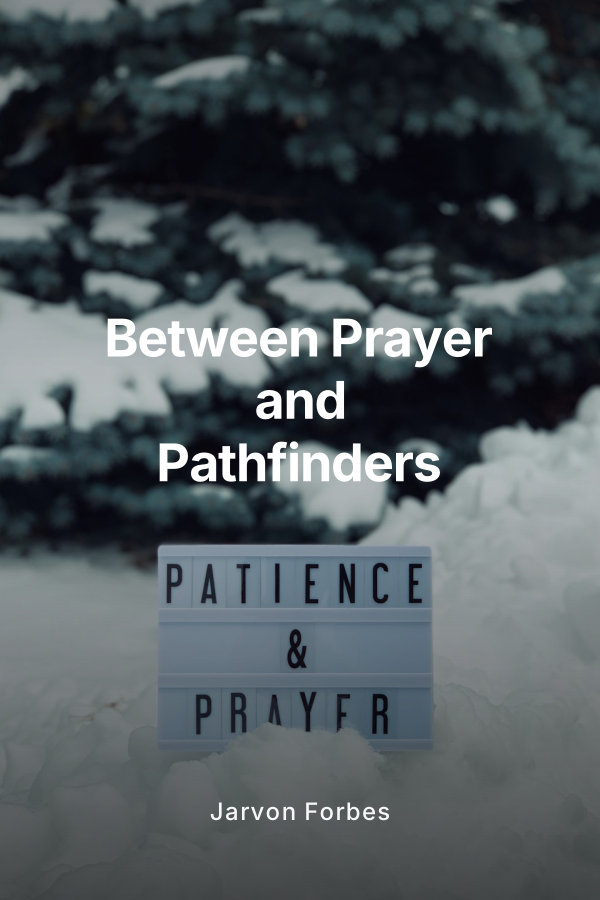
This book follows the inner world of a teenage girl growing up in a strict yet loving Christian home, adopted into a family where faith shapes everything from morning prayers to evening chores. Set between ages 11 and 15, it reveals how discipline, church community, and a hardworking adopted mother slowly form her character, her beliefs, and her sense of belonging.
At the center of the story is one ordinary Wednesday morning that becomes the doorway to everything else. After a warm breakfast of cornmeal porridge and fried festival, she and her little brother Keith are called into the living room for family prayer. Their adopted mother, a respectful Christian woman, leads them in worship before school. That simple moment of bowed heads and joined hands becomes a quiet symbol of their entire life together. From there, the book moves in and out of different years, showing how similar mornings and repeated routines carry hidden joys, pressures, and turning points.
The narrative explores a home ruled by firm boundaries and constant spiritual guidance. There is a daily “no TV from 5pm to 6pm” rule, replaced by homework, chores, family time, and preparation for church activities. Afternoons are filled with sweeping floors, washing dishes, finishing assignments, and sometimes just sitting in the stillness of a small living room where the television must stay dark. Evenings and weekends are shaped by the church calendar. The main character spends much of her after-school time helping at church, practicing with the choir, training with the Pathfinder group, and attending meeting after meeting. Her life is a rhythm of uniforms, programs, and practices that leave very little space for idle time.
Through her eyes, readers see how structure and sacrifice can feel both safe and suffocating. Her adopted mother disciplines mostly through grounding and serious talks, often wrapped in prayer and Bible teaching. Losing television time, missing outings, or being told to stay inside the house become tools of correction. There is always a conversation, sometimes long and heavy, where her mother explains right and wrong, points to God, and asks hard questions about choices and character. At times, this discipline feels deeply loving and protective. At other times, it feels like pressure she cannot fully name. The book shows these mixed feelings without attacking or idealizing the mother, allowing readers to sit honestly in the tension of strict love.
The church community itself functions as an extended family. Brothers and sisters from church visit the house daily, making sure the home is “welcomed,” peaceful, and supported. They pray in the living room, share short devotions, inquire about school, and offer help when they can. For the young girl, their presence becomes a steady warmth. She feels comforted by their concern, loved by their attention, and protected by their constant prayers. On days when she feels uncertain or tired, the knock at the door from a familiar church sister or brother reassures her that she is not alone. The book paints these visits as a living net of care surrounding a small household that works hard to stay afloat.
At the same time, her younger brother Keith lives a different rhythm inside the same walls. While she is often at church rehearsals or programs, Keith usually stays home. He moves more freely in the quiet of the house, enjoying extra time to rest or play. This difference in routine slowly shapes their relationship. She sometimes feels that he has it easier and carries a lighter burden. Keith, on the other hand, sees how often she is pulled away and how much their mother relies on her. Their bond is tested and reshaped as they grow, argue, share secrets, and face their own forms of discipline. The story traces their journey from simple childhood closeness into a more complex teenage connection, where they must learn to understand each other’s different roles in the family and church.
Beneath the surface of chores, church, and rules, the central relationship of the book remains the adopted mother and daughter. The mother is portrayed as a respectful Christian woman, dedicated to her faith, her children, and her responsibilities. She wakes early to cook, cleans constantly, and somehow always finds a way to keep food on the table despite limits and struggles that are hinted at but not fully spelled out. Her daily work, usually taken for granted, becomes more visible to the main character as she grows older. Through scenes of late-night cleaning, weary yet determined cooking, and quiet moments of prayer at the kitchen sink, readers see the weight this woman carries and the love that fuels her sacrifices.
The book gradually leads toward a turning point in how the teenage girl sees her mother. As a child, she mostly experiences her as a voice of rules and a hand of discipline. As a young teen, she starts to feel both grateful for and burdened by the constant church activities and expectations. Then, between ages 11 and 15, a slow shift takes place. Through one or more key conversations, moments of vulnerability, and shared prayers, the girl begins to understand that her mother’s strictness comes from a deep desire to protect and guide, not to control for its own sake. She recognizes the spiritual guidance behind the grounding, the love inside the lectures, and the faith behind the insistence on church life.
By the end of the book, readers see a young woman who is still growing, still questioning, and still forming her own relationship with God, but who can finally name the gifts hidden inside her structured upbringing. The daily visits from church members, once just a background habit, appear as a shield of community. The “no TV” hour looks less like a punishment and more like a space that allowed homework, chores, and sometimes rare but precious family conversations. The endless practices and Pathfinder meetings are recalled not only for their tiredness, but also for the skills, friendships, and confidence they planted in her.
This is not a story of perfect people or a flawless Christian home. It is a story of real discipline mixed with real tenderness, of a girl who sometimes feels overused by church life yet secretly strengthened by it, of a mother who fails at times but never stops trying to provide and guide, and of a brother whose quieter presence still matters more than he realizes. Through ordinary scenes like breakfast on a Wednesday morning, shared prayers in a small living room, whispered talks during grounding, and busy evenings filled with uniforms and song sheets, the book invites readers into the quiet heroism of a family held together by faith.
“Between Prayer and Pathfinders” will resonate with readers who grew up under strict Christian rules, who know the smell of church benches and the sound of evening devotions, and who have wrestled with the meaning of discipline and belonging. It speaks to anyone who has ever questioned whether love can hide inside rigid routines, and whether God can be found in the simple acts of cleaning, cooking, visiting, and praying. Above all, it shows how an adopted daughter slowly discovers that she is more than just a child under rules. She is a young woman being shaped for strength, responsibility, and a faith that she can one day call her own.