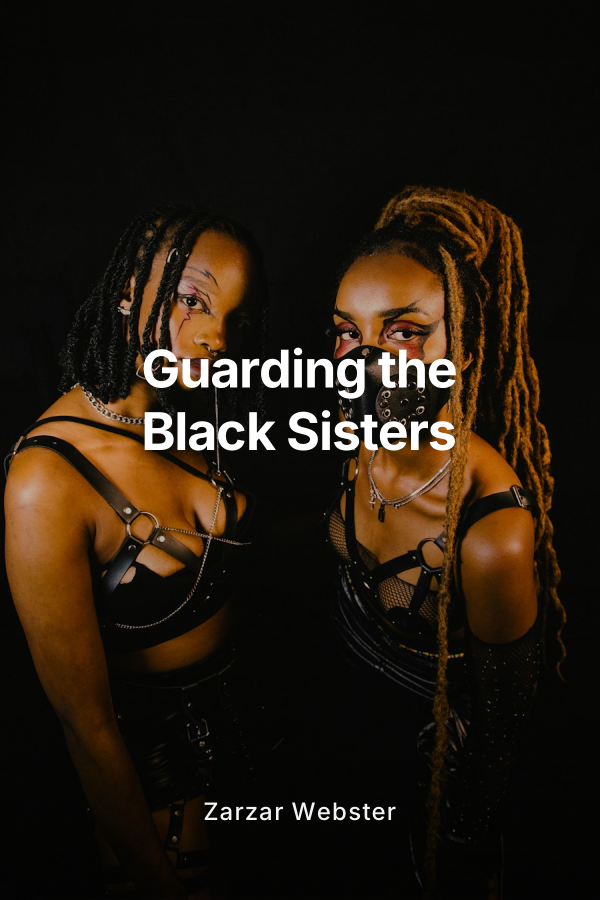
In a war carved into bloodlines, Thea Swan is a walking contradiction.
She is twenty seven, muggleborn, loudmouthed, proud, and far too talented for her own good. Top of her year at Hogwarts, Gryffindor prefect, Quidditch golden girl, and now one of the Order of the Phoenix’s most promising operatives, Thea has a talent for breaking curses, rules, and tempers in equal measure.
She is also very small, very explosive, and absolutely the wrong witch to assign to the darkest family in Britain.
Which is exactly why the Order chooses her.
When a secret bargain forces three infamous Black sisters into a shadowy “protective custody,” Thea is sent in as their live‑in guard, handler, and reluctant babysitter. Her orders are clear. Keep them contained. Keep them useful. Report everything. Do not get attached.
The Black sisters hear the same thing, implied in every cold word from the Ministry and the Order. Behave or rot. Cooperate or die.
No one expects affection. No one plans for obsession.
Bellatrix Black, recently torn from her imprisoned husband and disarmed of open warfare, should be the easiest to condemn and the hardest to control. She is the eldest, the most infamous, the Dark Lord’s former favorite. A childlike storm masquerading as a woman, she waltzes along the edge of sanity with bones in her hair and blood on her memories. Her corsets are black, her smile is red, and her laughter is a blade looking for something new to cut.
Thea is supposed to fear her. Instead, Thea insults her manicure.
Bellatrix should hex her to ash. Instead, something in her cracked mind clasps around the tiny furious witch who refuses to flinch from her. The first spark of obsession ignites over a throwaway comment about black nail polish and never really goes out.
Andromeda Black has already tried to live a gentler life and watched it fall apart. Recently divorced from her muggleborn husband, a healer and potioneer by calling, she is the most outwardly reasonable of the three. Warm curves, honey brown eyes, polished skirts, and a smile that looks safe, she seems like the good sister in a ruined line.
She is not. Not entirely.
Under the calm sits the same wild streak, trimmed into precision instead of chaos. She stitches flesh together in a war that keeps tearing it apart, brews poisons as easily as antidotes, and hides a dangerous cleverness behind motherly teasing.
She should treat Thea like a burden. Instead, she bandages Thea’s injuries after that first explosive dinner, leans in too close, and decides that the muggleborn with the white hair and uncontrolled mouth is a puzzle she very much wants to keep.
Narcissa Black is the last, the coldest, and the one the Order fears in quiet ways. Her power is not in curses shouted in corridors, but in the elegant tilt of her chin and the silent force of her mind. A gifted Legilimens, she wears wealth the way other witches wear shields. Dresses that cost more than most family homes, jewels that tell her history, perfume that marks every room she passes through.
She treats Thea like dirt at first sight. An upstart mudblood assigned to supervise a Black? Insulting. Impossible.
Yet Narcissa’s first real look at Thea is not with her eyes. It is with her magic, when she reaches into Thea’s mind at the dinner table to break her spirit and finds instead a blazing wall of stubborn courage, grief, and unyielding loyalty. The backlash hurts. The intrigue hooks deeper.
What begins as a punishment for all four women quickly turns into a pressure cooker.
Thea moves into the Black family manor to watch over three witches who have done unspeakable things for a cause that tried to erase her. She is supposed to keep her distance and her disgust. Instead, her temper keeps getting ahead of her training.
The first shared meal devolves into a duel that cracks marble, scorches ancient carpets, and draws blood on both sides. Bellatrix plays with her food, twirling curses in the air. Narcissa tries to pry into Thea’s thoughts and make her kneel. Andromeda stands between spells with a healer’s calm, then pulls Thea aside to tend every bruise and cut, hands lingering just a bit too long.
Thea should hate them.
She does. At first.
Their cruelty grates against everything she fought to prove at Hogwarts. Their insults dig into old scars, reopened along fault lines she thought she had sealed. They call her mudblood with practiced ease, mock her history, and test her limits like they expect her to break.
The problem is that Thea Swan does not know how to break. She only knows how to burn.
Every snub is met with a quip. Every delicate insult is volleyed back with plainspoken profanity that leaves Narcissa speechless and Andromeda giggling behind her hand. Every attempt Bellatrix makes to terrify her turns into a game of who will blink first.
In the quiet that follows conflict, fault lines begin to shift.
Bellatrix discovers she likes the way Thea glares at her, unafraid and incandescent. The little lioness looks so pretty when she snarls. Obsession curls around Bellatrix’s ribs in threads of curiosity. How far will Thea go to protect others? How much blood will she shed if pushed? Who will she choose when the war comes knocking at these doors again?
Andromeda, watching them all, realizes that Thea is not a symbol or an assignment. She is a person who laughs too loud, cares too hard, and hides her loneliness behind theatrical bravado. Each bandage Andromeda wraps becomes a secret promise. Each cup of tea an unspoken question. How much can Andromeda soften without losing her edge? How much can she indulge her own madness now that someone actually fascinates her?
Narcissa studies Thea like a rival and like prey. She plans to dismantle this meddling Order witch one thought at a time. Then she catches herself daydreaming about dresses Thea could wear and how the manor would look with another closet full of white hair ribbons and Gryffindor scarves. Her contempt twists into reluctant respect before it bleeds into something fiercer and far more dangerous.
In the world outside, the war does not pause. Loyalties are tested. Old allies fall. New bargains are struck behind closed doors. The sisters hold information the Order needs. Thea is the key to keeping them on the side of something resembling light, or at least away from open darkness.
Inside the manor, a different war rages.
The sisters torment Thea with mind games, flirtation, etiquette battles, and dueling practice that crosses lines. She answers in kind with pranks, arguments, stubborn moral stands, and a refusal to be cowed by ancient bloodlines. Guard and charges blur into adversaries, then into something more complicated.
Jealousy slinks through the halls. Bellatrix hates the way Andromeda’s hands soothe Thea’s pain. Narcissa bristles when Bellatrix earns one of Thea’s rare genuine smiles. Andromeda notices every time Thea’s gaze lingers on elegant rings or quiet moments in the greenhouse with Narcissa.
They are dangerous, each in her own flavor of unhinged. They are also capable of unexpected tenderness. A hand at Thea’s back when she stumbles. A shield thrown up around her during an unexpected attack. A night spent in the library, arguing about history and the cost of loyalty until the candles burn low.
Guarding them slowly turns into something else.
As Thea navigates this charged household, she faces a choice more harrowing than any duel. To keep her soul clean, she must keep her distance and cling to the Order’s black and white. To keep the people she is starting to care about alive, she may need to step into the grey with them, compromising on principles she once believed untouchable.
Can a muggleborn heroine who built her life on defiance afford to love the very witches who once served her enemy? Can three pureblood sisters raised on supremacy and secrecy truly change, or will their obsession drag Thea into depths she cannot escape?
Guarding the Black Sisters is a fast burn enemies to lovers dark romance set against the backdrop of a magical war. It follows one infuriatingly brave muggleborn witch and three equally infuriating pureblood sisters bound together in a volatile arrangement that was never meant to feel like home.
Expect sharp tongues, clashing wands, psychological chess, obsession that edges toward dangerous, and a slow unraveling of old prejudices.
In a house full of madness, the greatest risk is not death. It is the possibility that, despite everything, they will all end up choosing each other.