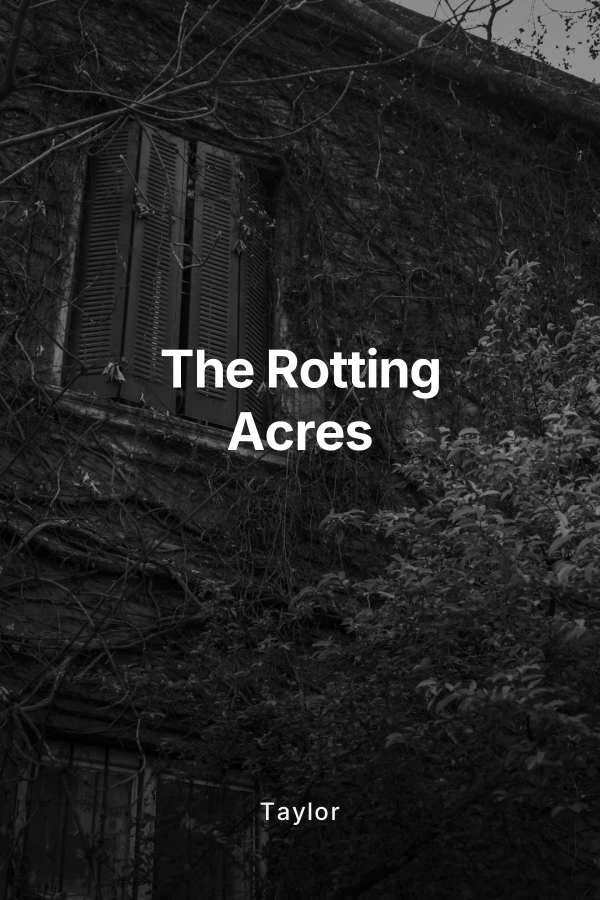
In a stretch of rural nowhere, where the soil turns black and the air hangs heavy with the scent of mildew and iron, lies a farm that no one claims and no one quite remembers. Locals avoid its overgrown paths. Old maps show its borders, then leave the space inside blank. That forsaken patch of land has a name, spoken only in whispers: the Rotting Acres.
At the edge of this cursed soil stands Murlin, a 35 year old farmer who has run out of second chances. The seasons have betrayed him, debts press at his door, and every field he touches seems to sicken and die. To Murlin, land is not romance or legend; it is survival. When he is offered ownership of a neglected property for a price that sounds almost merciful, he ignores the warnings and accepts. He believes in hard work, not haunted stories. He believes in sweat and calloused hands, not curses.
Chris, his 68 year old servant, does not share his faith in reason. Old, stooped, and sharp eyed, Chris carries with him the scars of decades spent serving other men and other lands. He has seen what happens when people pretend not to hear the land whisper back. Superstition and memory cling to him like dust. To him, nothing is ever simply abandoned without cause. As Murlin’s quiet shadow and reluctant conscience, he follows his employer to the Rotting Acres, driven by loyalty, fear, and a guilt he never speaks of.
The Rotting Acres welcome them with silence, and then with subtle revolt. Wood warps overnight. Wells turn brackish. Tools rust in moments when left unattended. The animals refuse to cross certain invisible lines. In the fields, the crops sprout fast, too fast, then twist upon themselves and rot in a matter of days, as if time itself is distorting. The soil does not simply fail. It fights back.
What begins as simple misfortune grows into a pattern that neither man can ignore. Strange marks appear beneath flaking paint in the farmhouse, forming circles and jagged sigils that resurface no matter how much they scrape and repaint. A cellar door will not stay locked. The weather over the farm never quite matches the neighboring sky, as if a separate climate clings to the cursed acres. At night, the creak of old beams sounds like footsteps, and voices mutter just beyond the edge of hearing, speaking names and promises Murlin refuses to admit he understands.
The locals know stories, but they offer them piecemeal, wrapped in superstition and fear. Children dare each other to sprint along the fence line at dusk. Elders cross themselves when the farm is mentioned, remembering a family that once ruled those fields with iron fists and secret rites. Some speak of a harvest that was too plentiful, of a bargain struck in a dry year when famine loomed. Others claim the land began to rot from the inside after the soil was stained with blood in a hidden ritual, a sacrifice meant to bind prosperity to a single bloodline. What everyone agrees upon is simple: the farm should have stayed empty.
Murlin knows none of this when he signs his name to the deed. To him, the Rotting Acres represent a final attempt at redemption. He sees the crooked fences and collapsing barns and imagines order, repair, and harvest. He sees his chance to salvage his name, his livelihood, maybe even some quiet dignity. He refuses to be ruled by the fears of others. Curses belong in bedtime stories, not ledgers.
Chris, however, recognizes an echo in the land’s sickness. Something in the smell of the air, the way the ground seems to pulse beneath his boots, awakens memories he has spent a lifetime burying. He has seen this kind of wrongness before on a different estate, under a different master. There, the soil turned on its owner, and the house sank into decay even as its lord insisted that all was well. Chris survived that time by obedience and silence, then carried the weight of that silence into old age. Step by cautious step, he begins to suspect that the Rotting Acres are not a new chapter for Murlin, but a reprise of an old, unfinished story that has finally caught up with him.
The story unfolds as Murlin and Chris attempt to reclaim the land, each day bringing new signs that the farm refuses their touch. Murlin clings to his identity as a practical man in a world that rewards effort, struggling to explain every unnatural event as coincidence, bad luck, or sabotage. His pride will not allow him to surrender. Each setback only feeds his resolve, even as his nights grow longer and his temper shorter. The more the farm resists, the more fiercely he believes he can bend it to his will.
Chris watches, torn between loyalty to his employer and dread that they are both walking into a fate that was set in motion long before either of them arrived. He is superstitious, but not foolish. Every creak, every cold spot in the hallways, every patch of soil where nothing will grow feels like a word in a language he almost remembers. As he begins to piece together the farm’s grim history through overheard gossip and the remnants of old records, a chilling pattern emerges. The Rotting Acres have never been truly abandoned. They simply wait for someone new to claim them, someone desperate enough to ignore the warnings.
The Rotting Acres become the crucible in which the bond between Murlin and Chris is tested and transformed. At first their relationship is simple: employer and servant, youth and old age, stubborn faith in labor against weary belief in hidden powers. Their conflicts seem ordinary, arguments about money, methods, and the foolishness of dreams. Yet as the land’s hostility intensifies, the stakes of those arguments rise. Each man clings to his worldview because to let it go would mean accepting a terrifying truth: that their fates might not be their own.
In time, hints appear that the farm’s curse is not merely territorial. It is personal. Names carved into rafters match names muttered in the dark. Old portraits in the attic bear features strangely similar to Murlin’s, inviting uncomfortable questions about ancestry and inheritance. Documents hidden behind collapsed walls suggest that the original bargain that poisoned the land was not limited to one generation. The farm may have its roots entwined with Murlin’s bloodline, calling him home not as savior, but as payment.
Chris must then face the possibility that his presence is no accident. Threads from his past connect to the farm’s original fall. He recognizes familiar handwriting in a forgotten ledger, the seal of a house he once served, and the ritual phrasing of old promises that should have died decades earlier. Perhaps he has been circling back here for most of his life, pulled by a story that never finished with him. His fear shifts from the land itself to what it might demand of him to set things right or to keep its grip on the world beyond its borders.
The central conflict deepens from a simple struggle to restore a sick farm to a battle over whether the curse will stay contained within the Rotting Acres or spill into the surrounding countryside. The fields do not merely rot; they generate a slow spreading blight that threatens neighboring farms, tainting wells and withering crops beyond the original borders. Rumors grow. People begin to suspect that Murlin’s stubborn insistence on working the land is waking something that has slept fitfully, restrained by neglect, but never truly gone.
Breaking the curse becomes more than a question of survival for Murlin and Chris. It turns into a race against the land’s creeping corruption. If they fail, the Rotting Acres will expand their influence, swallowing livelihoods, families, and entire communities one season at a time. What began as one man’s desperate gamble to rescue his future becomes a fight to prevent the past from consuming everything in its path.
The Rotting Acres: A Tale of Murlin and Chris traces two men who stumble into the center of an ancient pact, forced to confront history, blood, and the cost of bargains made in secret. It is a dark fantasy rooted in soil and sweat, where the magic is not bright and noble, but heavy, slow, and suffocating, tied to land and labor. Supernatural forces do not roar. They linger in rot, in the cracking of beams, in the stubborn refusal of a seed to sprout where it should.
The book explores what happens when human will collides with a land that remembers too much. Murlin must decide whether he can accept truths that undermine his identity as a self made man, while Chris must find the courage to speak aloud the secrets that have kept him alive but haunted. Their bond shifts into something that resembles a harsh, fragile kinship, forged in shared peril. They come to need each other, not simply as master and servant, but as two witnesses who can confirm that what they see is real, that they are not facing the darkness alone.
Across two chapters, each divided into unfolding layers of the present and revelations from the past, the story moves from unsettling signs and creeping dread toward raw confrontation. As the boundary between the farm’s history and the men’s lives dissolves, the Rotting Acres are revealed not as a passive haunted place, but as an active force with intention and memory. The farm wants something from Murlin and Chris, and it will not stop until it gets it.
In the end, The Rotting Acres is not simply a tale of a cursed farm. It is a study of inheritance, guilt, and the cost of ignoring stories that older generations tried to bury. It shows how curses are often the echoes of choices made in desperation, and how the land itself can become a ledger of debts unpaid. It asks, quietly and relentlessly, whether two flawed men can break a pattern that has devoured lives for generations, or whether they too will become another layer of rot beneath the fields, another story that locals whisper about as they steer wide of the broken fence line at dusk.