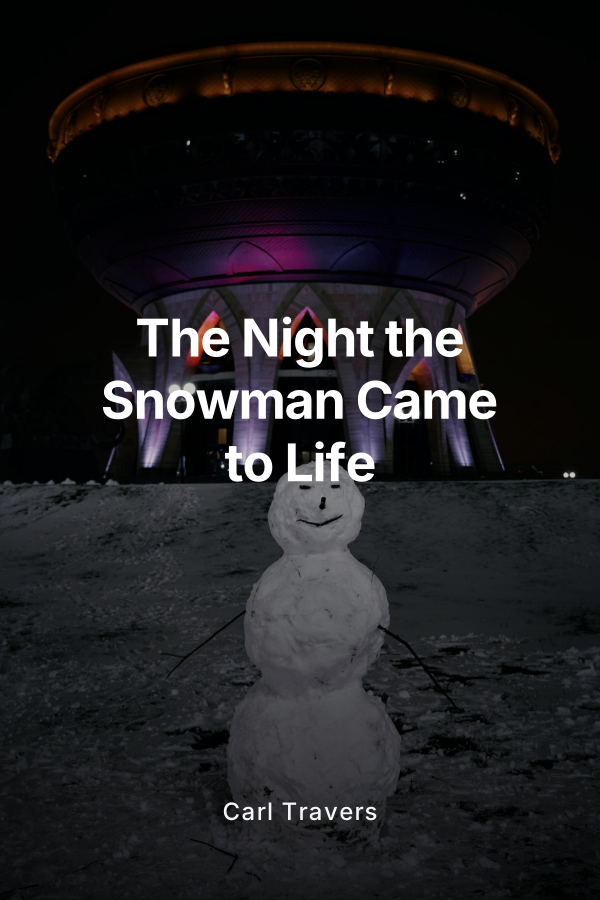
This book tells the story of one extraordinary Christmas Eve when two young brothers, Zac and Thom, discover that being left home alone can turn into the most magical adventure of their lives. In their tall three story home, wrapped in fairy lights and quiet snow, the boys promise their mum Helen that they will be good and look after the house while she slips out to help a neighbor. They do not expect trouble. They certainly do not expect a snowman to come to life.
At first, everything feels calm and cosy. The brothers race toy cars along the hallway, peek at the presents under the tree, and stare out at the snowy garden. Then Thom notices something that makes his heart skip. A snowman has appeared in the front garden, huge and lumpy, too big to have been built in the short time since their mum left. When it moves, speaks, and growls that it hates Christmas, the boys realize they must defend their home and their Christmas from a creature made of snow and bad intentions.
What follows is a joyful, slightly scary, and very funny battle of wits. Zac, the older brother, becomes the planner. He locks windows, checks doors, and thinks like a quiet commander. Thom, younger but bold, turns the house into a fortress with toys, Lego traps, and glitter bombs. Together they turn ordinary objects into clever defenses, filling the house with tiny, inventive tricks that any child will recognize and love. They are not just waiting to be rescued. They are the heroes of their own story.
As the snowman crashes, stomps, and squeezes around the house, trying to break in and ruin their Christmas, the boys’ courage is tested. They face fear, argue for a moment, then remember they are on the same side. Their teamwork becomes the beating heart of the story. Each trap they spring on the snowman is another moment of laughter, tension, and triumph, showing readers that bravery can come in small, very human forms: whispered plans in the dark, holding a brother’s hand, and standing your ground when you would rather hide.
Just when it seems the snowman’s cold anger might win, the sky and roof above their three story home begin to shimmer. Bells jingle faintly. Warm red light seeps through the ceiling. Father Christmas himself arrives, not as a distant, untouchable figure, but as a powerful ally who respects what the boys have already done. He does not simply sweep in to save the day. He acknowledges their courage, amplifies their efforts with his own gentle magic, and shows them that even in the wildest night, they are never truly alone.
With Father Christmas at their side, the final confrontation becomes less about destroying a monster and more about transforming the danger into something harmless. The snowman is frozen, scattered back into simple snow, and stripped of his power to frighten. The house settles. The night softens. The boys discover that heroes are not always grown ups in uniforms, but sometimes children in pyjamas who refused to give up.
When Mum Helen returns, she steps into a living room sprinkled with glitter and whispers of fading magic. She sees nothing of the raging battle her sons have just fought, but she notices that something in them has changed. They stand a little taller. They speak with a quiet pride. Behind it all lingers the echo of Father Christmas’ laughter and the secret knowledge that he visited their home, fought beside them, and trusted them with the safety of Christmas.
The story closes on Christmas morning with a peaceful garden, no snowman in sight, and a single note in the snow addressed to Thom and Zac. It is a simple message that confirms what the boys already feel in their hearts: their courage helped keep Christmas safe. This ending gives young readers a gentle, lasting sense that their own bravery, kindness, and imagination matter far more than they might think.
Across five chapters, each divided into two focused scenes, the book expands the original short tale into a richer world while keeping the tight, exciting flow of a bedtime story. Readers see more of the house’s three floors, more of the boys’ personalities, and more of the snowman’s strange, grumpy nature. There are quiet, tender moments with Mum Helen before and after the adventure, playful brotherly jokes, and deeper glimpses of how it feels to be responsible, scared, and still choose to act. The pacing keeps the tension light enough for young children, yet thrilling enough to hold older ones.
The Night the Snowman Came to Life is written for families who love Christmas stories filled with warmth, humour, and just a touch of danger that always resolves safely. It is especially aimed at children aged six to ten, with younger siblings listening along, and parents or grandparents reading aloud. The tone is reassuring, festive, and vivid, inviting children to picture each scene as if it were an illustrated page. It avoids heavy seriousness, even when the snowman is at his scariest, and always returns to the comfort of home, family, and the quiet strength that grows when children are trusted.
Above all, this is a story about courage, teamwork, and the magic that appears when ordinary kids step up in extraordinary moments. It celebrates brothers who bicker and still have each other’s backs, a mother who believes in her children, and a Father Christmas who is more than a gift giver: he is a guardian of joy who knows the names and hearts of the children he visits. Every chapter offers a new piece of the adventure, new traps, new laughs, and new reasons to love Christmas.
By the final page, young readers are left with a feeling that their own homes might also be watched over on snowy nights, that their toys and creativity might be more powerful than they seem, and that even if a bad snowman ever appeared at their own window, they would know exactly what to do.