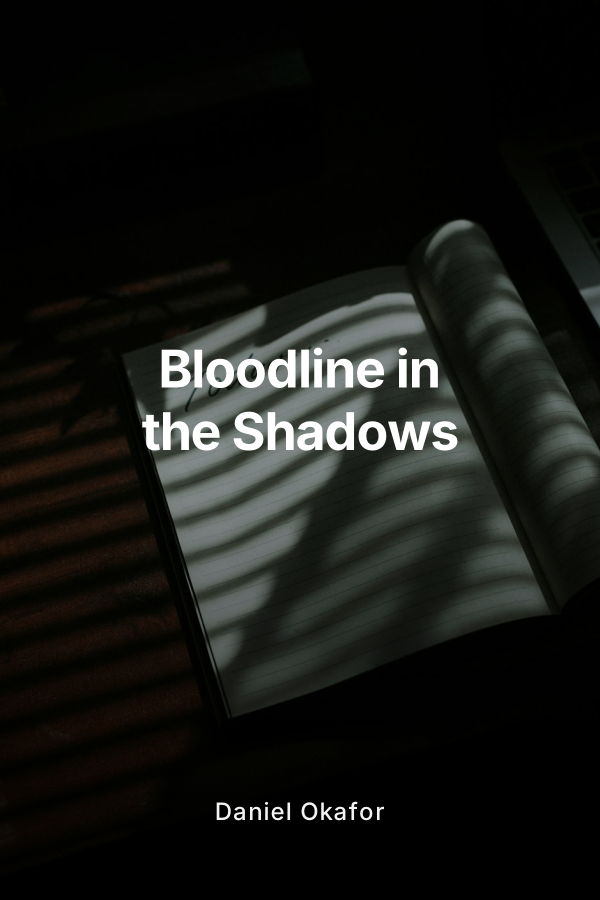
This book follows a powerful Korean mafia boss whose life is split in two by a single phone call. Eight months after a cold, calculated divorce from his distant wife, he discovers a secret that shatters every rule he has ever lived by: she was pregnant when she walked away, and somewhere in a hospital, a baby might carry his name, his blood, and his enemies’ target on its back.
Set against the backdrop of Seoul’s criminal underworld and the vibrant presence of Afro communities woven into its streets, Bloodline in the Shadows explores how love, fear, and power collide when a man built on control faces the one thing he cannot command: the safety of a child he never knew he had.
The story opens in the present, with a man who believes he has already lost everything that mattered. He is a feared figure, a meticulous boss, a man whose name is spoken in whispers. Then a call comes from a hospital, uttering a name he has not allowed himself to say aloud for months, and a question that stops his world in place. His ex wife, who vanished after the divorce, lies between life and death, and there is a baby involved. The first act of the book captures this moment of shock, tracing his reaction from denial to anger to a dangerous quiet, and closing with a single, tormenting question in his mind. If the child is his, why did she hide it from him?
From that turning point the narrative moves backward, peeling away the layers of his power and the ruins of their marriage. The second chapter dives into his reputation as a cold, untouchable leader and the way that same armor poisoned his home. The reader sees a marriage strangled by control, silence, and the ever present risk of his world. His ex wife is drawn as a woman trapped in the shadows, watching her husband choose violence and loyalty over intimacy and trust, until finally she chooses her own survival over his empire. Their divorce, once framed as one more transaction in a ruthless life, is revealed as the first act of protection for a life growing inside her.
The heart of the book revolves around the woman who disappeared. Chapter by chapter, her absence becomes its own presence. After she leaves, she cuts all ties to the mafia network, slips out of the city, changes her number, and buries her identity behind new routines and new streets. Along the way the book expands its cultural canvas: she leans on an Afro diaspora community that understands displacement, fear, and the longing for home. Her pregnancy unfolds in quiet, anxious scenes far from the neon glow of gang meetings, and every decision she makes is framed by the same terror. His world kills what it touches, and she refuses to let it touch their child.
When he finally tracks her down, the confrontation is not just between a man and a woman, but between two versions of the same past. The book builds this encounter as a storm of accusations and defenses. He demands answers, furious that she erased him from their child’s life. She stands her ground, confessing that the baby is his while insisting that he was never meant to know. In this clash a central line emerges like a knife: his world has always devoured innocence, and she will not feed it her child. That moment flips the story’s axis. His authority, forged in violence and fear, means nothing in the face of a newborn’s breath and a mother’s decision to stand alone.
From there the book raises the stakes from private betrayal to public danger. The reason she stayed silent unfolds through a bitter series of revelations. Enemies placed a hit on his bloodline. Someone inside his organization fed information to a rival group. The divorce, which he once took as an insult and an injury, becomes a desperate shield that kept the baby invisible. As he pieces together the betrayal within his own ranks, the man who never bends begins to crack. For the first time, readers witness his emotional breaking point, not in the face of a gun, but in the realization that the only person who protected his child was the woman he pushed away.
The danger, however, refuses to stay buried. The book shifts into high tension when someone else discovers the existence of the baby. Surveillance, attempted kidnapping, and power plays thrust the child into the center of a violent game. The boss faces a choice that defines the rest of the story. He can respond as he always has, with overwhelming force that spills blood across the city, or he can tear down the very empire he built to keep control. The narrative follows his struggle as enemies close in, his own men begin to suspect, and the line between protection and destruction blurs.
In the final act the story transforms from a tale of vengeance to one of sacrifice. To cut the threat at its root, he chooses the unthinkable: he turns against his own network, dismantles key parts of his organization, and orchestrates a disappearance that may cost him his name, his throne, and the only identity he has ever known. The climax pits him against the traitor who endangered his bloodline, and he fights not for power, but for the right of his child to grow up without the shadow of his crimes. Crucially, he does all of this while trying to shield the baby and the mother from the full horror of what he is willing to do. His hands remain bloody, but he refuses to let their eyes see it.
The resolution arrives after time has passed and the streets have fallen quiet. The king of an underworld is gone, replaced by a ghost who lives on the edges of a new life. The mother and child inhabit a world without gunshots in the distance, without coded phone calls in the night. He watches them from afar or, after cautious rebuilding of trust, stands close enough to learn how to hold a child instead of a weapon. The final pages settle on a simple truth. Once he ruled an invisible empire that stretched through fear and money. Now his universe has narrowed to a single fragile heartbeat, and he chooses to guard it with a dedication he never gave to any territory or deal.
Bloodline in the Shadows is designed to read like a cinematic, binge worthy episode from a storytelling channel that thrives on intense emotional stakes, escalating twists, and layered cultural detail. It maintains a relentless rhythm, introducing new hooks as secrets unravel, loyalties shift, and danger presses in. The Afro Korean backdrop enriches the narrative with themes of migration, belonging, and dual identity, framing the characters’ choices within worlds that do not always accept them as they are.
Blending crime, romance, family drama, and moral reckoning, this book invites readers to question where power truly lies. Is it in the ability to command a city’s fear, or in the willingness to step away from everything in order to keep a single child safe? As the protagonist learns, the cost of redemption is not paid in sudden gestures alone, but in the quiet decision to live with less power and more vulnerability.
Throughout the story every revelation reshapes what the reader thinks they know about the past. The ex wife’s silence, at first framed as deceit, becomes an act of courage. The boss’s past brutality, once excused as the price of survival, is thrown against the tenderness required of a father. The betrayal inside his organization, traced through careful hints and confrontations, underlines how fragile loyalty becomes when bloodlines and legacies are at stake.
Ultimately Bloodline in the Shadows is a story about what survives when the dust of an empire settles. It speaks to anyone who has tried to outrun their history, anyone who has walked away to protect a future no one else could see, and anyone who has ever wondered whether a person rooted in darkness can truly change for the sake of someone helpless and new. The book closes with a lasting image of a man who once believed he was untouchable, now standing quietly in the background of an ordinary life he can never fully enter but will spend the rest of his days defending.