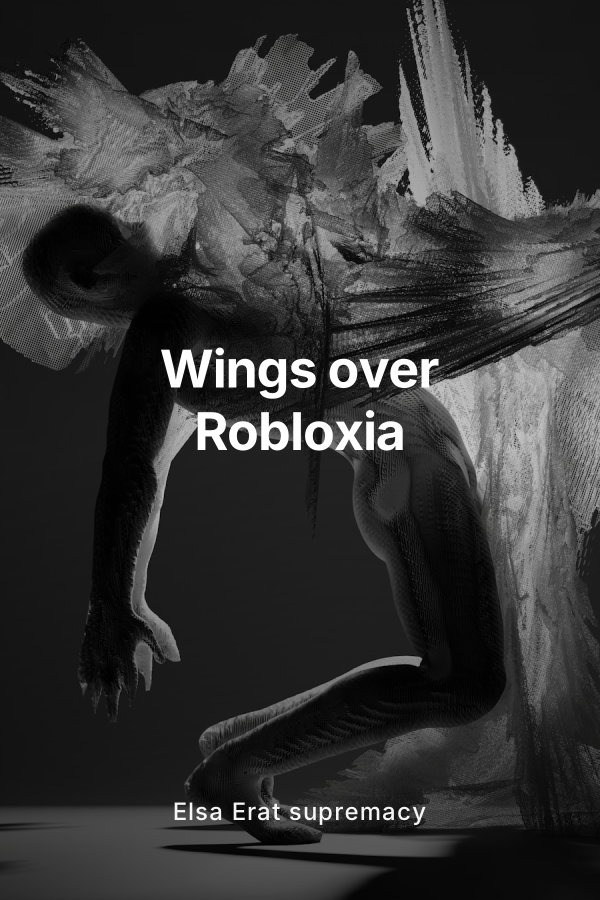
This book follows Telamon, a shy and oblivious deity who drifts over Robloxia in the form of a strange bird or a robed, winged “cultist” on two legs. Unknown to him, his occasional, awkward visits to a small temple have turned a scattered handful of lonely players into a fanatical underground cult, convinced their god is testing their pain and loyalty. To Telamon, they are simply cute little humans who like gifts and attention. To the rest of Robloxia, they become a terrifying rumor that will explode into a full-blown scandal.
When a popular player stumbles upon the cult’s hidden sanctuary and exposes it in an exploration video, panic grips the platform. Graphic offerings, bloodstained rituals, and desperate worshippers spark outrage and fear, while Roblox’s admins scramble to control the narrative and protect the community. The supposed “god” of this cult looks fake, like a hoax invented by a malicious user, and no one believes a real divine being could be that quiet, that absent, that disinterested.
They are wrong.
Telamon has been watching everything. Clueless about worship, morality, or human psychology, he has let the cult spiral while he naps in the clouds. He neither understands their devotion nor knows how to say “no,” so he allows unstable leaders to rise, lets dangerous rules flourish, and appears just enough to keep hope alive. When admins enter the temple undercover, Telamon finally steps down from the sky to meet these strange, powerful humans who have the courage to question his followers and the authority to change their world.
What follows is a chaotic clash between a divine innocent and a corporate machine.
Lured to Roblox HQ under the guise of a “pilgrimage,” Telamon walks willingly into interrogation. There, Builderman, the platform’s exhausted and sharp-tongued leader, confronts him with a mess he never meant to cause. Telamon is baffled. Why is everyone so angry? Why is pain wrong when his followers beg him for it? Why does this stern man with the tired eyes look so unfairly attractive?
As the admins wrestle with a public relations nightmare, Builderman makes a risky decision. Instead of banning or binding the god, he will teach him. Telamon must learn what worship means, what responsibility looks like, and how to heal rather than harm. In exchange, Telamon will help dismantle his own cult from the inside and guide its members back to normal life.
There is one complication.
Telamon decides, immediately and single-mindedly, that Builderman is his mate.
Bound by curiosity and necessity, the two form a strange partnership. Builderman introduces Telamon to the rules of Robloxia, from basic consent to community standards, while Telamon introduces Builderman to divine power, birdlike instincts, and the baffling intimacy of being adored by a creature who has never been taught human love. In the temple at night, they shepherd wounded believers away from self-destruction. By day, they battle panic in the offices, fend off conspiracy theories, and navigate interviews filled with questions they cannot fully answer.
The cult slowly unravels.
Under Telamon’s reluctant guidance and Builderman’s firm support, the followers are pulled out of their blood-soaked rituals and pushed toward therapists, friends, and healthier communities. Their god stops granting dangerous power, stops disappearing without a word, and starts listening. They learn that the burns on their hands were never holy tests, just side effects of a confused deity handing out raw energy. They discover that love from a higher being can look like boundaries, not suffering. Grateful but wiser, they return to everyday life, still waving at Telamon in the street but no longer willing to bleed for him.
Yet while Robloxia heals, Telamon faces a new kind of storm.
Romance.
He courts Builderman with pure, bird-based logic: nesting in his office, preening his own feathers while sitting in the admin’s lap, exposing his most vulnerable spots as offerings of trust, and trying to undress at the worst possible moments. Builderman, mortified but patient, keeps covering him with jackets, dragging him away from cameras, and insisting that this is not how humans flirt. The more Telamon pushes for affection, the more frustrated and distant Builderman appears, until the god retreats to the sky, plucks out his own feathers, and rips apart clouds in bitter tantrums watched by other gods.
The emotional core of the story emerges here. The book does not treat Telamon’s devotion as a joke. His confusion is real, his heartbreak raw. He believes he has been rejected, that his strange, birdlike language of love is simply wrong. Only when Builderman forces a confrontation and pins him down long enough to speak does the truth come out. Humans love differently. Human love needs words, not just instinct. And if Telamon is willing, Builderman will try this relationship on human terms and godly ones both.
Their bond grows from pity and obligation into something tender and genuine. Builderman learns to read the meaning behind preening and nesting, the significance of a deity exposing a weak spot or resting wings over another body. Telamon learns about consent, timing, and the difference between hunger for attention and steady, everyday care. Together, they build a shared language that bridges divine instinct and human custom.
Robloxia, watching from below, adapts right along with them.
After the cult’s dissolution, the admins release a formal update that reframes Telamon not as a monster but as a harmless, socially inept deity under supervision. At a public interview, Telamon refuses to sit anywhere except on Builderman’s lap, preening his feathers as the room awkwardly adjusts to this new normal. Over time, the community grows fond of their odd resident god who trips on stairs without understanding what stairs are, gets leashed at events so he will not wander off, and kisses Builderman on stage mid-question out of sheer boredom and affection.
What could have been Robloxia’s darkest scandal transforms into one of its strangest love stories.
Wings over Robloxia blends cosmic innocence, internet culture, and emotional healing into a character driven tale about power without wisdom and worship without understanding. It explores how vulnerable minds can twist mystery into obsession, how institutions struggle to respond when faith turns dangerous, and how genuine care can turn a disaster into a second chance.
At its heart, the book asks:
What happens when a god who never wanted followers is forced to confront the damage done in his name?
How do you teach responsibility to someone who has never had to answer to anyone?
And what does it mean to love a being who has never seen his own actions as love at all?
Across five chapters, readers will watch Telamon move from an invisible, drifting deity to a visible, accountable presence in Robloxia. They will see the cult rise in secret and collapse under scrutiny, follow the tense negotiations between admins and believers, and live through the deeply awkward, unexpectedly gentle romance between a clueless god and the man who chooses to guide him. By the end, Telamon and Builderman stand not only as partners in love but as reluctant guardians of a community that has learned to look past fear and rumor to find the story beneath.
This is a tale of gods and gamers, temples and ticket systems, sacrifice and safe spaces. It sits at the intersection of myth and moderation, comedy and trauma, divinity and digital life. Above all, it is about two wildly different beings learning that real devotion does not require suffering, and real love does not need to hurt in order to feel real.