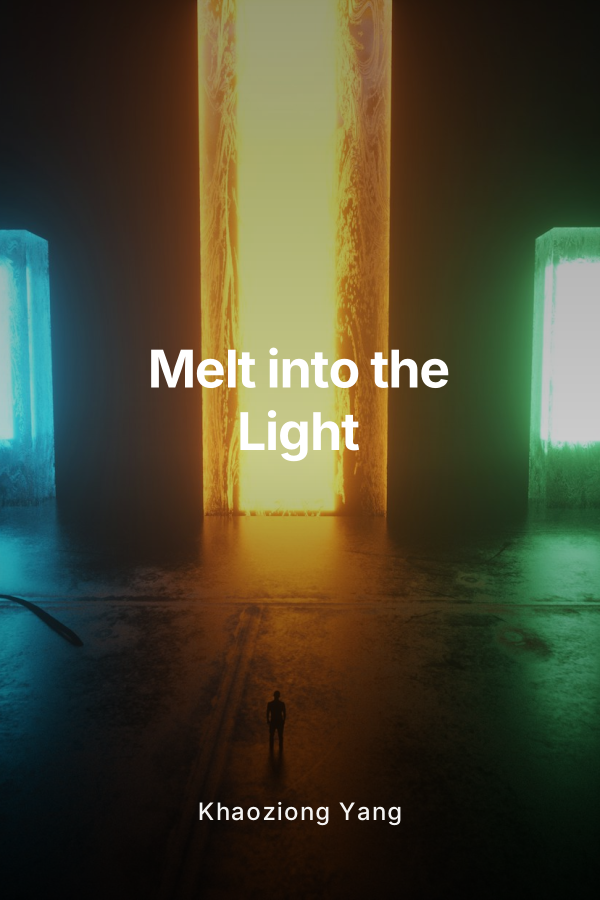
This book follows the intimate emotional journey of two women, SouaChoua and Khaoziong, who learn to feel safe in their own skin and in each other’s arms. Their story is not built on scandal or shock, but on the quiet power of being seen, cherished, and fully accepted.
SouaChoua carries years of self doubt, cultural pressure, and unspoken shame about who she is and whom she loves. She has learned to tense up at the first sign of vulnerability, to question every feeling before she allows herself to feel it. Khaoziong is her opposite in some ways: gentle yet steady, soft spoken yet fiercely protective of the people she loves. Where SouaChoua has learned to hide, Khaoziong has learned to endure. Together, they are about to discover that healing is not a straight path, but a series of fragile, honest moments that ask them to stay instead of run.
At the heart of this story is the way they learn to relax and melt into each other’s presence, not simply as lovers, but as whole human beings who are finally allowed to be tender. Their intimacy is emotional first: the quiet evenings when SouaChoua finally allows her shoulders to drop; the late night confessions that Khaoziong listens to without flinching; the soft, almost shy moments when they reach for each other’s hands and discover how natural it feels. Physical closeness becomes an extension of this trust, always framed by mutual respect, clear consent, and a shared understanding that both of them deserve to feel safe and adored.
The book unfolds in two sweeping chapters that reflect the two turning points in their lives together. The first chapter focuses on awakening: to desire, to identity, to the possibility that love can be both gentle and powerful. SouaChoua and Khaoziong navigate the early, uncertain steps of their relationship, exploring what it means to call each other “home” in a world that has not always welcomed their love. The second chapter turns toward deepening: the slow, patient work of choosing each other again and again, especially when fear, memory, or outside judgment threaten to pull them apart.
Cultural roots and family expectations quietly shape their journey. Both women live within communities where tradition can be both a comfort and a cage. SouaChoua wonders if there is room for a love like theirs within the stories she grew up hearing. Khaoziong struggles with the unspoken rules about what women are allowed to want and who they are allowed to become. Yet neither of them wants to abandon their heritage. Instead, they search for a way to carry forward what is beautiful and life giving from their culture while refusing to surrender their truth.
Their private language of affection becomes a central thread in the narrative. Pet names, playful teasing, and vulnerable confessions turn ordinary evenings into sacred rituals of connection. When SouaChoua whispers “I love you” in a moment of raw honesty, and Khaoziong blushes and echoes the words back, the book captures an intimate turning point: the instant when both women realize that this love is not a passing comfort, but a choice they intend to keep making. Their kisses, touches, and shared warmth are described not as spectacle, but as the natural expression of two souls who have finally found rest in each other.
The story does not ignore conflict. SouaChoua battles old narratives that tell her she is “too much” or “not enough.” Khaoziong fears that if she chooses love openly, she might lose the approval she has worked so hard to earn. Misunderstandings, silences, and moments of hesitation arise. However, instead of leaning on dramatic betrayals, the book explores smaller, truer struggles: learning how to apologize, how to ask for reassurance without feeling needy, how to say “no” and still feel loved, and how to trust that intimacy can be safe rather than dangerous.
Throughout the book, emotional intimacy stands at the forefront. Scenes of physical closeness are handled with care and subtlety, always aiming to show tenderness rather than graphic detail. The emphasis falls on sensation as feeling rather than spectacle: the way SouaChoua’s breathing slows when she finally lets herself trust Khaoziong’s hands; the way Khaoziong feels her own heart unclench when SouaChoua reaches for her without being prompted. These are the moments where armor falls away and both women allow themselves to be fully present.
“Melt into the Light” speaks especially to readers who crave a gentle, queer love story centered on emotional safety, mutual respect, and healing. It will resonate with anyone who has ever been taught to distrust their own desires, anyone who has felt torn between family expectations and personal truth, and anyone who has longed for a love that feels calm instead of chaotic. The book invites readers into a private world where two women slowly teach each other what it means to belong, not as an act of rebellion, but as an act of quiet courage.
By the end, SouaChoua and Khaoziong have not solved every problem in their world, but they have claimed something powerful: the right to feel at ease in their own bodies, to rest in each other’s arms without fear, and to speak words of love out loud without apology. Their journey shows that true intimacy is not a performance, but a practice. It is the soft, repeating choice to reach out, to stay present, and to believe that they are worthy of a love that lets them melt gently into the light of who they really are.